
 By Evan Lee Salim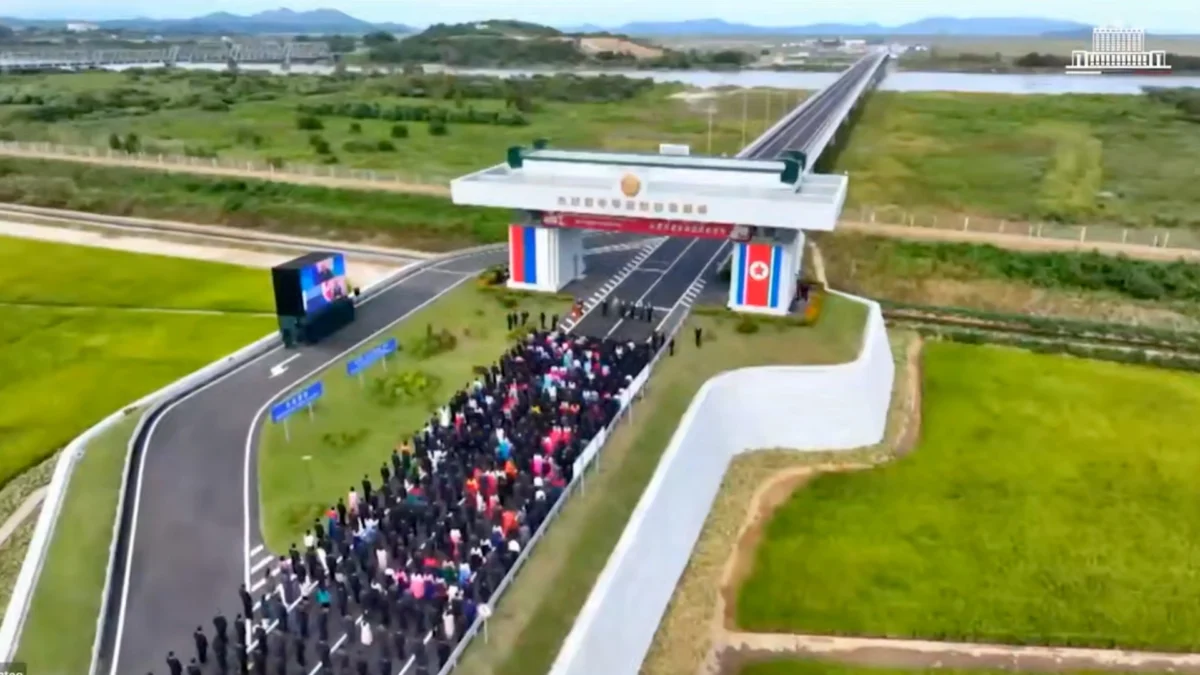
In a move that signals a profound deepening of ties between Moscow and Pyongyang, the two nations have officially inaugurated the first dedicated road bridge across the Tumen River. The project, which has been under development for years, represents more than just a logistical upgrade; it is a tangible manifestation of a shifting geopolitical landscape that has seen North Korea pivot toward Russia as its primary strategic partner.
NK News Data Correspondent Anton Sokolin joined the NK News podcast this week to unpack the complexities surrounding this infrastructure milestone. Beyond the ceremonial ribbons and official declarations, the story of the Tumen River bridge is one of ballooning costs, opaque procurement practices, and a lingering question: what does this physical connection portend for international sanctions enforcement?
Main Facts: A New Arterial Connection
The newly opened bridge serves as the first direct vehicle crossing between North Korea and Russia, bypassing the limitations of the existing rail-only Friendship Bridge. For decades, the movement of goods between the two nations was constrained by the bottlenecks of the Khasan-Tumangang railway. The new road bridge is designed to facilitate faster, more flexible logistics, potentially allowing for the rapid transit of materials that might bypass traditional, more easily monitored maritime or rail channels.
The project’s completion comes at a time when the DPRK is increasingly reliant on Russian support to mitigate the impact of international sanctions. By establishing a direct road link, the two allies have created a "land bridge" that simplifies the logistics of cross-border trade, whether in humanitarian goods, industrial supplies, or military-related logistics.
Chronology: A Project Defined by Delays and Rushed Finishes
The road to the Tumen River bridge was far from smooth. What was initially conceived as a straightforward engineering project became a multi-year saga plagued by delays and technical hurdles.
- Initial Conception: The bridge was proposed as a solution to the stifling lack of road connectivity. Planners aimed to boost trade volume in the Rason Special Economic Zone.
- The Construction Phase: Over the years, the project faced numerous interruptions, ranging from harsh climate conditions to the complexities of coordinating with North Korea’s highly secretive bureaucratic apparatus.
- Budgetary Bloat: As the timeline stretched, the project’s costs began to balloon far beyond the original Russian estimates. Analysts suggest that the cost increases were not merely due to inflation or material prices but also reflected the hidden costs of working within the North Korean environment.
- The Rushed Rollout: The final stages of the project were characterized by an uncharacteristic rush. Evidence of this haste was recently brought to light through a peculiar, widely mocked error: a botched Korean-language road sign near the bridge. For observers, this grammatical and typographical oversight served as a potent symbol of a project pushed across the finish line for political optics rather than operational perfection.
Supporting Data: Procurement and the Shadowy Contractor
One of the most revealing aspects of the bridge’s history lies in the procurement records analyzed by NK News. Investigations into the contractor responsible for the build have uncovered links to obscure business interests, specifically those tied to regional figures in the Chechen Republic.
The Paper Trail
The procurement documents suggest a complex web of intermediaries. By using subcontractors that operate outside the view of major international scrutiny, the project avoided the standard oversight mechanisms typically applied to massive cross-border infrastructure works. These records highlight a recurring pattern in DPRK-related business: the use of "shell-like" or lesser-known entities to perform critical infrastructure tasks, effectively insulating primary government agencies from direct liability should the project falter or violate international trade norms.
Economic Implausibility
The financial figures associated with the construction remain murky. When compared to similar infrastructure projects in the region, the bridge’s price tag appears disproportionately high. Experts argue that the "premium" paid for this project likely covers more than just concrete and steel; it accounts for the logistical difficulty of navigating the North Korean border, the high-risk nature of the venture, and perhaps a degree of "facilitation fees" that are typical in the Russia-DPRK trade corridor.
Official Responses and European Pressure
While Moscow and Pyongyang have hailed the bridge as a triumph of bilateral cooperation, the international community has viewed the development with increasing alarm. The bridge effectively creates a "sanctions blind spot," allowing for the transfer of goods that are difficult to track via satellite or maritime surveillance.

The European Union’s Stance
In a separate but related development, the conversation surrounding the bridge has dovetailed with reports of the European Union exploring new sanctions. Of particular interest is the EU’s potential move to target entities involved in the operation of facilities like the Songdowon Children’s Camp, which has become a focal point for the EU’s broader strategy of putting pressure on the North Korean regime.
The rationale for such sanctions is clear: if the EU can target the financial and logistical pipelines that support North Korean institutions, it can increase the cost of the regime’s defiance. By linking the construction of infrastructure like the bridge to the broader, ongoing saga of North Korean human rights and proliferation, the international community is attempting to signal that no project, regardless of its local utility, is immune from global scrutiny.
Implications: A Shifting Strategic Map
The completion of the Tumen River bridge has long-term implications for the regional security architecture.
1. The Normalization of Circumvention
The bridge provides a physical template for how Russia and North Korea intend to interact in a post-sanctions-compliance era. By building infrastructure that is inherently opaque, they are creating a blueprint for others to follow. If this project is seen as a success, it may encourage further "grey zone" infrastructure projects that prioritize political utility over transparency.
2. The Legal History of KNIC
The broader context of North Korean business practices was also touched upon by Sokolin, particularly the historical legal battles involving the Korea National Insurance Corporation (KNIC). For years, KNIC operated as a key financial arm for the North Korean state, leveraging European insurance markets to generate hard currency. Its eventual exposure and legal unraveling serve as a cautionary tale for any firm—or nation—that engages in business with North Korean entities. The bridge project, while ostensibly a government-to-government endeavor, shares the same DNA as the KNIC operation: a reliance on obscurity to function within the global system.
3. Geopolitical Alignment
Finally, the bridge is a physical symbol of the "new normal" in Eurasia. With Russia increasingly isolated from Western markets, its embrace of North Korea is no longer a peripheral diplomatic activity but a core component of its survival strategy. The Tumen River crossing ensures that even if maritime routes are choked off by international naval patrols, a land-based artery remains open.
Conclusion
As the dust settles on the opening ceremony, the Tumen River bridge stands as a testament to the resilience of the Russia-DPRK alliance. It is a structure built on necessity, funded by opaque processes, and opened with a haste that betrayed its political significance. For analysts, the bridge is not just a road; it is a signal. It indicates that despite the mounting pressure from the European Union, the United States, and their allies, the bond between Moscow and Pyongyang is moving from the abstract to the physical.
As we look toward the future, the critical task for international observers will be to monitor the traffic crossing this bridge. Whether it carries the raw materials of industry or the prohibited goods of a pariah state remains to be seen—but one thing is certain: the Tumen River is no longer the barrier it once was.
© Korea Risk Group. All rights reserved. No part of this content may be reproduced, distributed, or used for commercial purposes without prior written permission from Korea Risk Group.
 Ammar Sabilarrohman
  Pevita Pearce
  Nana Wu
