
 By Jia Lissa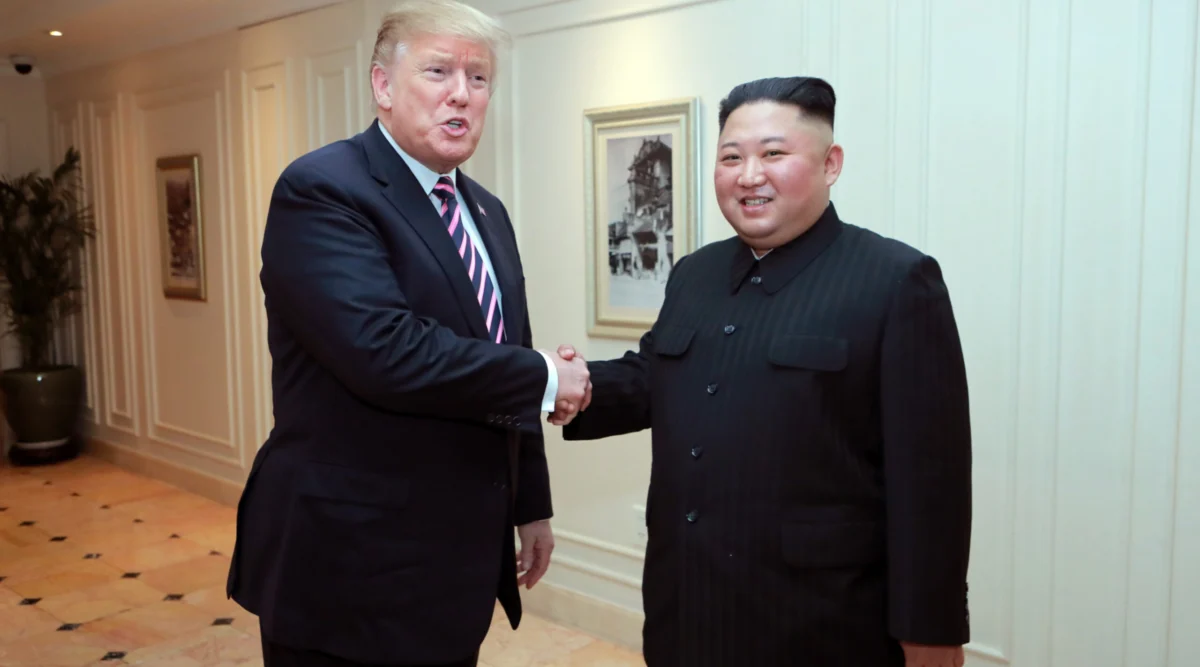
By [Your Name/Journalistic Desk]
The geopolitical architecture of the Korean Peninsula has long rested upon the bedrock of the U.S.-Republic of Korea (ROK) alliance. Central to this defense posture are the joint military exercises—large-scale, complex maneuvers designed to ensure interoperability, readiness, and, most importantly, a credible deterrent against North Korean aggression. However, the recent, abrupt decision to curtail these exercises marks a significant pivot in Washington’s regional policy.
Critics, including security analysts and seasoned defense officials, argue that this move represents a "trifecta of failure": it degrades the defensive capabilities of the alliance, sows seeds of distrust between Washington and Seoul, and inadvertently grants Pyongyang a strategic advantage in future negotiations.
Main Facts: A Shift in Deterrence
The core of the controversy lies in the unilateral nature of the decision. Without prior coordination with Seoul or the Pentagon’s senior command, the shift in military posture has effectively signaled a weakening of the "Ironclad" commitment that has defined the alliance for seven decades.
The primary objective of these drills, such as the former Key Resolve and Foal Eagle exercises, was to demonstrate that the United States and South Korea could mobilize forces, integrate command structures, and execute a synchronized defense against a sudden conventional or nuclear provocation. By slashing the duration and scope of these operations, the U.S. has arguably signaled a shift toward a policy of "appeasement-lite," prioritizing the optics of diplomatic engagement over the mechanics of operational readiness.
Chronology of the Policy Pivot
To understand the current impasse, one must look at the timeline of events that led to the erosion of traditional military cooperation:
- Pre-2018 Status Quo: Large-scale, annual exercises served as the primary deterrent against North Korean miscalculation. These exercises were transparent, defensive in nature, and critical for training thousands of troops.
- The Singapore Summit (June 2018): Following his first meeting with Kim Jong Un, President Donald Trump unilaterally labeled the joint exercises "provocative" and "expensive," signaling a desire to halt them. This caught the South Korean government and the U.S. military leadership entirely off-guard.
- The Hanoi Deadlock (February 2019): Despite the pause in exercises, the second summit between Trump and Kim ended without a deal. This failure highlighted the emptiness of the "denuclearization for concessions" gambit.
- Post-Hanoi Realignment: The subsequent period saw a continued degradation of the scope of these exercises, transitioning from large-field training to smaller, computer-simulated scenarios.
- The Current Strategic Environment: With the exercises now a shadow of their former selves, North Korea has seized the opportunity to accelerate its missile development programs, effectively utilizing the "diplomatic breathing room" to enhance its nuclear strike capabilities.
Supporting Data: The Erosion of Readiness
The impact of these decisions is not merely political; it is empirical. Military analysts point to several critical metrics that demonstrate the decline in readiness:
- Interoperability Decay: Large-scale exercises are essential for junior officers and enlisted personnel to understand how to operate in a combined environment. A lack of field training means that should a crisis erupt, the "learning curve" for a coalition response would be significantly steeper and more dangerous.
- Intelligence Gaps: Military drills are not just for training; they are intelligence-gathering operations. They allow the alliance to test North Korea’s radar, communication, and response times. Reducing the exercises creates "blind spots" in the intelligence picture of the North’s military capabilities.
- The Economic Argument: Proponents of the cuts cited the financial burden. However, data from the Department of Defense suggests that the cost of these exercises, while substantial, is a fraction of the cost of a potential conflict or the long-term price of losing a key strategic foothold in Northeast Asia.
Official Responses: A House Divided
The reaction to these policy shifts has been marked by a profound disconnect between the executive branch in Washington and the security establishment.
The U.S. Military Perspective:
Privately, many in the U.S. military have expressed concerns that they are being forced to trade operational readiness for political optics. The sentiment among the rank and file is one of uncertainty—a feeling that the "rules of the game" have changed without a clear replacement strategy.

The South Korean Government’s Dilemma:
Seoul is currently caught between two fires. On one hand, the ROK government under the previous administration sought to maintain a "peace process" with the North, viewing the exercises as a potential obstacle. On the other, the military and conservative factions in South Korea recognize that without the U.S. umbrella, the ROK is left exposed to the North’s nuclear blackmail. The lack of consultation by Washington has left Seoul questioning the reliability of the U.S. security guarantee.
North Korea’s Calculated Response:
Pyongyang has viewed these cuts as a victory. Through their state media outlets, they have consistently demanded the total cessation of these "war games." By securing a partial victory, they have successfully pressured the U.S. into a unilateral concession without having to provide a single verifiable step toward denuclearization in return.
Implications: The Strategic Landscape
The implications of this shift are profound and may be irreversible in the near term.
1. Weakening Deterrence
Deterrence is not just about having weapons; it is about the credibility of the willingness to use them. By pulling back from exercises, the alliance has signaled a reluctance to project power. This invites North Korean adventurism, as the threshold for them to conduct provocative missile tests or border skirmishes is lowered.
2. The Credibility Gap
The United States relies on its alliance system to maintain regional stability in the Indo-Pacific. If the U.S. can unilaterally alter its posture toward South Korea—a major treaty ally—without notice, it undermines the confidence of other allies, such as Japan, Australia, and the Philippines. They may begin to wonder: if the U.S. can abandon its long-standing posture in Korea, will it do the same elsewhere?
3. A Path to Further Concessions
The logic of "concessions for engagement" has proven flawed. The DPRK has demonstrated that it views U.S. concessions as signs of weakness, not as incentives for dialogue. By continuing to reduce military readiness in hopes of coaxing Kim Jong Un to the table, the U.S. is not building a path to peace; it is building a path to a more empowered and dangerous North Korean regime.
Conclusion: Rebuilding the Foundation
The path forward requires a sober assessment of the realities on the ground. The "trifecta of failure"—degrading deterrence, damaging allied relations, and emboldening adversaries—must be reversed.
Restoring the credibility of the U.S.-ROK alliance requires, at a minimum, a return to transparent, coordinated, and meaningful military exercises. Diplomacy with Pyongyang cannot be conducted in a vacuum where the tools of defense are dismantled in the hope of securing a handshake. To ensure long-term stability in Northeast Asia, the United States must re-commit to the principle that peace is best preserved through strength, readiness, and, above all, the unwavering solidarity of its alliances.
Without a return to these fundamentals, the alliance risks becoming a hollow shell—a relic of a bygone era that no longer possesses the bite to back up its bark. The time for unilateral, surprise policy shifts must end, replaced by a strategic, deliberate approach that prioritizes the collective security of the alliance over the ephemeral gains of summitry.


 Ammar Sabilarrohman
  Pevita Pearce
  Nana Wu
