
 By Muslim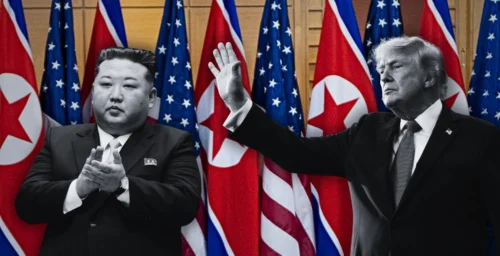
By International Affairs Desk
As the global geopolitical landscape shifts in the latter half of 2026, the prospect of a high-stakes diplomatic encounter between Washington and Pyongyang has returned to the forefront of international discourse. President Donald Trump, signaling a return to the personal diplomacy that characterized his first term, has publicly declared his intent to meet with North Korean leader Kim Jong Un before the year concludes.
However, this renewed overture arrives at a delicate moment. While the White House appears eager to secure a "win" on the world stage, North Korean officials have remained conspicuously reserved, suggesting that any future summit will be predicated on far more than mere dialogue. For Pyongyang, the bar for engagement has been raised, with the Kim regime demanding concrete, sustained concessions from the United States long before they agree to shake hands.
The Push for a Fall Summit: Context and Recent Developments
The current momentum toward a potential summit began building in mid-August 2026, when reports surfaced that President Trump had directed his national security aides to prioritize the arrangement of a meeting with Kim. According to sources cited by The Wall Street Journal, the President expressed a desire to facilitate this encounter "as soon as this fall."
Logistically, the window for such a meeting is narrowing. Observers point to the upcoming Asia-Pacific Economic Cooperation (APEC) summit in Shenzhen, China, scheduled for November, as a potential venue. For the Trump administration, the allure of a summit is clear: it offers a chance to re-establish personal rapport with the North Korean leader and potentially freeze, if not roll back, the DPRK’s nuclear and missile development programs.
Despite the President’s vocal enthusiasm—exemplified by his Wednesday confirmation that he plans to meet Kim—there remains a profound disconnect between the two capitals. North Korea has offered no formal indication that it shares Trump’s itinerary, and state media in Pyongyang has been notably quiet regarding the specific overtures emanating from the Oval Office. This silence is widely interpreted by analysts as a tactical maneuver, designed to project strength and ensure that any future summit occurs strictly on North Korean terms.
A Chronology of Engagement: From Hanoi to 2026
To understand the weight of the current moment, one must examine the rocky trajectory of U.S.-DPRK relations over the last several years:
- 2018-2019: The Era of Personal Diplomacy: The initial "bromance" between Trump and Kim, characterized by the Singapore and Hanoi summits, saw a temporary thaw in tensions. However, the breakdown of the Hanoi summit in February 2019 due to disagreements over the scope of denuclearization versus sanctions relief left a lingering sense of distrust.
- 2020-2025: The Deep Freeze: Following the unsuccessful negotiations in Hanoi and the subsequent political transitions in Washington, communication channels largely withered. North Korea utilized this time to aggressively expand its tactical nuclear capabilities and modernize its delivery systems.
- Early 2026: As the U.S. political cycle heated up, North Korea conducted a series of provocations, including advanced missile tests, effectively signaling that they would not be ignored.
- August 2026: President Trump publicly revives the "summit-first" strategy, signaling a departure from the "maximum pressure" or "strategic patience" models that have dominated the intervening years.
The Price of Admission: Pyongyang’s Evolving Demands
Experts closely monitoring the DPRK suggest that the Kim regime has learned significant lessons from the 2019 collapse. Pyongyang is no longer interested in "photo-op" diplomacy. Instead, they are reportedly demanding a fundamental shift in the U.S.-ROK (Republic of Korea) security architecture.
The Security Dilemma
North Korea has long viewed U.S.-ROK joint military exercises as a "rehearsal for invasion." For any summit to move beyond symbolic gestures, Pyongyang is expected to demand a permanent cessation or a massive scaling back of these drills. Furthermore, there is growing concern that the Kim regime will demand a reduction in the U.S. military footprint on the Korean Peninsula as a prerequisite for any further nuclear talks.
Sanctions Relief vs. Denuclearization
The central sticking point remains the "all-or-nothing" approach. The U.S. has historically pushed for comprehensive denuclearization before significant sanctions relief. Conversely, North Korea has adopted a strategy of "phased implementation," where they offer limited, reversible nuclear freezes in exchange for the immediate lifting of economic sanctions. The gap between these two positions remains as wide as it was in 2019, if not wider, given North Korea’s current nuclear status.

Supporting Data: The Current Threat Landscape
The urgency for a summit is driven by a sobering reality: North Korea is no longer the state it was eight years ago. Data from regional intelligence agencies suggests that the DPRK has:
- Increased Fissile Material Production: Recent satellite imagery of the Yongbyon nuclear complex suggests a surge in enrichment activities.
- Technological Sophistication: Pyongyang’s development of solid-fuel intercontinental ballistic missiles (ICBMs) has drastically reduced the warning time for the U.S. mainland.
- Regional Integration: North Korea’s deepening military-technical cooperation with Moscow has provided the regime with a strategic safety net, making them less susceptible to the traditional economic pressures of the UN Security Council.
This shift in power dynamics means that the U.S. is entering these potential negotiations from a position of "management" rather than "disarmament." The goal for the Trump administration may shift from complete denuclearization to the more modest objective of crisis stabilization.
Official Responses and Diplomatic Skepticism
The White House continues to project confidence. "The President believes that personal relationships are the key to unlocking the most difficult international stalemates," a senior administration official noted earlier this week. However, this optimism is not shared by the broader foreign policy establishment.
In Seoul, the government of the Republic of Korea finds itself in a precarious position. While South Korea generally supports diplomatic engagement, there is a deep-seated fear that a "Trump-Kim" deal could be reached at the expense of South Korean security interests. The ROK Ministry of Foreign Affairs has emphasized the importance of "close coordination" between Washington and Seoul, essentially warning the U.S. not to negotiate a separate peace that might undermine the alliance.
Meanwhile, the response from Beijing has been characteristically measured. China remains the primary facilitator of regional stability and is wary of a sudden U.S.-North Korea rapprochement that could destabilize its own sphere of influence. Beijing has signaled that it would welcome a summit, provided it leads to a reduction in U.S. military presence in the region.
Implications: Can a Summit Succeed?
If a summit were to take place this fall, the implications for global security would be profound.
The Risk of Failure
A failed summit—one that ends in a walkout or public acrimony—would likely trigger a new round of provocations. North Korea, feeling emboldened, might resort to long-range missile tests or even a nuclear detonation to signal their displeasure. This would put the Trump administration in a difficult domestic political position, potentially forcing a return to a more aggressive posture that the President has sought to avoid.
The Path to Stability
Conversely, if the summit leads to a "freeze-for-freeze" agreement, it could create a period of relative calm. Such an arrangement—where North Korea stops testing and the U.S. suspends large-scale exercises—would not solve the nuclear issue, but it would manage the risk of accidental escalation.
Ultimately, the potential for a 2026 summit reflects a shift in how the international community perceives the "North Korea problem." It is no longer viewed as a problem to be solved, but a reality to be managed. Whether President Trump can navigate the ego, the politics, and the conflicting security demands of the parties involved remains the defining question of his administration’s foreign policy this year.
As the calendar turns toward November, all eyes will be on the diplomatic channels between New York, Pyongyang, and Seoul. One thing is certain: if a summit occurs, the world will be watching to see if history repeats itself, or if a new framework for peace in the Pacific is finally within reach.

 Ammar Sabilarrohman
  Pevita Pearce
  Nana Wu
