
 By Laily UPN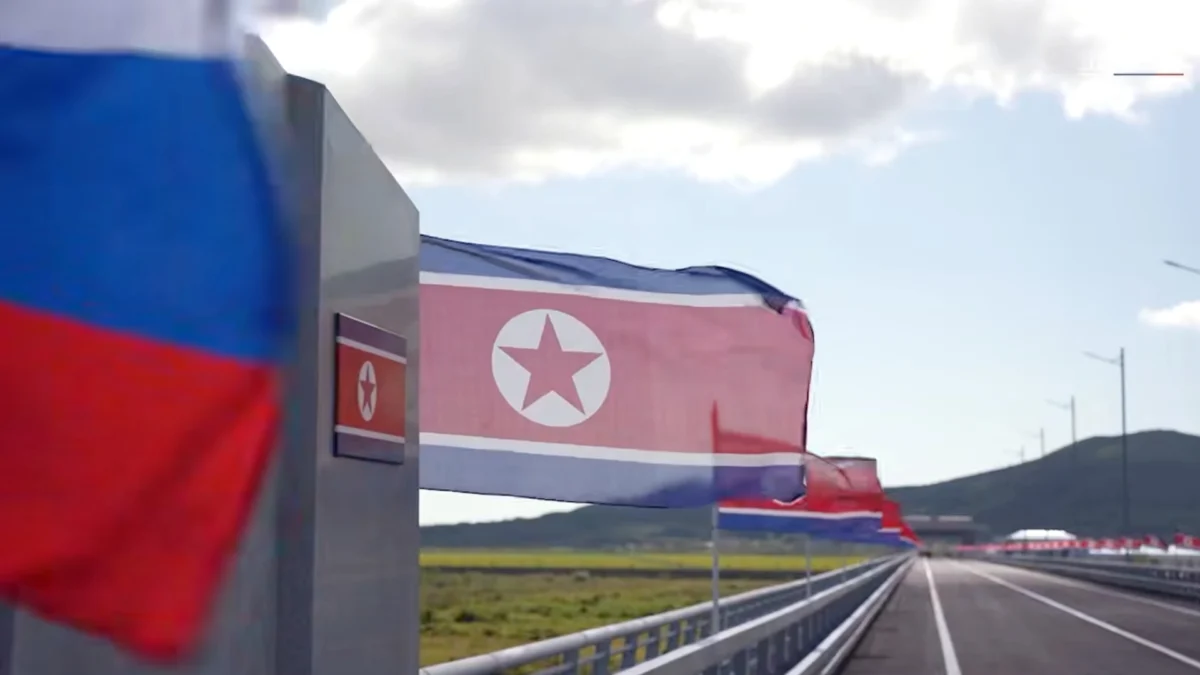
In a move that signals a profound shift in the security architecture of Northeast Asia, Russia and North Korea officially inaugurated their first-ever cross-border road bridge on September 7, 2026. While the physical structure serves as a logistical conduit between the two nations, analysts argue that the bridge is far more than an infrastructure project; it is a tangible manifestation of a revitalized military-political alliance that seeks to challenge the status quo in the Pacific.
By linking the Russian Primorsky Krai region directly to North Korea’s Rason Special Economic Zone, the bridge facilitates a level of integration that has remained elusive since the collapse of the Soviet Union. As global powers watch the deepening ties between Moscow and Pyongyang, the bridge stands as a physical testament to the "unprecedented" friendship described by officials from both nations.
The Strategic Anatomy of the Crossing
The completion of the bridge represents a milestone in the "Comprehensive Strategic Partnership" signed by Vladimir Putin and Kim Jong Un. Historically, transit between Russia and the DPRK was limited to a single, aging rail bridge—the Friendship Bridge—which constrained the volume and speed of trade.
The new road bridge provides an agile alternative, capable of supporting heavy transport vehicles, fuel tankers, and military logistics that do not require the bureaucratic bottleneck of rail scheduling. For Moscow, currently embroiled in an attritional conflict in Ukraine, the bridge offers a reliable overland route for the transport of munitions and labor. For Pyongyang, it serves as a lifeline for Russian energy and food imports, effectively bypassing Western sanctions regimes that have long sought to isolate the regime.
Chronology: A Relationship Rebuilt
The path to this infrastructure project was paved by a rapid acceleration of diplomatic and military cooperation over the last three years:
- September 2023: Kim Jong Un visits the Vostochny Cosmodrome, signaling a new era of space and defense cooperation.
- June 2024: President Putin visits Pyongyang, where the two leaders sign a mutual defense treaty, committing to provide immediate military assistance in the event of aggression against either party.
- January 2025: Initial planning for the "Novichenko Crossing" is announced, with Russian and North Korean engineers breaking ground shortly thereafter.
- September 7, 2026: The bridge is officially opened by Russian Prime Minister Mikhail Mishustin, accompanied by high-level DPRK officials.
The project was executed at a pace that is rarely seen in international civil engineering, suggesting that both nations prioritized the bridge as a top-tier security asset rather than a commercial utility.
The Symbolism of Yakov Novichenko
During the ribbon-cutting ceremony, Prime Minister Mishustin placed significant emphasis on the naming of the bridge. It is dedicated to Yakov Novichenko, a Soviet officer who, in 1946, allegedly shielded DPRK founding leader Kim Il Sung from a grenade during a public rally in Pyongyang.
This nomenclature is not merely historical window-dressing; it is a calculated political narrative. By invoking the "heroism" of a Soviet officer in the service of the Kim dynasty, Moscow is reinforcing the legitimacy of the DPRK’s leadership and rooting the current alliance in the shared blood and history of the mid-20th century. It serves as a reminder to the North Korean public that Russia remains their primary, if not only, ideological protector against "Western imperialism."

Implications: A New Leverage Point
The bridge fundamentally alters Pyongyang’s geopolitical calculus, specifically regarding its relationship with Beijing. For decades, North Korea has been almost entirely dependent on China for economic survival. This dependency has occasionally irked Pyongyang, as Beijing has historically pressured the North to temper its nuclear ambitions to maintain regional stability.
Shifting the Balance of Power
With a direct, efficient road link to Russia, Pyongyang now has an alternative "big brother." Experts suggest that this allows Kim Jong Un to play Moscow and Beijing against each other.
- Economic Diversification: North Korea can now source fuel and industrial goods from Russia without needing to transit through Chinese customs checkpoints.
- Military Autonomy: The bridge facilitates the rapid movement of dual-use technology and heavy equipment. Analysts worry this will accelerate the development of North Korea’s ICBM capabilities and submarine technology, with Russian technical expertise being ferried across the border with greater ease.
The Regional Security Outlook
For South Korea, Japan, and the United States, the bridge represents a direct challenge to the "Indo-Pacific" security framework. The ability of Russia and North Korea to coordinate logistics in real-time creates a "second front" of sorts in Asia. If Moscow requires additional shells or short-range ballistic missiles, the bridge allows for an immediate response that is significantly harder for Western intelligence to monitor via satellite compared to the more predictable rail routes.
Official Responses and International Skepticism
The international reaction to the bridge has been one of heightened concern, if not alarm.
- The United States: State Department officials have repeatedly characterized the infrastructure as a violation of UN Security Council resolutions, arguing that the increased connectivity facilitates the illicit transfer of arms.
- South Korea: The South Korean Ministry of Unification issued a statement warning that the deepening of bilateral ties between Moscow and Pyongyang "threatens the peace and stability of the Korean Peninsula and the global non-proliferation regime."
- Russia’s Stance: The Kremlin maintains that the bridge is a purely economic venture designed to foster "neighborly relations" and regional development. Moscow asserts that it has the right to develop bilateral infrastructure with any sovereign nation, regardless of Western pressure.
Supporting Data: Trade and Logistics
While specific volumes of trade remain classified, trade analysts monitoring satellite imagery of the border region note a 40% increase in heavy vehicle traffic at the border crossing since the bridge’s completion.
- Logistical Throughput: The bridge is designed to handle up to 500 heavy-duty trucks daily, a massive increase over the previous rail-only capacity.
- The Rason Link: The Rason Special Economic Zone is now effectively integrated into the Russian Far East’s logistics network. This zone, which includes a port capable of handling significant maritime cargo, now serves as a gateway for Russian goods to enter the Asian market, bypassing the crowded ports of Vladivostok.
Conclusion: The Bridge as a Geopolitical Statement
The Yakov Novichenko Bridge is more than steel and asphalt. It is a physical manifestation of a geopolitical pivot. As Russia looks to maintain its war effort in Europe and North Korea seeks to solidify its status as a nuclear-armed state, the two nations have created a corridor that bridges their strategic deficiencies.
For the international community, the challenge lies in the fact that this bridge is likely the first of many initiatives intended to link the two economies. Whether this alliance will stand the test of time or prove to be a marriage of convenience remains to be seen. However, one thing is certain: the era of isolating North Korea through simple containment has ended. The border, once a symbol of the Cold War’s rigid divide, has been transformed into a highway for a new, emboldened axis of power.
As the first trucks roll across the span, the world is reminded that in the high-stakes game of global geopolitics, the most effective tool is often the one that creates a permanent, undeniable connection between two allies who have everything to gain—and everything to lose—by standing together.

 Ammar Sabilarrohman
  Pevita Pearce
  Nana Wu
