
 By Nana Muazin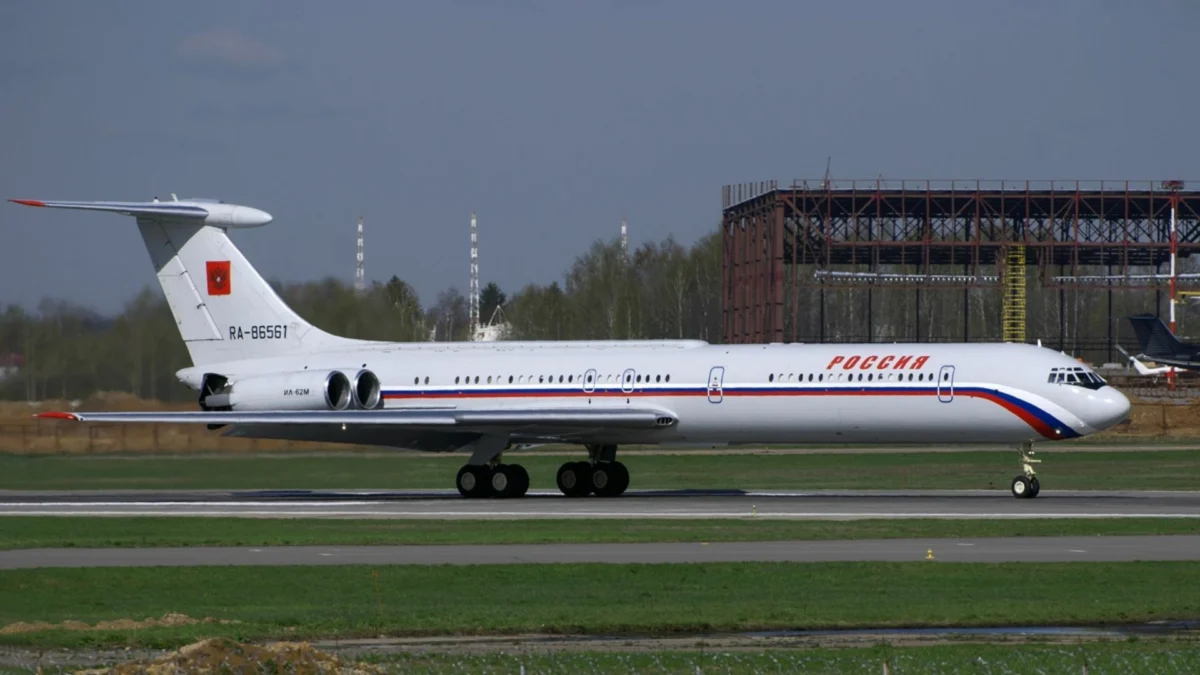
Introduction: A New Chapter in Pyongyang-Moscow Relations
The skies over the Korean Peninsula and the Russian Far East have become a focal point of intense geopolitical scrutiny following a flurry of rare aviation activity this weekend. In a series of movements that underscore the rapidly deepening strategic partnership between the Democratic People’s Republic of Korea (DPRK) and the Russian Federation, high-level diplomatic transit and military logistics have intersected in a significant display of bilateral cooperation.
On Saturday, North Korean Foreign Minister Choe Son Hui departed Pyongyang for Moscow, opting for a vintage Soviet-era Ilyushin Il-62M passenger jet—a relic of the Cold War that remains a staple of the North Korean diplomatic fleet. This departure was immediately followed by a reciprocal movement: a Russian military aircraft touched down at Pyongyang’s Sunan International Airport on Sunday, marking the first such visit by a Russian military jet in two months. These synchronized maneuvers signal that despite international sanctions and global pressure, the logistical and diplomatic bridge between Kim Jong Un and Vladimir Putin remains not only open but increasingly active.
Chronology of the Weekend’s Aviation Activity
The sequence of events unfolded with the precision often associated with high-stakes diplomatic maneuvering. According to aviation tracking data provided by Flightradar24 and other open-source intelligence monitors, the timeline of this engagement is as follows:
Saturday: The Envoy’s Departure
Foreign Minister Choe Son Hui, a key figure in North Korea’s foreign policy apparatus and a primary architect of the regime’s recent pivot toward Russia, boarded a DPRK-operated Il-62M. This aircraft, characterized by its long-range capabilities and aging airframe, took off from Pyongyang, heading toward Moscow. The choice of aircraft—a legacy Soviet design—serves as both a practical mode of transport and a symbolic link to the historical ties between the two nations, which have been revitalized following the onset of the war in Ukraine.
Sunday: The Reciprocal Arrival
Following the transit of the North Korean envoy, the Russian Aerospace Forces mobilized a heavy-duty asset. The Russian Il-62M (tail number RA-86561) executed a flight path from Moscow, with a stopover in Vladivostok, before descending into Sunan International Airport at approximately 10:40 a.m. KST. The arrival was brief, lasting only a few hours, before the aircraft departed. This marked the first instance in roughly 60 days that a Russian military-affiliated aircraft had been tracked landing in the North Korean capital, breaking a period of relative quiet in direct aerial logistics between the two nations.
Supporting Data: Understanding the Assets
The use of the Il-62M is not merely a matter of convenience; it provides significant insight into the nature of North Korea’s logistics.
The Il-62M: A Cold War Workhorse
The Ilyushin Il-62M is a long-range, narrow-body jet airliner that first entered service in the late 1960s. While most of the world has retired this airframe in favor of more fuel-efficient, modern aircraft, the DPRK continues to rely on these jets for long-haul government travel. The aircraft’s robustness and its ability to operate independently of modern, Western-dominated aviation infrastructure make it an ideal vehicle for a state operating under heavy international isolation.
Flight Tracking and Open-Source Intelligence (OSINT)
The ability to track these movements via Flightradar24 highlights the transparency afforded by modern technology. However, security analysts note that while these platforms provide a reliable record of movement, they often leave questions regarding cargo. The brief duration of the Russian military jet’s stay on the tarmac in Pyongyang suggests that the visit was likely for the rapid transfer of high-value personnel, sensitive diplomatic documents, or specialized cargo that could not be handled through standard commercial freight channels.
Official Responses and Diplomatic Context
As of this writing, both the Kremlin and the North Korean Ministry of Foreign Affairs have remained tight-lipped regarding the specific agenda of these flights. Historically, such movements coincide with preparations for high-level summits or the finalization of defense-industrial agreements.
Moscow’s Stance
The Russian government has repeatedly asserted that its cooperation with the DPRK is "fully compliant with international law." Following the historic signing of the "Comprehensive Strategic Partnership Treaty" between Putin and Kim in June 2024, Moscow has made it clear that it views the development of ties with Pyongyang as a sovereign right. Kremlin spokespeople have deflected questions about military cargo, focusing instead on the "broadening of economic and cultural exchanges."
Pyongyang’s Position
North Korean state media, primarily the Korean Central News Agency (KCNA), typically frames these high-level visits as a testament to the "invincible friendship" between the two nations. In the context of Choe Son Hui’s visit, analysts expect the discourse to focus on the implementation of the June treaty, which includes a mutual defense clause. For Pyongyang, the visit is a validation of its status as a key Russian ally, providing a necessary counterweight to the trilateral security cooperation between the United States, South Korea, and Japan.
Strategic Implications: Why Now?
The timing of these flights is critical. Several factors explain why Moscow and Pyongyang are intensifying their physical connectivity at this juncture.
1. Implementation of the Mutual Defense Pact
The treaty signed in June includes provisions that obligate both countries to provide immediate assistance if the other is attacked. The movement of high-level envoys and military logistical support is the necessary mechanism to move these words from paper into operational reality. Analysts suggest that the two nations are likely establishing clear command-and-control protocols for how this mutual defense would function in practice.
2. The War in Ukraine
Western intelligence agencies continue to track the flow of North Korean artillery shells and short-range ballistic missiles to the Russian front lines in Ukraine. The brief stopover of a Russian military aircraft in Pyongyang, particularly one associated with the Russian Aerospace Forces, fuels speculation that these logistical channels for ammunition replenishment remain active. By maintaining direct, high-level diplomatic contact, the two regimes ensure that supply chains remain resilient against global monitoring efforts.
3. Diplomatic Defiance
For North Korea, these flights are a powerful signal to the international community. By maintaining an active, albeit clandestine, air bridge with Moscow, Pyongyang demonstrates that the "maximum pressure" campaign led by the West has failed to achieve its primary objective: the total isolation of the Kim regime. The frequent movement of officials and equipment underscores that the DPRK has found a permanent, high-level patron in Moscow.
Looking Ahead: The Future of the Moscow-Pyongyang Axis
The recent aviation activity is unlikely to be an isolated event. Instead, it represents the new "normal" in a partnership that has moved from symbolic solidarity to practical, tactical, and strategic integration.
The Regional Security Outlook
For South Korea and its allies, this integration presents a growing headache. The increased frequency of logistical movements suggests that North Korea is receiving not just economic aid, but potentially advanced technological assistance—be it in the realms of space launch vehicle technology, nuclear submarine development, or sophisticated missile guidance systems. The presence of Russian military aircraft in Sunan is a visible reminder of the shifting power dynamics in the Indo-Pacific.
Potential for Further Escalation
Observers should watch for follow-up announcements regarding trade, joint military exercises, or further high-level visits. If the pattern holds, the coming months could see an increase in both the frequency of these flights and the transparency with which the two nations conduct their joint activities, as they move toward a more integrated defense posture.
Conclusion
The sight of a decades-old Il-62M carrying the North Korean Foreign Minister to Moscow, followed by the rare landing of a Russian military jet in Pyongyang, is a poignant illustration of the 21st-century geopolitical landscape. It is a world where Cold War-era hardware is being used to build a very modern, and very dangerous, alliance.
As the international community grapples with the implications of the Russia-DPRK pact, the skies over Sunan serve as a reminder that the world is entering a period of renewed bloc-based competition. Whether this aviation activity is merely a logistical necessity or a precursor to further escalation remains to be seen. However, one thing is certain: the bridge between Pyongyang and Moscow is stronger than it has been in decades, and the world is watching every flight.
Disclaimer: This report is based on available aviation tracking data and public record as of July 2024. All analyses of geopolitical implications are based on current international security discourse and are subject to evolving intelligence reports.


 Nila Kartika Wati
  Jia Lissa
  Muslim
