
 By Muslim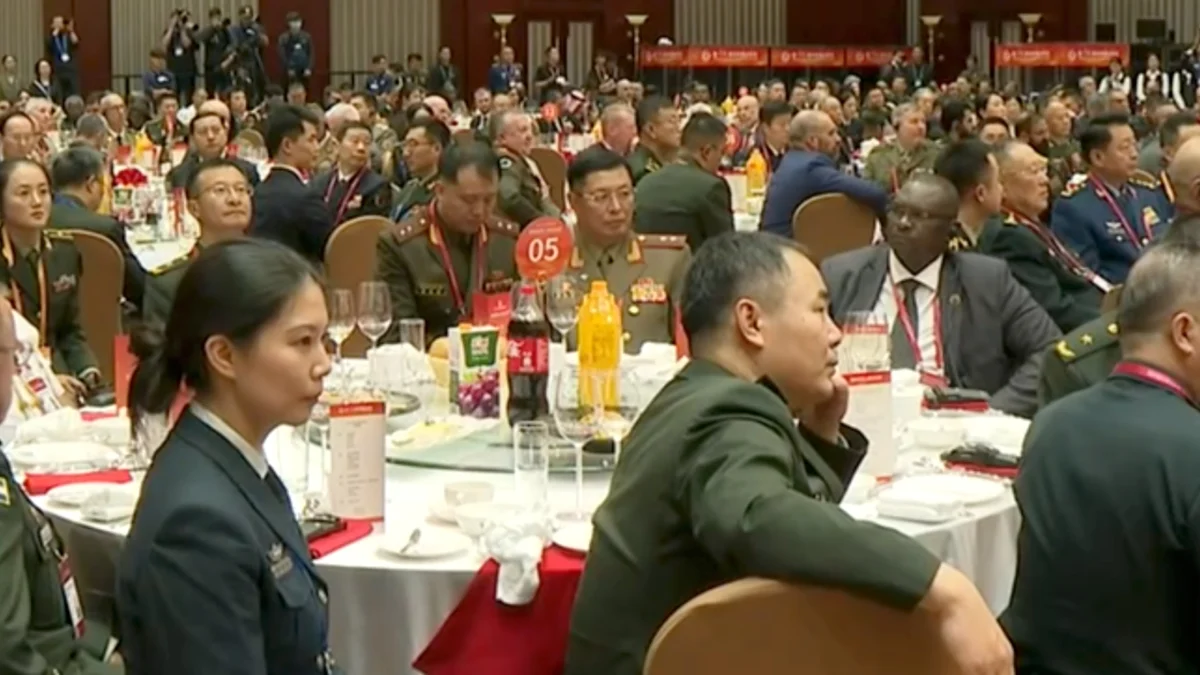
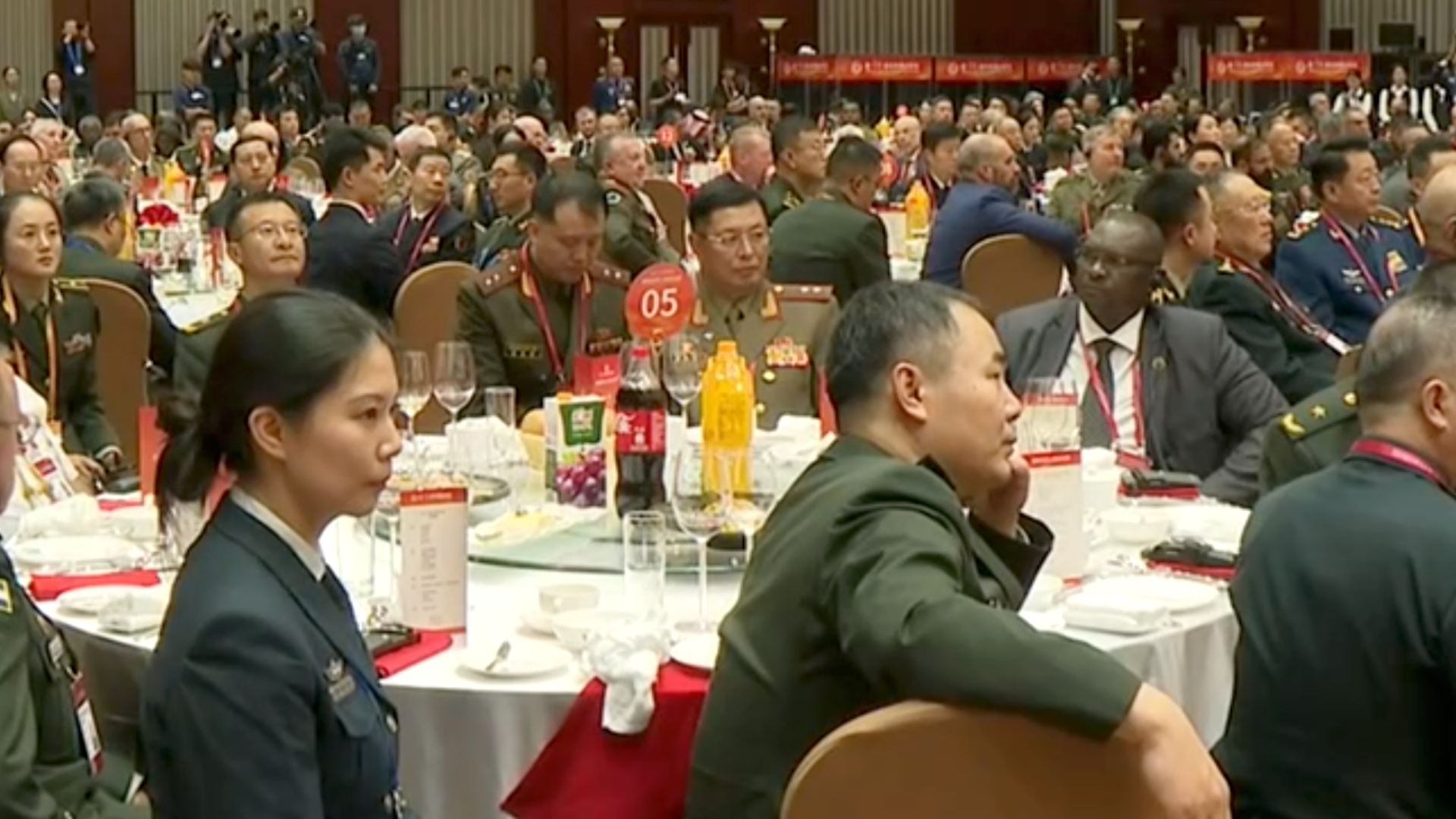
BEIJING — In a high-profile appearance at the 13th Beijing Xiangshan Forum, North Korea’s Vice Defense Minister Kim Kang Il issued a defiant defense of the Democratic People’s Republic of Korea’s (DPRK) nuclear program, characterizing it as an "irreversible" pillar of national sovereignty. His remarks, delivered on Thursday, served as both a scathing indictment of U.S. regional policy and a strategic signal of strengthening military ties between Pyongyang and Beijing.
The forum, often referred to as China’s answer to the Shangri-La Dialogue, provided a global stage for Kim to articulate Pyongyang’s worldview amidst a period of heightened geopolitical tension in Northeast Asia.
Main Facts: The Core Arguments
Kim Kang Il’s address centered on the premise that North Korea’s nuclear arsenal is a necessary reaction to external existential threats. During his speech, he labeled the long-standing military presence and alliance structures of the United States and its partners as the primary catalysts for instability on the Korean Peninsula.
Key takeaways from his intervention include:
- Irreversibility: Kim emphasized that the nuclear path taken by the Kim Jong Un regime is final and not subject to negotiation or abandonment.
- Blame Attribution: He argued that the "reckless political and military confrontational maneuvers" by the U.S. and its allies over the past eight decades have created a "vicious cycle of confrontation" that makes nuclear deterrence the only viable survival strategy for the DPRK.
- Strategic Alignment: Beyond the rhetoric against the West, Kim used the platform to publicly reiterate a pledge for deeper military cooperation with China, reinforcing the bond between the two socialist neighbors.
Chronology: Contextualizing the Tensions
The presence of a high-ranking North Korean defense official at the Beijing Xiangshan Forum is a continuation of a decades-long diplomatic dance between Beijing and Pyongyang.
- 1945–1953: The foundational period of the "vicious cycle" cited by Kim, spanning from the division of the peninsula to the armistice that ended active combat in the Korean War.
- 2003–2009: The era of the Six-Party Talks, which sought to denuclearize the peninsula but ultimately collapsed, leading to North Korea’s accelerated missile and nuclear testing schedule.
- 2018–2019: The brief diplomatic thaw characterized by summits in Singapore and Hanoi, which ultimately failed to yield a framework for sanctions relief or disarmament.
- 2023–2026: A period of rapid modernization of the Korean People’s Army (KPA) arsenal, including the deployment of tactical nuclear weapons and the deepening of defense ties with Russia and China.
- September 15, 2026: Vice Minister Kim Kang Il arrives in Beijing to engage with Chinese counterparts and address the international security community, signaling a pivot back to aggressive posture after a period of relative diplomatic silence.
Supporting Data: The Calculus of Deterrence
North Korea’s defense of its nuclear program rests on a specific interpretation of regional security data. According to international monitoring agencies and state-run media in Pyongyang, the DPRK has accelerated its development of both delivery systems and warhead miniaturization.
The Nuclear Justification
Kim’s assertion that "ceaseless nuclear arms buildup of the enemy states" justifies the DPRK’s posture is backed by several regional realities:
- Joint Military Exercises: Pyongyang has consistently cited the increased frequency and scale of joint U.S.-ROK-Japan naval and air exercises as an attempt to "decapitate" the North Korean leadership.
- Extended Deterrence: The U.S. deployment of nuclear-capable assets—such as strategic bombers and nuclear-powered submarines—to the Korean Peninsula has historically been met with increased testing cycles from the North.
- Sanctions Evasion: Despite stringent UN Security Council resolutions, North Korea has managed to maintain a steady technological advancement, suggesting a shift in supply chains that potentially involves broader support from regional allies.
Official Responses and Diplomatic Friction
The reaction to Kim’s speech was immediate, reflecting the deep divisions currently defining global security architecture.
The Chinese Perspective
Defense Minister Dong Jun met with Kim on the sidelines of the forum. While Chinese officials generally emphasize the need for "dialogue and restraint," the hosting of the North Korean official serves as a calculated move by Beijing. By allowing Kim to speak, China is signaling its frustration with the U.S. "Indo-Pacific" strategy, which Beijing views as a mechanism to encircle China.
The U.S. and Allied Response
Washington, along with Seoul and Tokyo, has largely ignored the rhetoric as standard "propaganda-fueled posturing." However, behind the scenes, defense analysts are concerned. A spokesperson for the U.S. Department of State noted that "the DPRK’s rhetoric only serves to isolate it further from the international community and undermines the security of the region."
The South Korean government, under the current administration, has taken a harder line, viewing the Beijing Xiangshan appearance as an attempt by the North to legitimize its nuclear status within the framework of the "China-Russia-DPRK" bloc.
Implications: A Shifting Security Paradigm
The appearance of Kim Kang Il at the Beijing Xiangshan Forum carries significant implications for the future of Northeast Asian security.
1. The Death of Denuclearization
The explicit use of the word "irreversible" is a signal to the international community that the era of "denuclearization talks" is effectively over. Policymakers in Washington and Seoul must now contend with a reality where North Korea functions as a de facto nuclear-armed state.
2. Deepening Sino-DPRK Ties
The warm reception for the North Korean delegation in Beijing suggests that China is willing to provide a degree of diplomatic cover for Pyongyang. As U.S.-China relations remain strained, Beijing may find that maintaining a stable, albeit nuclear-armed, North Korea is preferable to a collapse that could result in a unified, pro-U.S. Korea on its border.
3. The Risk of Miscalculation
As the rhetoric intensifies, the margin for error shrinks. With both sides engaged in high-stakes military posturing, the risk of a localized skirmish escalating into a broader conflict is at its highest point since the late 2010s. The "vicious cycle" identified by Kim is not merely a diplomatic talking point; it is a structural reality that continues to drive the arms race in the region.
4. Regional Proliferation Concerns
There is a growing fear that North Korea’s successful normalization of its nuclear status could trigger a "proliferation cascade." If Pyongyang remains immune to international pressure, other regional players may begin to question the reliability of the U.S. nuclear umbrella, potentially leading to indigenous nuclear programs in South Korea or Japan—a scenario that would fundamentally alter the global security order.
Conclusion
As the 13th Beijing Xiangshan Forum concludes, the takeaway is clear: the Korean Peninsula remains one of the world’s most volatile flashpoints. Vice Defense Minister Kim Kang Il’s speech was not an invitation to negotiate, but a declaration of intent. By cementing its nuclear policy as an "irreversible" reality, Pyongyang has laid down a challenge that the global community, and specifically the United States, seems currently ill-equipped to address. The coming months will likely see continued military exercises, further technological advancements from the North, and a deepening of the ideological and military divide that keeps the peninsula trapped in its long-standing cycle of tension.
 Ammar Sabilarrohman
  Pevita Pearce
  Nana Wu
