
 By Reynand Wu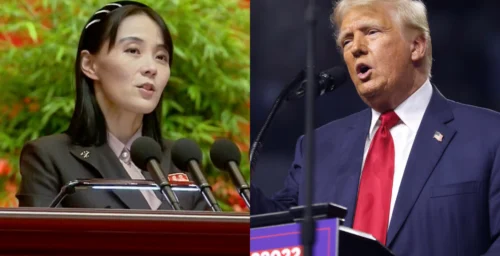
The geopolitical landscape surrounding the Korean Peninsula has shifted once again, defined by a curious dance of diplomatic outreach, military recalibration, and the familiar, sharp-tongued rhetoric of the Kim dynasty. As President Donald Trump signals a renewed interest in engagement with Kim Jong Un, Pyongyang has responded with a calculated mix of acknowledgment and defiance.
In this week’s Korea Risk Group podcast, correspondent Joon Ha Park joins a panel of experts—including veteran journalists and humanitarian observers Mike Chinoy and Kathi Zellweger—to dissect the latest signals emanating from the North. The discussion highlights a critical juncture: how Seoul is managing the fallout of U.S. overtures, the implications of scaled-back military exercises, and the enduring challenges of engaging a state that continues to oscillate between nuclear posturing and survival-driven diplomacy.
Main Facts: The New Diplomatic Equation
The current tension is anchored in two primary developments: President Trump’s recent overtures toward Pyongyang and the subsequent decision by the U.S.-ROK alliance to truncate the annual "Ulchi Freedom Shield" military exercises.
The exercises, originally slated for an 11-day window, were unexpectedly reduced to a five-day duration. This move, interpreted by many as a conciliatory gesture intended to create space for potential dialogue, has met with a cold reception from North Korea’s leadership. Kim Yo Jong, the powerful sister of Kim Jong Un and a key mouthpiece for the regime, issued two distinct statements that clarified Pyongyang’s stance:
- Personal Diplomacy vs. Strategic Reality: Kim Yo Jong acknowledged the "excellent" personal relationship between Donald Trump and Kim Jong Un, a nod to the summitry of the late 2010s. However, she was quick to decouple this personal rapport from state policy.
- The Rejection of Half-Measures: She dismissed the shortening of the Ulchi Freedom Shield exercises as "insufficient," signaling that North Korea views such symbolic gestures as inadequate compensation for the foundational existence of the alliance’s military presence.
This positions Seoul in a particularly precarious dilemma: caught between a U.S. administration willing to gamble on personal diplomacy and a North Korean regime that remains emboldened by its tactical position.
Chronology: A Timeline of Rising Tensions and Overtures
To understand the current impasse, one must look at the rapid sequence of events that have defined the past few weeks:
- Early August 2026: Reports emerge of back-channel communications regarding a potential resumption of high-level dialogue between the U.S. and the DPRK.
- August 10, 2026: The U.S. and South Korea announce the schedule for the Ulchi Freedom Shield exercises, originally set for 11 days of robust, theater-wide simulations.
- August 14, 2026: Following internal discussions, the alliance pivots, announcing a reduction of the drills to just five days, citing a desire to lower regional tensions.
- August 15, 2026: Kim Yo Jong releases her first statement, mocking the "hypocrisy" of the U.S. and asserting that North Korea will not be swayed by "cosmetic changes" to military policy.
- August 17, 2026: In a follow-up statement, Kim Yo Jong further clarifies that while the personal bond between the leaders is "excellent," the strategic calculus of the North remains unchanged—demanding total concessions that the ROK-U.S. alliance is currently unwilling to provide.
Supporting Data: The Humanitarian and Historical Context
While the headlines are dominated by nuclear rhetoric and military drills, the underlying reality for North Korea remains deeply tied to internal stability, famine risks, and economic hardship.
Mike Chinoy and Kathi Zellweger bring decades of experience to this analysis, noting that the "noise" of diplomatic summits often masks the chronic humanitarian crisis inside the DPRK. Zellweger, who has spent years overseeing aid missions, emphasizes that the regime’s obsession with external security often comes at the direct expense of the civilian population.
Economic Pressures
- Resource Allocation: Data suggests that North Korea’s military modernization programs continue to consume a disproportionate share of the national budget, even as agricultural output remains volatile due to erratic climate patterns.
- Aid Dependency: Historically, famine relief and food security have been the primary levers through which the international community has attempted to engage Pyongyang. However, the current regime has increasingly prioritized self-reliance, or Juche, over international aid, which they view as a potential vehicle for "ideological subversion."
Historical Precedent
The experts on the podcast remind listeners that the current "Trump-Kim" narrative is a rerun of the 2018-2019 period. The lesson, according to Chinoy, is that personal relationships between leaders do not equate to institutional shifts in North Korean policy. The regime’s core objectives—recognition as a nuclear state and the removal of sanctions—remain static regardless of who occupies the White House.
Official Responses: Seoul’s Growing Anxiety
The government in Seoul finds itself in a state of visible unease. President Trump’s tendency to negotiate unilaterally with Pyongyang without extensive consultation with the ROK raises concerns in the Blue House.
The South Korean Ministry of Unification has maintained a cautious tone, reiterating the necessity of a "coordinated approach" between Washington and Seoul. However, the shortening of the Ulchi Freedom Shield exercises has caused friction within the ROK military establishment. Senior defense officials in Seoul have expressed concern that these "quick-fix" reductions erode the readiness of the alliance to deter North Korean aggression.

By keeping South Korea out of the primary loop of the Trump-Kim dialogue, the North is effectively weaponizing the U.S.-ROK alliance’s own internal tensions. This "wedge strategy" is designed to make Seoul feel increasingly isolated, forcing it to either fall in line with a potential U.S.-DPRK deal that may ignore South Korean security interests or to adopt a more hardline stance that could alienate Washington.
Implications: What Comes Next?
The implications of this latest diplomatic cycle are profound and multifaceted.
1. The Erosion of Deterrence
The reduction of the Ulchi Freedom Shield drills creates a "slippery slope" scenario. If the U.S. continues to pare back military exercises in exchange for mere "personal acknowledgment" from Pyongyang, the credibility of the extended deterrent is diminished. North Korea may perceive this as a sign of weakness, potentially leading to increased provocations in the short term to test the boundaries of the new, shortened training schedule.
2. North Korea’s "Trump Strategy"
Kim Yo Jong’s statements suggest a sophisticated, long-term strategy. By acknowledging the "excellent" relationship with Trump while simultaneously rejecting the alliance’s military concessions, she is essentially trying to bypass the bureaucracy of the U.S. State Department and the anxieties of the South Korean government. Pyongyang is banking on a scenario where Trump, eager for a "win" in the lead-up to political milestones, might offer deeper concessions in exchange for a temporary freeze in missile testing.
3. The Humanitarian Blind Spot
As the focus shifts back to high-level summitry, the voices calling for humanitarian aid are being silenced. The podcast guests warn that if the focus remains solely on denuclearization—a goal that has proven largely elusive—the systemic suffering of the North Korean people will continue to worsen. Any future agreement must integrate humanitarian monitoring and economic support, rather than focusing purely on security theater.
4. The Future of the Alliance
The most significant long-term risk is the potential fracturing of the U.S.-ROK alliance. If South Korea concludes that the United States is prioritizing a personal relationship with the Kim family over the collective security of the Peninsula, the pressure within South Korea for indigenous nuclear capabilities will intensify. This would not only destabilize the region but could trigger a broader nuclear arms race in East Asia, involving Japan and potentially other regional powers.
Conclusion
As we look toward the final quarter of 2026, the situation remains fluid. The signals from Pyongyang are clear: they are willing to engage, but only on terms that favor their long-term strategic survival and nuclear ambitions.
The renewed outreach from President Trump provides a glimmer of hope for some, but a deep sense of dread for those familiar with the history of the Korean nuclear crisis. Whether this results in a genuine breakthrough or simply another cycle of empty promises and eventual disappointment depends on whether the U.S. can move beyond the "personal" and address the "structural."
For now, the world watches as Seoul, Washington, and Pyongyang perform their familiar roles, knowing that beneath the political posturing, the lives of millions hang in the balance. The task for the international community is to remain vigilant, ensuring that in the rush to secure a headline-grabbing deal, the fundamental security of the region and the humanitarian needs of the North Korean people are not sacrificed on the altar of diplomatic expediency.
For more in-depth analysis on these developments, subscribe to the Korea Risk Group podcast and stay tuned to our ongoing coverage of North Korean state policy.
 Siti Muinah
  Evan Lee Salim
  Asro
Asro 
