
 By Pevita Pearce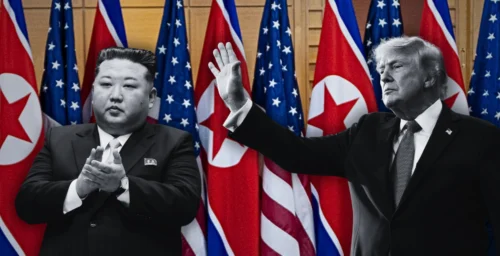
As the international community navigates the shifting currents of geopolitics in the second half of 2026, a familiar narrative has resurfaced: the high-stakes, personality-driven overtures between U.S. President Donald Trump and North Korean leader Kim Jong Un. With President Trump signaling an urgent desire for a face-to-face meeting before the year concludes, the prospect of a third major summit has become the central focus of Northeast Asian security policy.
However, the current climate is markedly different from the "fire and fury" era of 2017 or the diplomatic thaw of 2018–2019. While Trump views a summit as a potential crown jewel of his foreign policy legacy, Pyongyang has adopted a posture of strategic reticence. Experts suggest that while the possibility of a meeting is growing, North Korea is no longer interested in "summitry for the sake of optics." Instead, Kim Jong Un is raising the bar, demanding substantial, irreversible U.S. concessions—far removed from the vague promises of the past—as a prerequisite for any meaningful engagement.
Main Facts: The Race to the Negotiating Table
President Trump’s recent declaration—expressed during a media appearance on Wednesday—that he intends to meet with Chairman Kim later this year has sent ripples through the intelligence and diplomatic communities. Despite the lack of an official invitation or a confirmed communication channel from Pyongyang, the White House appears to be operating under the assumption that a meeting is not only possible but imminent.
Reports from The Wall Street Journal have added geopolitical context to the President’s intent. Sources close to the administration indicate that Trump has been pressuring his aides to orchestrate a summit as early as this fall. The favored backdrop for such a meeting is the Asia-Pacific Economic Cooperation (APEC) summit, scheduled to take place in Shenzhen, China, this November.
For the Trump administration, the summit represents a chance to claim a diplomatic victory in a region increasingly dominated by competition with Beijing. For Pyongyang, however, the calculus is more complex. Having spent the last several years bolstering its nuclear arsenal and deepening its military partnership with Moscow, North Korea enters this potential round of negotiations from a position of perceived strength.
A Chronology of Engagement: From Hanoi to Shenzhen
To understand the current impasse, one must look at the volatile history of the U.S.-DPRK relationship over the past decade.
- June 2018 (Singapore): The historic first summit between Trump and Kim, resulting in a joint statement pledging to work toward the "complete denuclearization of the Korean Peninsula."
- February 2019 (Hanoi): The second summit, which ended abruptly without an agreement. The failure to reach a deal on the scope of sanctions relief versus the extent of nuclear disarmament led to a significant cooling of relations.
- June 2019 (Panmunjom): A brief, impromptu meeting at the Demilitarized Zone (DMZ), which kept the diplomatic window ajar but failed to produce a working-level breakthrough.
- 2020–2025 (The Years of Silence): Following the pandemic and a shift in U.S. administrations, North Korea largely retreated into isolation, focusing on internal development and the modernization of its intercontinental ballistic missile (ICBM) capabilities.
- August 2026 (The Present): President Trump reignites the summit push, aiming to capitalize on his personal rapport with Kim Jong Un, even as North Korea remains publicly non-committal or dismissive of "backdoor" communication attempts.
Supporting Data: The Shifting Balance of Power
The geopolitical environment of 2026 is vastly different from the era of the Singapore Summit. Data points from both intelligence assessments and open-source reporting suggest that the bargaining chips have fundamentally changed.
The Nuclear Threshold
North Korea’s nuclear program has moved from a developmental phase to an operational one. Intelligence reports suggest that Pyongyang now possesses a sophisticated array of tactical nuclear weapons and has successfully tested multiple-warhead reentry vehicles. This shift means that any discussion regarding "denuclearization" is effectively off the table from Pyongyang’s perspective; they now view themselves as a de facto nuclear state.
The Russia Factor
Perhaps the most significant change is the deepening military cooperation between Pyongyang and Moscow. Since early 2024, North Korea has reportedly supplied significant quantities of conventional ammunition and military technology to Russia in exchange for advanced space, satellite, and energy technology. This "security guarantee" from a permanent member of the UN Security Council has provided Kim Jong Un with a strategic safety net, allowing him to ignore U.S. pressure tactics that were effective in 2018.
Economic Resilience
Despite heavy international sanctions, Pyongyang has demonstrated a surprising ability to circumvent restrictions through cyber operations and illicit ship-to-ship transfers. Their economy is no longer as vulnerable to the "maximum pressure" campaign as it was during the early years of the Trump presidency.

Official Responses and Diplomatic Skepticism
The reaction to the President’s proposal has been cautious, if not outright skeptical, among career diplomats and regional allies.
The U.S. Perspective:
Within the administration, there is a clear divide. President Trump continues to rely on his "deal-maker" philosophy, believing that personal chemistry can overcome structural geopolitical barriers. However, State Department officials and regional experts have warned that a poorly prepared summit could backfire, granting Kim Jong Un legitimacy on the global stage without extracting any tangible security benefits for the United States or its allies, South Korea and Japan.
The Pyongyang Perspective:
North Korea’s state media has been conspicuously quiet regarding the specific "summit" talk, though it has continued to issue routine condemnations of joint U.S.-ROK military drills. By maintaining a stony silence, Pyongyang is effectively exercising "strategic patience"—a reversal of the roles played during the Obama administration. By refusing to confirm or deny communication, Kim Jong Un is forcing the Trump administration to publicly bid for his attention, thereby increasing his leverage.
The View from Seoul:
South Korea finds itself in a delicate position. While the ROK government generally supports any effort to reduce tensions on the peninsula, there is lingering anxiety in Seoul that a direct U.S.-DPRK deal could be reached at the expense of South Korean security interests. The ROK Ministry of Foreign Affairs has signaled that any potential engagement must involve close coordination with Seoul to ensure that the "denuclearization" goal remains a central, if long-term, priority.
Implications: What a 2026 Summit Would Mean
Should the proposed November summit in Shenzhen actually materialize, the implications for global security would be profound.
1. The Normalization of a Nuclear North
If the summit takes place without a clear, verifiable disarmament roadmap, the international community will be forced to confront the reality of a normalized nuclear North Korea. This would likely trigger a domino effect in the region, with calls from within South Korea and Japan for their own independent nuclear deterrents, potentially ending decades of non-proliferation norms in Northeast Asia.
2. A Challenge to the "Rules-Based Order"
The summit would be viewed by China and Russia as evidence that the U.S. is willing to bypass international sanction regimes in exchange for personal diplomatic gains. This could weaken the unity of the UN Security Council and provide a template for other rogue states to seek similar accommodations by waiting out U.S. domestic political cycles.
3. Domestic Political Stakes
For President Trump, the success or failure of such a summit will be viewed through the lens of his domestic policy agenda. A "deal" that lowers tensions—even if it is superficial—would be touted as a triumph of "America First" diplomacy. However, a failure, or a summit where North Korea extracts major concessions without reciprocal actions, would provide significant political ammunition to his critics, who argue that the President is being manipulated by authoritarian leaders.
Conclusion: The Long Road Ahead
As the calendar approaches November, the diplomatic dance between Washington and Pyongyang will intensify. While President Trump’s enthusiasm for a summit is clear, the path forward is fraught with obstacles. Kim Jong Un is no longer the isolated leader seeking a seat at the table; he is a calculated player who has successfully leveraged regional tensions to secure his regime’s future.
For any summit to be more than a photo opportunity, the U.S. must be prepared to address the fundamental shift in North Korea’s status. The days of expecting Pyongyang to trade its nuclear deterrent for vague promises of economic prosperity are likely over. If the goal is a lasting peace, the dialogue must evolve from the transactional nature of the 2018 summits to a more robust, multi-layered security framework that recognizes the realities of 2026. Until then, the world will watch to see if this potential meeting serves as a turning point for stability or merely another chapter in a long, unresolved standoff.
 Evan Lee Salim
  Layla Zulfa
  Neng Nana
