
 By Jia Lissa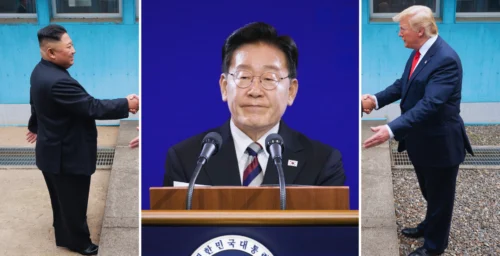
By Editorial Staff
September 2026
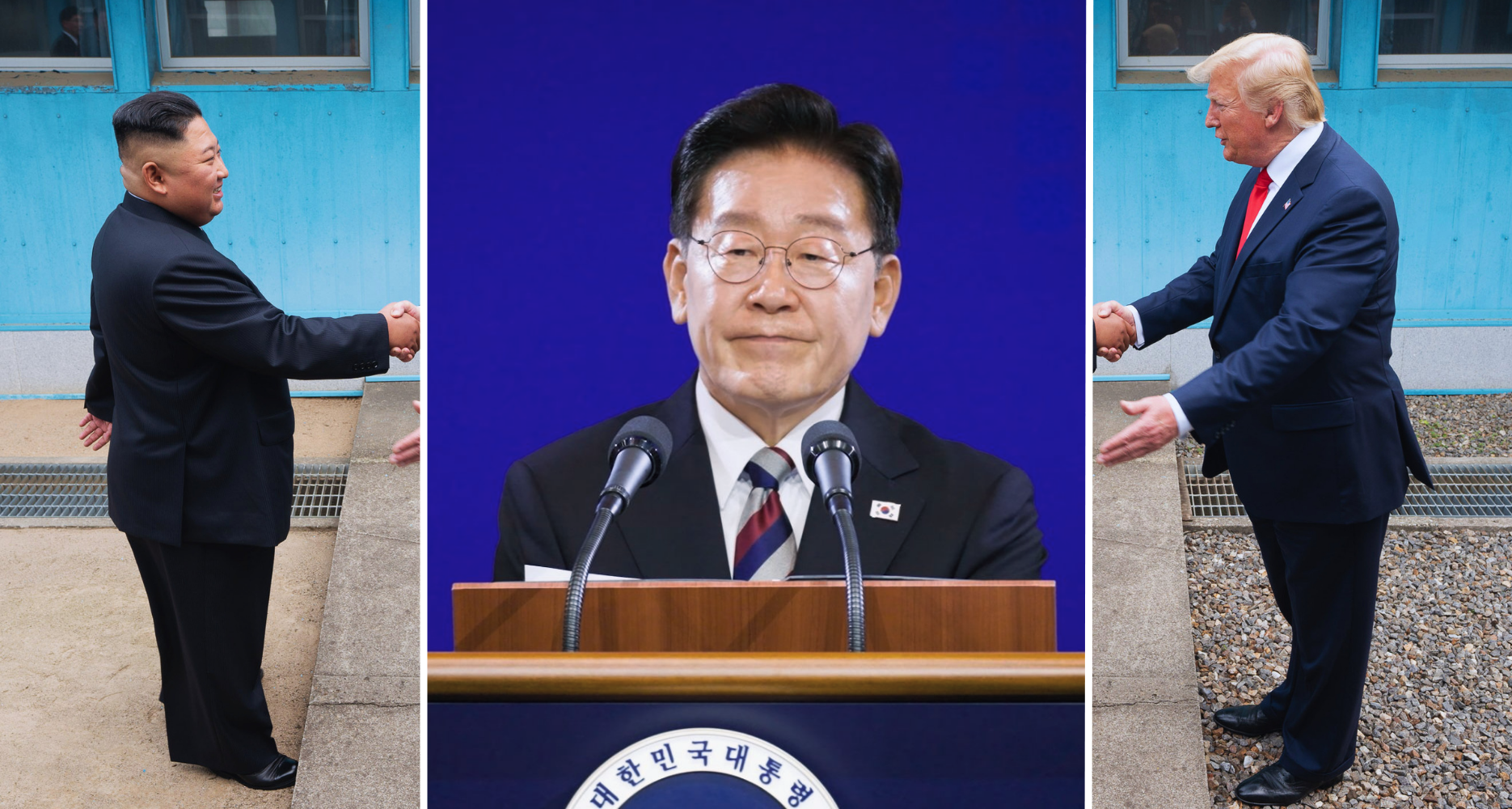
In a high-stakes diplomatic maneuver, South Korean President Lee Jae Myung has dismissed mounting concerns that Seoul risks being relegated to the sidelines should Washington and Pyongyang renew direct high-level engagement. Speaking during a wide-ranging press conference at the Blue House this past Friday, President Lee underscored his administration’s active, albeit quiet, role in facilitating the conditions necessary for a potential breakthrough between U.S. President Donald Trump and North Korean leader Kim Jong Un.
President Lee’s remarks come at a sensitive juncture in Northeast Asian geopolitics, as the region grapples with shifting security architectures and the persistent challenge of North Korea’s nuclear program. By positioning South Korea as the essential bridge between the two nuclear-armed protagonists, Lee is attempting to exert influence over a process that has historically threatened to leave the ROK without a seat at the table.
The Strategic Objective: Creating an Opening
The core of President Lee’s message was one of proactive mediation. Addressing reporters, Lee confirmed that South Korea is "continuing behind-the-scenes coordination" aimed at creating a viable opening for U.S.-DPRK dialogue. The rationale, according to the President, is that such a rapprochement is not merely an end in itself but a necessary prerequisite for the resumption of meaningful inter-Korean talks.
"Whether they can hold a summit is one thing, but what kind of agreement they will reach is a matter for later," Lee stated, exercising characteristic caution. He refused to be drawn into speculative timelines regarding a potential Trump-Kim meeting, noting that while the desire for such a summit exists, the operational realities remain fluid and complex.
A Chronology of Engagement: From Hanoi to 2026
To understand the weight of President Lee’s current efforts, one must look back at the trajectory of U.S.-DPRK relations over the last decade.
- 2018-2019: The Summit Era: The initial thawing of relations began with the PyeongChang Winter Olympics, leading to the historic Singapore Summit in 2018 and the subsequent Hanoi Summit in 2019. These events, while producing iconic imagery, ultimately struggled to translate diplomatic theater into concrete denuclearization steps.
- 2020-2024: The Period of Dormancy: Following the breakdown of working-level talks, the relationship entered a period of relative stagnation, exacerbated by the global pandemic and shifting political priorities in Washington. North Korea intensified its tactical missile development during this period.
- 2025: The Re-emergence: As the geopolitical landscape shifted in 2025, back-channel communications began to show signs of life. Analysts observed a subtle change in rhetoric from Pyongyang, shifting from pure belligerence to a more transactional stance regarding the U.S. political cycle.
- September 2026: Current Context: President Lee’s recent comments mark the most explicit confirmation of South Korean involvement in nearly two years. The administration is now attempting to synthesize the lessons of the failed Hanoi summit with the current realities of a more hardened North Korean nuclear posture.
Supporting Data: The Calculus of Diplomacy
The skepticism surrounding Lee’s strategy is rooted in hard data. North Korea’s nuclear capabilities have advanced significantly since the last face-to-face summit. According to intelligence reports synthesized by the Korea Risk Group and various international monitoring bodies, the DPRK has continued to expand its fissile material production and diversify its delivery systems, including solid-fuel intercontinental ballistic missiles (ICBMs) and tactical nuclear warheads.
Regional Security Metrics
| Metric | Trend (2024-2026) | Security Implication |
|---|---|---|
| Missile Testing | High Frequency | Demonstrates operational readiness |
| Inter-Korean Hotline | Intermittent | Limited crisis management capability |
| U.S.-ROK Drills | Regular/Integrated | Deterrence vs. Escalation tension |
For President Lee, the data suggests that waiting for "perfect" conditions is a recipe for inaction. By pushing for a summit, Seoul hopes to freeze the most dangerous aspects of North Korea’s weapons program, even if complete, verifiable, and irreversible denuclearization (CVID) remains a distant prospect.
Official Responses and Political Reactions
The Blue House press conference has triggered a flurry of responses from both domestic political factions and international observers.
Domestic Opposition
Conservative elements within the South Korean National Assembly have criticized the Lee administration, arguing that Seoul is overextending its influence. Critics contend that relying on a Trump-Kim summit risks repeating the "Hanoi collapse," where North Korea used the diplomatic process to buy time for military expansion without conceding any strategic assets.
Washington’s Stance
The U.S. State Department has remained characteristically opaque, emphasizing that while they appreciate the "support of our ROK allies," the ultimate decision-making process regarding a summit remains under the purview of the White House. Sources close to the Trump administration suggest that a summit would only be considered if there were "clear indications of a willingness to discuss substantive disarmament."
Pyongyang’s Silence
As of this writing, North Korean state media has not issued a formal response to President Lee’s comments. This silence is interpreted by many analysts as a tactical choice—allowing the DPRK to observe how the international community reacts before deciding whether to engage or issue a characteristic rebuff.
Implications: The Risks and Rewards of Mediation
The "Lee Doctrine" carries significant implications for the future of the Korean Peninsula.
The Risk of Being Sidelined
The primary fear in Seoul has long been the "Nixon-to-China" scenario: a sudden, direct deal between the U.S. and North Korea that prioritizes American security (e.g., stopping ICBM threats to the U.S. mainland) while leaving the ROK vulnerable to the DPRK’s short-range tactical nuclear arsenal. President Lee’s insistence on "coordination" is a direct attempt to preempt this outcome by ensuring that any U.S.-DPRK deal includes explicit security guarantees for South Korea.
The Opportunity for Inter-Korean Dialogue
Lee believes that a U.S.-DPRK summit could act as a "circuit breaker" for the current tension. If the existential threat posed by the U.S. is perceived to be lowered through a diplomatic agreement, Pyongyang might feel more confident in re-engaging with Seoul on lower-level humanitarian or economic issues. This is the "opening" Lee refers to—a window of opportunity to shift the relationship from one of kinetic tension to one of managed coexistence.
The Geopolitical Multiplier
Furthermore, the regional dimension cannot be ignored. China and Russia both play pivotal roles in the North Korean equation. A successful U.S.-DPRK summit could potentially alleviate some of the pressure on the current trilateral security framework involving the U.S., Japan, and South Korea, though it may also complicate relations with Beijing, which prefers the status quo over a sudden U.S.-led diplomatic breakthrough.
Conclusion: A High-Wire Act
President Lee Jae Myung is playing a high-stakes game of diplomatic poker. By staking his political capital on the potential for a U.S.-DPRK summit, he is attempting to steer a course between the dangers of total isolation and the risks of reckless engagement.
The path forward is fraught with obstacles. North Korea’s refusal to engage in meaningful disarmament talks, combined with the unpredictable nature of U.S. foreign policy, suggests that any summit would be a fragile, high-risk affair. Yet, as Lee noted on Friday, the alternative—a continuation of the current deadlock—is a path that offers no security, no progress, and an ever-increasing risk of miscalculation.
As the international community watches, the Blue House remains the central hub of a complex, behind-the-scenes effort to prevent a permanent drift toward conflict. Whether President Lee’s "opening" leads to a breakthrough or simply another chapter in the long, difficult history of Korean diplomacy remains to be seen. For now, Seoul is firmly holding onto the steering wheel, hoping that the diplomatic momentum it is creating will be enough to bring the parties to the table once more.


 Nana
Nana  Nila Kartika Wati
  Suro Senen
