
 By Dwi Wanna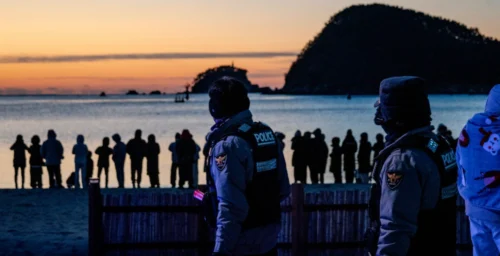
By Staff Reporter
Human rights advocates and representatives of the North Korean defector community in South Korea have launched a sharp critique against local news organizations, accusing them of professional negligence and ethical misconduct. The contention centers on the media’s propensity to explicitly highlight the "defector" status of suspects in criminal investigations, a practice critics argue serves no investigative purpose while actively fueling xenophobia and social alienation.
The outcry follows recent high-profile coverage of a domestic homicide investigation in which a woman was identified as a North Korean defector. Advocacy groups assert that such labeling is not merely descriptive but constitutes a sensationalist tactic designed to exploit the "otherness" of escapees, thereby reinforcing negative stereotypes that have long plagued the community in South Korea.
Main Facts: The Controversy Over Identity and Journalism
The core of the dispute lies in the editorial decision-making process of South Korean media outlets. When a suspect possesses a background as a North Korean defector, this detail is frequently placed in the headline or the lead paragraph of crime reports, regardless of its relevance to the motive or the nature of the crime.
Lee Eun-taek, secretary general of the Central Association of North Korean Defectors, expressed the frustration of many in the community during a recent interview with NK News. "I’m offended that they treat us like we will always be outsiders," Lee stated. For the defector community, the label is not just a descriptor of origin; it is a weight that carries the baggage of social stigma, economic hardship, and the ongoing struggle for integration.
Critics argue that by framing crimes through the lens of a perpetrator’s origin, the media creates a false narrative suggesting that such individuals are inherently prone to deviance. This, they argue, has tangible, harmful consequences for the thousands of defectors who are working to rebuild their lives in the South.
Chronology: A Pattern of Sensationalism
The criticism is not directed at a singular event, but rather a persistent pattern of reporting that spans several years.
- Mid-2020s: Several high-profile criminal cases involving individuals from North Korea were reported with heavy emphasis on the suspect’s refugee status. In these reports, phrases such as "a defector who fled the North" were used prominently, even when the crimes involved personal or financial disputes unrelated to the political or social conditions of their upbringing.
- January 2026: The Busan Metropolitan Police highlighted various social issues, drawing renewed attention to how law enforcement and media interact. This period saw a rise in the reporting of incidents involving defectors, often framed within a "social management" context rather than a standard criminal justice context.
- August 2026: A specific case involving a woman under investigation for the killing of her younger brother served as the catalyst for the current backlash. Major South Korean outlets identified the woman as a defector, sparking immediate condemnation from human rights groups who viewed the inclusion of her background as gratuitous.
- September 2026: Following the incident, advocacy groups began formalizing their opposition, calling for a change in journalistic standards regarding the disclosure of sensitive personal backgrounds in criminal reporting.
Supporting Data: The Socio-Economic Context of Defectors
To understand why this issue is so sensitive, one must look at the data surrounding the defector population. According to the Ministry of Unification in South Korea, there are over 34,000 North Korean defectors currently residing in the South. While many have successfully integrated into the workforce and society, they continue to face significant systemic barriers.
Data from the Korea Hana Foundation consistently highlights that defectors face higher rates of psychological distress, economic instability, and social discrimination compared to the average South Korean citizen. A significant portion of the population reports feeling a "hidden" status, where they actively conceal their origins to avoid prejudice in hiring and social interactions.
When media outlets broadcast these identities during criminal investigations, it exacerbates this climate of fear. For many, the label "defector" carries a dual stigma: the suspicion of being a "North Korean" (associated with political tensions) and the label of being a "criminal." This intersectional discrimination makes it increasingly difficult for defectors to escape the margins of society.
Official Responses and Ethical Debates
The media industry’s response has been largely defensive, citing the public’s "right to know" and the necessity of providing context in criminal reports. However, journalism ethics experts argue that the "right to know" must be balanced against the principle of "harm reduction."

The Media’s Perspective
Proponents of the current reporting style argue that the background of a suspect is a vital piece of personal information. They contend that if a suspect is a foreigner or an individual with a unique immigration history, it is standard journalistic practice to include that detail. They argue that excluding the background of a North Korean defector would be an act of "censorship" or an attempt to "sanitize" the news.
The Advocacy Perspective
Human rights activists counter that the comparison to "foreigners" is flawed. Defectors are, by constitutional definition, citizens of the Republic of Korea. By treating them as an "other," the media undermines their status as fellow citizens. Lee Eun-taek noted, "There are many murder cases in South Korea that have nothing to do with North Korea. Why is our background relevant only when it serves to make the news more shocking?"
Implications: The Long-term Social Impact
The implications of this journalistic trend extend far beyond the individual cases reported.
Erosion of Trust
When the media consistently frames defectors as "potential criminals," it erodes the trust between the North Korean community and South Korean institutions. This leads to a withdrawal from social services and a reluctance to report crimes to the police, as victims fear they will be treated with the same prejudice they see in the headlines.
Impact on Integration Policy
South Korea spends millions of won annually on the integration and settlement of North Korean defectors. When the media focuses on negative narratives, it undermines these policy goals. It fosters a climate where the public views the integration of defectors as a "security risk" rather than a humanitarian obligation.
The Need for Revised Editorial Guidelines
The current situation has sparked a call for the Korea Press Ethics Commission to develop clear guidelines regarding the reporting of individuals from sensitive backgrounds. These guidelines would likely suggest:
- Relevance Testing: Does the suspect’s background directly contribute to the public’s understanding of the crime?
- Harm Mitigation: Is the inclusion of this information likely to cause undue stigma to an entire demographic?
- Language Sensitivity: Using descriptive, neutral language rather than loaded terms that emphasize the suspect’s status as a "refugee" or "escapee."
Conclusion: A Call for Journalistic Maturity
The controversy over how the South Korean media covers criminal suspects who are North Korean defectors is a microcosm of a broader struggle for identity and inclusion. As South Korea continues to grapple with the complexities of potential reunification and the current reality of a divided peninsula, the role of the media in shaping public perception cannot be overstated.
Journalists have a responsibility to report the facts, but they also have a duty to consider the impact of their words on marginalized communities. The demand from activists is clear: they are not asking for an exemption from the law, nor are they asking for crimes to be covered up. They are asking for a professional standard that treats them as individuals rather than symbols.
By moving away from sensationalist labeling, the South Korean media has the opportunity to play a constructive role in the integration of North Korean defectors. A more nuanced, ethical approach to reporting would not only improve the quality of journalism but also contribute to a more inclusive society where the legacy of the North-South divide is treated with the gravity and empathy it deserves.
As the debate continues, it serves as a reminder that the ink used to print the news leaves a lasting mark on the people it describes. It is time for the media to ensure that this mark is one of truth, not one of unnecessary prejudice.


 Ammar Sabilarrohman
  Pevita Pearce
  Nana Wu
