
 By Suro Senen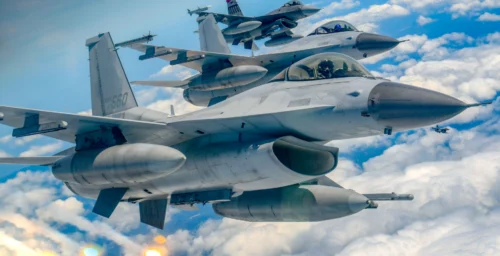
Main Facts: A Resolute Commitment to Aerial Integration
The Republic of Korea (ROK) Air Force and the United States Air Force (USAF) have commenced the second iteration of the "Buddy Squadron" (known in Korean as Ssangmae) exercise for the 2026 calendar year. The four-day battalion-level joint air drill, which began this past Monday at Jungwon Air Base, approximately 120 kilometers (75 miles) southeast of Seoul, serves as a cornerstone of the bilateral security architecture between Washington and Seoul.
This exercise represents a deliberate move to maintain high-level readiness despite the complex geopolitical atmosphere of the Korean Peninsula. The air drills feature a formidable array of advanced aviation assets, including South Korean F-16s, KF-16s, the cutting-edge F-35A stealth fighters, and the domestically produced FA-50 light attack aircraft. These are complemented by the deployment of American F-16 Fighting Falcons, ensuring that pilots from both nations achieve a high degree of tactical synergy. The primary objective is to hone joint response capabilities, enhance communication protocols, and solidify the "fight tonight" posture that characterizes the ROK-U.S. alliance.
Chronology: The Evolution of Bilateral Air Exercises
The "Buddy Squadron" series has historically undergone significant transformations in terms of frequency, scope, and strategic signaling.
Pre-2018: The Era of Large-Scale Drills
Historically, U.S.-ROK aerial training was defined by massive, highly publicized exercises like Vigilant Ace. These drills involved hundreds of aircraft and tens of thousands of personnel, aimed at sending clear deterrent messages to Pyongyang. However, following the 2018 diplomatic thaw and the subsequent summits between then-President Donald Trump and North Korean leader Kim Jong Un, these large-scale exercises were significantly scaled back or suspended to facilitate denuclearization negotiations.
2019–2023: Tactical Refinement and Adaptation
As diplomatic momentum stalled, the allies pivoted toward smaller, more frequent, and highly specialized drills. The "Buddy Squadron" program was designed to fill the void left by the cancellation of massive exercises, focusing on decentralized training at the squadron level. This shift allowed for deeper technical integration—such as air-to-air refueling practice, precision strike simulations, and electronic warfare drills—without the massive logistical footprint that often triggered aggressive rhetorical responses from North Korea.
2024–2026: A New Normal
The current exercise, the second in 2026, reflects a "new normal." The frequency of these drills has been carefully calibrated to balance the requirement for combat readiness with the strategic goal of regional stability. By conducting these exercises at Jungwon Air Base, the allies demonstrate their commitment to maintaining a credible air defense posture that is robust enough to deter aggression while being tactically flexible.
Supporting Data: The Arsenal of Interoperability
The success of the Buddy Squadron exercise relies on the seamless integration of disparate aircraft platforms. The combination of fourth and fifth-generation fighters is a deliberate tactical choice:
- F-35A Lightning II: Acting as the "quarterback" of the formation, the F-35A provides unparalleled situational awareness and stealth capabilities, allowing it to penetrate contested airspace and relay target data to other platforms.
- KF-16 and F-16 Fighting Falcons: These workhorse platforms are the backbone of the joint force, tasked with air-to-air superiority and suppression of enemy air defenses (SEAD).
- FA-50 Light Combat Aircraft: The inclusion of the FA-50 highlights the growing maturity of the ROK defense industry. It serves as an effective platform for training and light attack roles, proving its value as a cost-effective, high-performance asset in a modern combat environment.
The integration of these aircraft during the four-day window at Jungwon allows pilots to practice real-time data link sharing, mission planning, and coordinated maneuvers. These drills are not merely about flying; they are about harmonizing the "software" of the alliance—the rules of engagement, the digital communication links, and the trust between individual pilots.
Official Responses and Strategic Rationale
While the South Korean Ministry of National Defense (MND) has maintained a measured tone regarding the exercise, the strategic intent is clear. Officials have repeatedly stated that these drills are "defensive in nature" and are essential for maintaining the integrity of the ROK-U.S. combined defense posture.
The ROK Perspective
The South Korean military emphasizes that the Buddy Squadron exercises are crucial for maintaining the technical edge required to neutralize potential aerial threats from the North. By rotating the location of the drills and varying the types of participating aircraft, the ROK Air Force ensures that its personnel remain adaptable to a wide range of combat scenarios.

The U.S. Stance
From the U.S. perspective, these exercises are a practical manifestation of the "Ironclad" commitment to the defense of South Korea. Washington views the drills as an opportunity to test the interoperability of U.S. forces stationed in the Indo-Pacific with their ROK counterparts. The presence of U.S. F-16s in these exercises signals to regional actors that the U.S. remains deeply committed to its extended deterrence obligations.
The Pyongyang Factor
Historically, North Korea has condemned these exercises as "rehearsals for invasion." State media in Pyongyang frequently issues bellicose warnings, characterizing the presence of advanced stealth fighters and joint tactical drills as a provocation that warrants a "merciless" response. However, analysts note that while North Korea uses these exercises as a pretext for its own missile tests and weapons development, the allies have largely adopted a policy of proceeding with the drills regardless of the rhetoric from the North.
Implications for Regional Security
The continuation of the Buddy Squadron exercise series has several profound implications for the security architecture of Northeast Asia.
1. Deterrence Through Credibility
The ability to sustain a consistent tempo of joint training, despite political pressure, strengthens the credibility of the ROK-U.S. alliance. It demonstrates that the two nations can coordinate complex aerial operations with precision, serving as a powerful deterrent against any potential North Korean miscalculation.
2. Technological Evolution
The exercise provides a testing ground for the integration of new technologies. As both nations modernize their fleets, the ability to link legacy systems with modern, sensor-fused platforms like the F-35A is a significant force multiplier. This evolution ensures that the alliance remains technologically superior to regional adversaries.
3. Managing the Escalation Ladder
By opting for squadron-level drills over massive joint exercises, the allies have created a "sweet spot" in their security strategy. They maintain the necessary readiness levels without creating an environment of permanent, high-intensity tension that could lead to an accidental kinetic escalation. This approach reflects a sophisticated understanding of the escalation ladder, allowing the allies to "dial up" or "dial down" their military activities based on the current threat environment.
4. Regional Geopolitics
The drills also serve as a reminder to other regional powers—namely China and Russia—that the U.S.-ROK security architecture is not just a legacy of the Cold War but a dynamic, active, and highly integrated military force. In an era of increasing regional competition, the strength of this bilateral air alliance serves as a stabilizing factor, ensuring that the ROK remains a key player in the security of the Indo-Pacific.
Conclusion: Looking Ahead
As the four-day exercise at Jungwon Air Base draws to a close, the focus for military planners will shift to analyzing the data collected during the drills. The lessons learned in the skies over Korea will be integrated into future training cycles, ensuring that the ROK and U.S. air forces remain the preeminent aerial power in the region.
While the "Buddy Squadron" drills may not garner the same headlines as the massive, high-profile exercises of the past, their significance cannot be overstated. They are the daily grind of diplomacy and defense—the quiet, necessary work of keeping an alliance sharp, responsive, and ready. In the complex and often unpredictable security environment of the Korean Peninsula, this steady commitment to air-to-air integration remains the most effective tool for maintaining the peace.


 Ammar Sabilarrohman
  Pevita Pearce
  Nana Wu
