
 By Nana Wu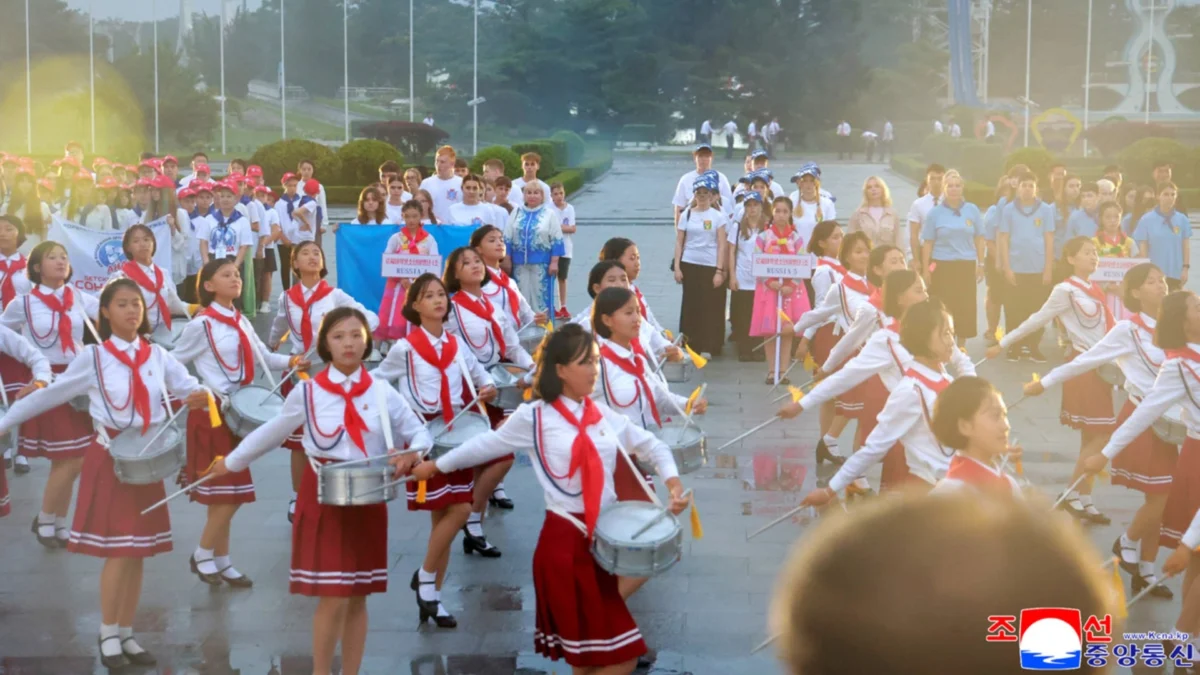
The geopolitical landscape surrounding the Korean Peninsula is bracing for another significant fracture. Recent reports suggest that the European Union is preparing to designate the Songdowon International Children’s Camp—a facility located on the coast of North Korea—as a target for new sanctions. This move, intended to punish entities facilitating cooperation with Russia amidst the ongoing war in Ukraine, has drawn sharp warnings from analysts who suggest that while the practical economic impact may be negligible, the political ramifications could trigger a dangerous new cycle of hostility between Pyongyang and the West.
The Core Conflict: Why Target a Children’s Camp?
The proposed European Union sanctions are reportedly part of a broader, sweeping package aimed at curtailing Russia’s military and logistical efforts in Ukraine. According to a draft report surfaced by Radio Free Europe/Radio Liberty (RFE/RL), Brussels is looking to tighten the net on entities accused of participating in the alleged abduction and indoctrination of Ukrainian youth.
Songdowon, a prestigious facility frequently used by the North Korean state to showcase its socialist ideals, has become a focal point of Western scrutiny. For the EU, the camp is not merely a recreational center but a site of ideological indoctrination. The Western narrative posits that by hosting children from Russian-occupied territories or facilitating exchanges that serve the Kremlin’s geopolitical narrative, Songdowon has transitioned from a diplomatic outreach tool into an active participant in a war-related policy that the EU views as illegal.
However, critics of the move argue that targeting a facility primarily framed as a youth exchange program pushes the boundaries of traditional sanctions, moving the target from high-level military industrial complexes to social and cultural infrastructure.
Chronology of a Diplomatic Deterioration
The potential EU designation does not exist in a vacuum; it follows a well-established pattern of increasing friction between North Korea and European nations.
- May 2026: The United Kingdom takes the lead in international isolation efforts by officially sanctioning the Songdowon International Children’s Camp. The U.K. government cites the camp’s role in the "indoctrination of Ukrainian youth" as the primary justification.
- June 2026: The reaction from Pyongyang is swift and aggressive. A diplomatic scandal erupts as North Korea vehemently denies the allegations, labeling the sanctions a "vicious provocation" and an infringement on its sovereign right to conduct international cultural exchanges.
- July 2026: The tension manifests in tangible diplomatic retaliation. North Korea recalls its recently appointed ambassador to the U.K. after only one month in the post, effectively freezing normal diplomatic channels.
- August 2026: Pyongyang begins issuing public demands, suggesting that the reopening of the British Embassy in North Korea—which has been shuttered for years—is now contingent on the reversal of these sanctions.
- September 2026: Reports emerge that the European Union is poised to adopt a similar stance to that of the United Kingdom, threatening to expand the scope of the diplomatic crisis to the continental level.
Supporting Data and the "Symbolic" Reality
Experts monitoring the situation suggest that the financial impact of these sanctions will be minimal. Songdowon does not rely on European capital, nor does it engage in the type of international trade that is typically vulnerable to EU banking restrictions. As such, the move is widely viewed as a political signal rather than an economic weapon.
"The EU is sending a message that there is no ‘grey zone’ for cooperation with Russia," says a regional security analyst. "By sanctioning Songdowon, they are targeting the soft power assets of the DPRK. It is a signal to Pyongyang that their deepening ties with Moscow—specifically regarding the war in Ukraine—will carry a cost across every facet of their international engagement."
Data from the Korea Risk Group and other monitoring bodies indicate that North Korea’s reliance on Russian support has surged since 2024. The frequency of high-level delegations and youth exchanges has increased, serving as a vital propaganda tool for both Moscow and Pyongyang. By sanctioning the physical manifestation of this alliance, the EU is attempting to stigmatize these exchanges, making it increasingly difficult for other neutral nations to engage with North Korean state institutions without facing secondary sanction risks.
Official Responses: The Clash of Narratives
The divergence in perspectives between Brussels and Pyongyang is stark.

The European Perspective:
EU officials, speaking on condition of anonymity, maintain that the sanctions are a necessary extension of their human rights and rule-of-law framework. The argument is that if a facility is used to host children forcibly removed from their home country—a central pillar of the accusations surrounding the Ukraine war—then that facility loses its status as a protected cultural site and becomes a logistical node in a conflict-related enterprise.
The North Korean Perspective:
Pyongyang has consistently framed the sanctions as "political terrorism." In state media reports, the DPRK foreign ministry has characterized the sanctions as a "desperate attempt by decaying Western powers to stifle the development of our youth and isolate our state." North Korean officials argue that the camps are purely for the purpose of "socialist education and international solidarity," and that the West’s focus on the camp is a reflection of their own "hostile policy" aimed at regime change.
Implications for Future Diplomacy
The move toward sanctioning the Songdowon Camp carries several long-term risks for international diplomacy.
1. The Shrinking Space for Dialogue
By targeting institutions that North Korea considers "pride points," the EU is effectively closing off avenues for low-level engagement. Historically, cultural and educational exchanges have served as the "backchannel" for diplomacy when formal ties are severed. When these are sanctioned, the remaining channels for communication between the West and Pyongyang become strictly restricted to military and nuclear negotiations, which are currently at a total standstill.
2. Deepening the Russia-DPRK Axis
If the EU moves forward, North Korea is likely to lean even harder into its alliance with Russia. Pyongyang may view the sanctions as confirmation that the West is irredeemably hostile, thereby justifying a total pivot toward Moscow and Beijing. This could lead to a more rigid "Cold War" alignment, where North Korea provides Russia with the logistical and political cover it needs in exchange for economic and technological support that bypasses Western oversight entirely.
3. Diplomatic Reciprocity
The U.K. experience serves as a cautionary tale. Once sanctions hit, the "tit-for-tat" cycle begins. North Korea has already shown that it is willing to sacrifice the presence of its own diplomats in Western capitals to prove a point. If the EU follows suit, it could result in the expulsion of European diplomatic staff from Pyongyang or the permanent closure of remaining European missions in the North. This would leave the international community virtually "blind" to developments within the hermit kingdom.
4. A Precedent for "Soft Target" Sanctions
The expansion of sanctions to include educational and youth-oriented facilities marks a shift in international relations. While human rights advocates argue that this is a necessary step to hold regimes accountable, some legal scholars warn of the precedent it sets. If children’s camps are legitimate targets for economic warfare, the list of entities that qualify as "legitimate targets" could expand significantly, further blurring the lines between state actors and civilian infrastructure.
Conclusion
The potential sanctioning of the Songdowon International Children’s Camp is a high-stakes gamble for the European Union. While it fulfills the goal of aligning European policy with the broader international condemnation of the war in Ukraine, it risks pushing North Korea further into a corner from which it has little incentive to emerge.
As the international community watches, the primary question remains: is the symbolic victory of sanctioning a youth camp worth the potential cost of completely severing the remaining diplomatic threads that connect Pyongyang to the West? For now, the answer from Brussels appears to be yes, but the echoes of this decision will likely be felt in the halls of Pyongyang for years to come, potentially solidifying a divide that the world may struggle to bridge for decades.
 Ammar Sabilarrohman
  Pevita Pearce
