 By Iffa Jayyana

A prominent South Korean television personality, Lee Kyung Kyu, has found himself at the center of an unexpected online debate after a recent visit to his former residence in Japan. The incident, captured in a YouTube video, saw the veteran entertainer attempting to gain entry into a private Japanese home he once inhabited three decades ago, a request that was politely but firmly denied by the current occupants. This seemingly innocuous moment rapidly ignited a discourse among netizens, highlighting the complex interplay of celebrity culture, personal privacy, and cross-cultural etiquette.
The Nostalgic Return and the Unforeseen Hurdle
The controversy began to unfold on October 29th, when a segment featuring Lee Kyung Kyu was uploaded to YouTube. The video documented his heartfelt journey back to Japan, specifically to the neighborhood where he had resided during his student days some 30 years prior. Lee Kyung Kyu, a figure revered in Korean entertainment for his decades-long career as a comedian, host, and "Godfather of Korean Variety," embarked on this trip with a clear sense of nostalgia, hoping to reconnect with a significant period of his past. Despite the considerable changes the area had undergone over the years, Lee Kyung Kyu, with remarkable precision, managed to locate the very "luxurious mansion" that had once been his home.
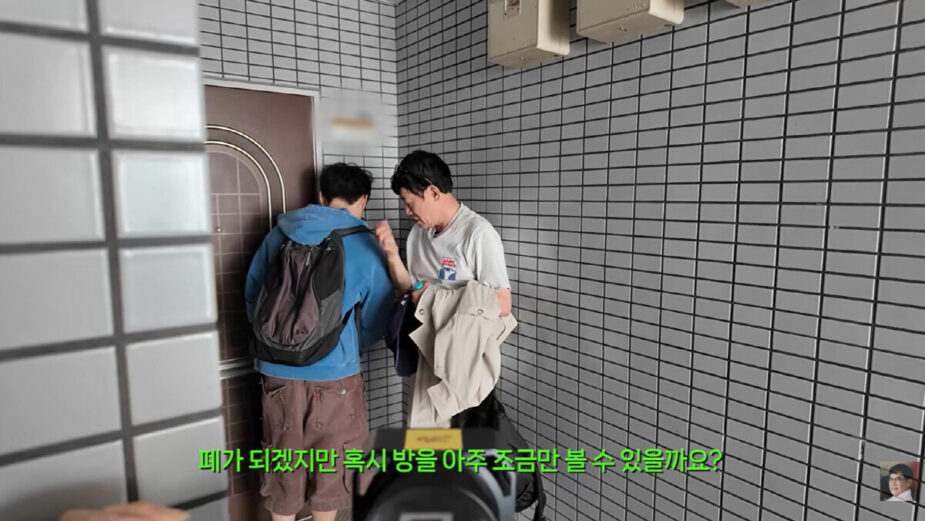
Overwhelmed by emotion and the weight of memories, he paused for a commemorative photograph in front of the residence. However, his desire to fully immerse himself in the past extended beyond a simple photo opportunity. Driven by a compelling urge to revisit the interior of the house, he suggested to his accompanying crew, "Shall we ask if someone lives here?" This spontaneous query, born from a deep personal connection to the property, set the stage for the subsequent cultural friction.
The Delicate Request and the Firm Refusal
Acting as a crucial intermediary, the interpreter accompanying Lee Kyung Kyu approached the current homeowner. The request was phrased with utmost politeness and caution, attempting to balance the celebrity’s unique circumstance with respect for privacy. "A famous celebrity from Korea lived here 30 years ago," the interpreter explained. "Though we don’t want to bother you, could we take a quick look inside one of the rooms?" The carefully chosen words aimed to convey the special nature of the visit while acknowledging the potential imposition.

However, the homeowner’s response was swift and unambiguous, delivered with characteristic Japanese politeness: "That’s difficult." This succinct phrase, while not overtly confrontational, served as a clear and definitive refusal. Understanding the homeowner’s stance and the cultural implications of pushing further, the interpreter promptly apologized for any inconvenience caused. Consequently, Lee Kyung Kyu, without having gained entry, left the premises, his wistful hope of stepping back in time unfulfilled.
Netizen Reactions: A Divided Digital Forum
The public’s response to this sequence of events, particularly after an online community post titled "Lee Kyung Kyu’s Latest Status" circulated on November 4th, proved to be sharply divided. Korean netizens, accustomed to the often unscripted and boundary-pushing nature of their domestic reality television, offered a spectrum of opinions.
One segment of the online community expressed intrigue, describing the incident as "truly unplanned" and finding the unexpected turn of events compelling. For these viewers, the refusal added a layer of raw, unscripted reality that often defines popular variety shows, where unexpected challenges or rejections can be part of the entertainment value. They viewed it as an authentic moment, highlighting the unpredictable nature of celebrity interactions with the public.
Conversely, a significant portion of netizens voiced strong criticism, perceiving Lee Kyung Kyu’s request as an overreach and a disregard for private property rights, especially in a foreign country. Comments such as "The filming style only worked because of his celebrity status in Korea and failed here" underscored the perception that celebrity privilege had been inappropriately applied. Other critiques were more direct: "Private spaces shouldn’t be violated just because it’s for filming" and "It’s a nuisance." These reactions highlighted a prevalent concern for personal boundaries and the potential for celebrity-led productions to infringe upon individual privacy. The debate extended beyond the immediate incident, touching upon broader questions of cultural sensitivity and the ethics of content creation.
Cultural Nuances: Japan’s Emphasis on Privacy
At the heart of this controversy lies a fundamental difference in cultural norms regarding privacy and public interaction, particularly between South Korea and Japan. In South Korea, while privacy is valued, the landscape of reality television and celebrity culture often blurs the lines between public and private spaces. Shows frequently feature celebrities’ homes, impromptu street interviews, and interactions with the public that might be considered intrusive in other cultures. The "unplanned" and "spontaneous" elements are often celebrated, and fans might even expect a certain level of accessibility from their beloved stars. While not every Korean celebrity would attempt to enter a stranger’s home, the general environment might foster a greater sense of possibility for such interactions.

Japan, however, operates under a distinctly different set of social codes. The concept of meiwaku (迷惑), or causing trouble/nuisance to others, is deeply ingrained in Japanese society. Respect for private property, personal space, and the avoidance of imposing on others are paramount. Direct, unannounced requests to enter a private residence, even from a well-intentioned celebrity, are generally viewed as highly unusual and intrusive. Japanese homeowners typically maintain strict boundaries between their private lives and the public sphere. A polite but firm refusal, such as "That’s difficult" (それはちょっと難しいです – Sore wa chotto muzukashii desu), is a culturally appropriate way to decline without causing direct offense, yet leaving no room for negotiation. This cultural context strongly suggests that the homeowner’s decision was not a personal slight against Lee Kyung Kyu but rather an adherence to deeply held societal norms.
Lee Kyung Kyu’s Legacy and Context
Lee Kyung Kyu, born in 1960, is an undisputed titan in the South Korean entertainment industry. With a career spanning over four decades, he is renowned for his quick wit, sharp comedic timing, and often blunt but endearing persona. He has hosted countless popular variety shows, film award ceremonies, and has been instrumental in shaping the careers of many younger comedians and television personalities. His influence is so profound that he is often referred to as the "Godfather of Korean Variety."
Given his stature, it is plausible that Lee Kyung Kyu’s request stemmed from a genuine emotional connection to his past and perhaps an expectation that his celebrity status, well-recognized within Korea, might facilitate a moment of sentimental indulgence. In Korea, such a request, while still potentially intrusive, might be met with more leniency or even excitement from a fan, depending on the context. However, translating this cultural dynamic directly to a different national context, especially one with such stringent privacy norms as Japan, proved to be a miscalculation. His journey was ostensibly for a YouTube segment, a platform where content creators often seek unique, authentic, and sometimes boundary-pushing interactions to engage viewers. This incident underscores the challenges of navigating such content creation across international borders.
The Role of the Interpreter and Production Ethics
The interpreter’s role in this scenario was critical. Their careful phrasing of the request, highlighting Lee Kyung Kyu’s celebrity status and his historical connection to the house while simultaneously expressing a desire "not to bother," demonstrates an awareness of the cultural sensitivity required. Their immediate apology upon refusal further illustrates an understanding of Japanese etiquette. This highlights the crucial role of local guides and cultural experts when media productions venture into foreign territories.
For the YouTube channel and its production team, the incident presents a learning opportunity. While the desire for "unplanned" and "authentic" content is strong in the digital age, such authenticity must be balanced with ethical considerations and respect for local customs. Production teams planning international shoots are increasingly expected to conduct thorough cultural sensitivity checks, obtain necessary permits, and, where private property is involved, secure explicit prior consent, even for seemingly innocuous requests. The incident serves as a stark reminder that what might be considered acceptable or even endearing spontaneity in one cultural context can be perceived as an unwelcome intrusion in another.
Broader Implications for K-Content and International Filming
This minor controversy carries broader implications for the rapidly expanding global reach of K-content. As Korean dramas, music, and variety shows gain international traction, the production companies and individual celebrities involved will increasingly operate across diverse cultural landscapes. This incident serves as a case study in the challenges of maintaining authentic content while adhering to international ethical standards and local customs.
The debate sparked by Lee Kyung Kyu’s visit underscores the need for K-content creators to adopt a highly nuanced approach when filming abroad. This includes:
- Pre-production Research: Extensive research into the social customs, legal frameworks, and privacy expectations of the host country.
- Local Liaisons: Engaging experienced local production teams or consultants who can advise on cultural sensitivities and facilitate interactions.
- Clear Consent Protocols: Establishing rigorous protocols for obtaining explicit consent, especially when involving private individuals or properties, well in advance of filming.
- Training for Talent: Educating celebrities and on-screen talent about cultural differences to prevent unintentional faux pas.
In an era where social media can instantly amplify perceived missteps, incidents like this can quickly escalate, potentially impacting the image of individual stars and even the broader perception of a national media industry. While Lee Kyung Kyu’s controversy is relatively minor, it highlights a critical area for growth and adaptation within the thriving K-content ecosystem.
Lessons Learned and Future Outlook
The incident involving Lee Kyung Kyu’s visit to his former residence in Japan, while perhaps an unintended consequence of a nostalgic journey, offers valuable insights into the complexities of international media production and cross-cultural communication. It serves as a vivid reminder that celebrity status, while affording certain privileges, does not transcend universal principles of privacy and respect for personal boundaries, particularly in cultures where such values are deeply ingrained.
For Lee Kyung Kyu, it was likely a moment of personal reflection and a lesson in cultural adaptation. For the production team, it reinforces the necessity of meticulous planning and cultural due diligence when creating content for a global audience. And for netizens, it sparked a healthy debate on the ethics of reality television, the responsibilities of public figures, and the delicate balance between capturing authentic human moments and respecting individual privacy. As K-content continues its global expansion, such incidents, while potentially challenging, offer crucial learning opportunities that will ultimately contribute to more culturally sensitive and ethically sound productions in the future. The conversation it ignited is a testament to the growing global interconnectedness and the continuous need for understanding and respect across diverse cultural landscapes.

