
 By Reynand Wu

In the landscape of international journalism, undercover reporting is often hailed as a necessary, if hazardous, instrument for exposing the inner workings of reclusive regimes. Yet, the ethical foundation of such work rests entirely on the integrity of the narrative. Anne-Isabelle Tollet, a prominent French journalist and former France 24 correspondent, recently published North Korea: Marathon in a Forbidden Country, a book detailing what she describes as a "clandestine incursion" into the Democratic People’s Republic of Korea (DPRK) to participate in the 31st Pyongyang International Marathon in April 2025.
However, an extensive investigation by NK News has uncovered a series of structural inconsistencies, logistical impossibilities, and official denials that directly contradict the book’s central premise. By comparing Tollet’s narrative against race records, travel logs, and expert testimony from North Korean tourism insiders, the account emerges not as a factual chronicle of a daring investigative feat, but as a collection of details that fail to align with the reality of the event.
The Premise: A Journalist’s Clandestine Incursion
Tollet’s book frames the Pyongyang International Marathon—a rare event that allows foreigners to traverse the streets of the North Korean capital—as the perfect cover for a journalist persona non grata. She claims that by posing as an amateur runner, she bypassed the stringent vetting processes used by the DPRK to screen foreign visitors, specifically those with backgrounds in media.

"The first 400 meters pass in a blur, carried by the cheers of 50,000 spectators," Tollet writes. "I run without feeling my legs, swept along by the noise, by the adrenaline." This vivid imagery forms the heartbeat of her book. Yet, as questions regarding her presence in the country grow, the author maintains that she achieved her goal, though she refuses to provide evidence of how she navigated the country’s famously impenetrable bureaucracy, citing the need to protect her "trade secrets."
Chronology of Inconsistencies
The discrepancies in the book begin with the logistics of the trip. The 2025 Pyongyang Marathon was a tightly controlled affair, with Koryo Tours acting as the exclusive partner for Western tourists.
The Application Conflict
According to Koryo Tours, the agency was approached by Tollet regarding a potential tour booking. After standard vetting revealed her status as a journalist, the agency, acting in accordance with its protocols for North Korean entry, formally rejected her application and processed a refund for her deposit.

Tollet’s book, however, paints a different picture. She suggests that after an initial inquiry, she received an email from an unnamed agency confirming her place in the race after she claimed to be a bookstore employee. Koryo Tours acknowledges this exchange occurred but maintains that the invitation was revoked shortly thereafter, and that the application was never submitted to North Korean authorities.
Travel Dates and Flight Records
The timing of Tollet’s described itinerary creates further friction with verifiable facts. She claims to have arrived in Pyongyang on April 2, 2025, four days before the race. However, the official Koryo Tours packages for that year were limited to two windows: April 3–8 and April 5–10.
Furthermore, her account of a departure on the morning of April 7 is unsupported by aviation data. There were no scheduled passenger flights from Pyongyang to Beijing on that date, and none of the authorized tour groups utilized such an early departure. This suggests that the author was operating outside of the logistical framework available to all other international participants.
Supporting Data: The Evidence of the Bib
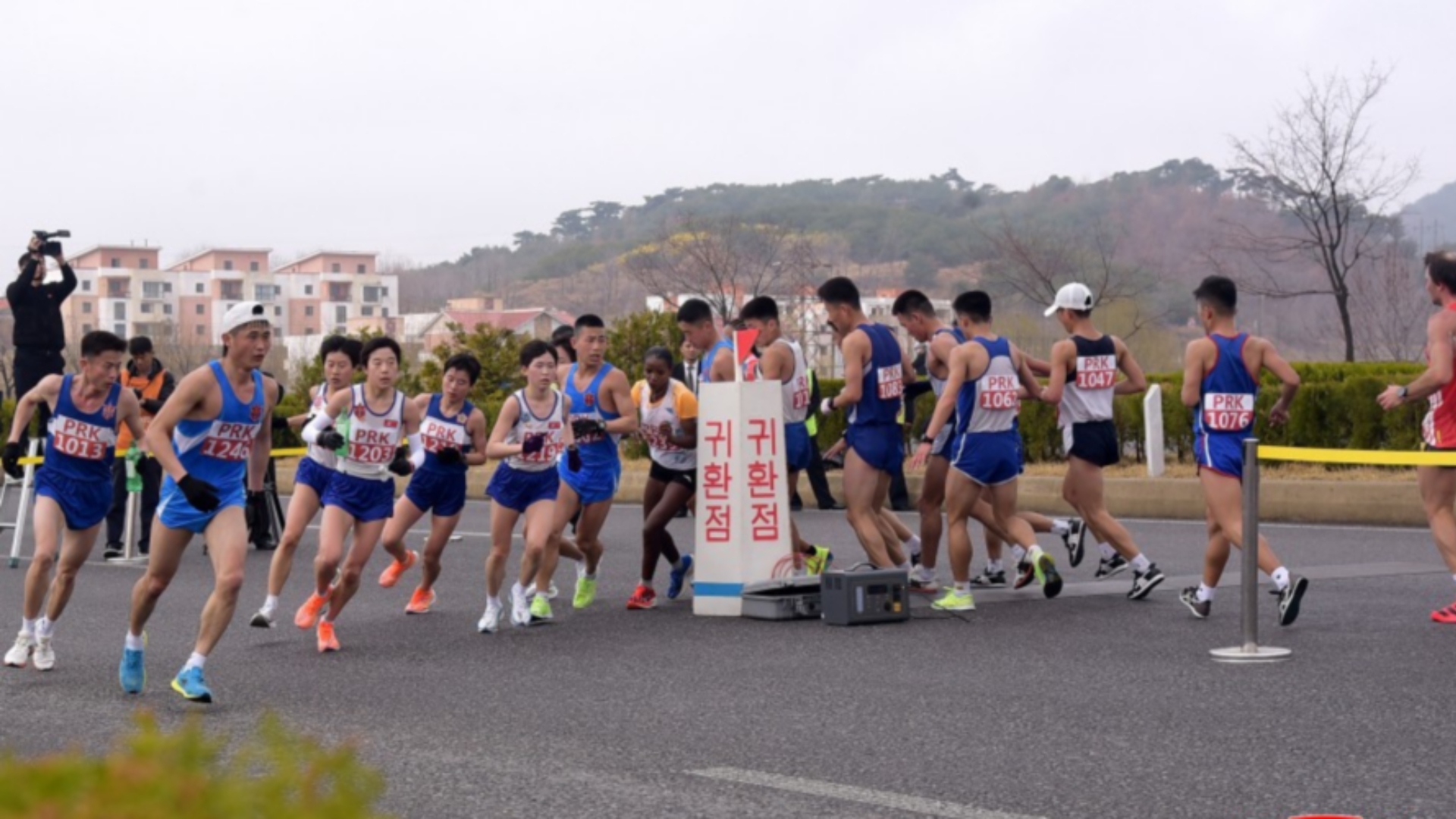
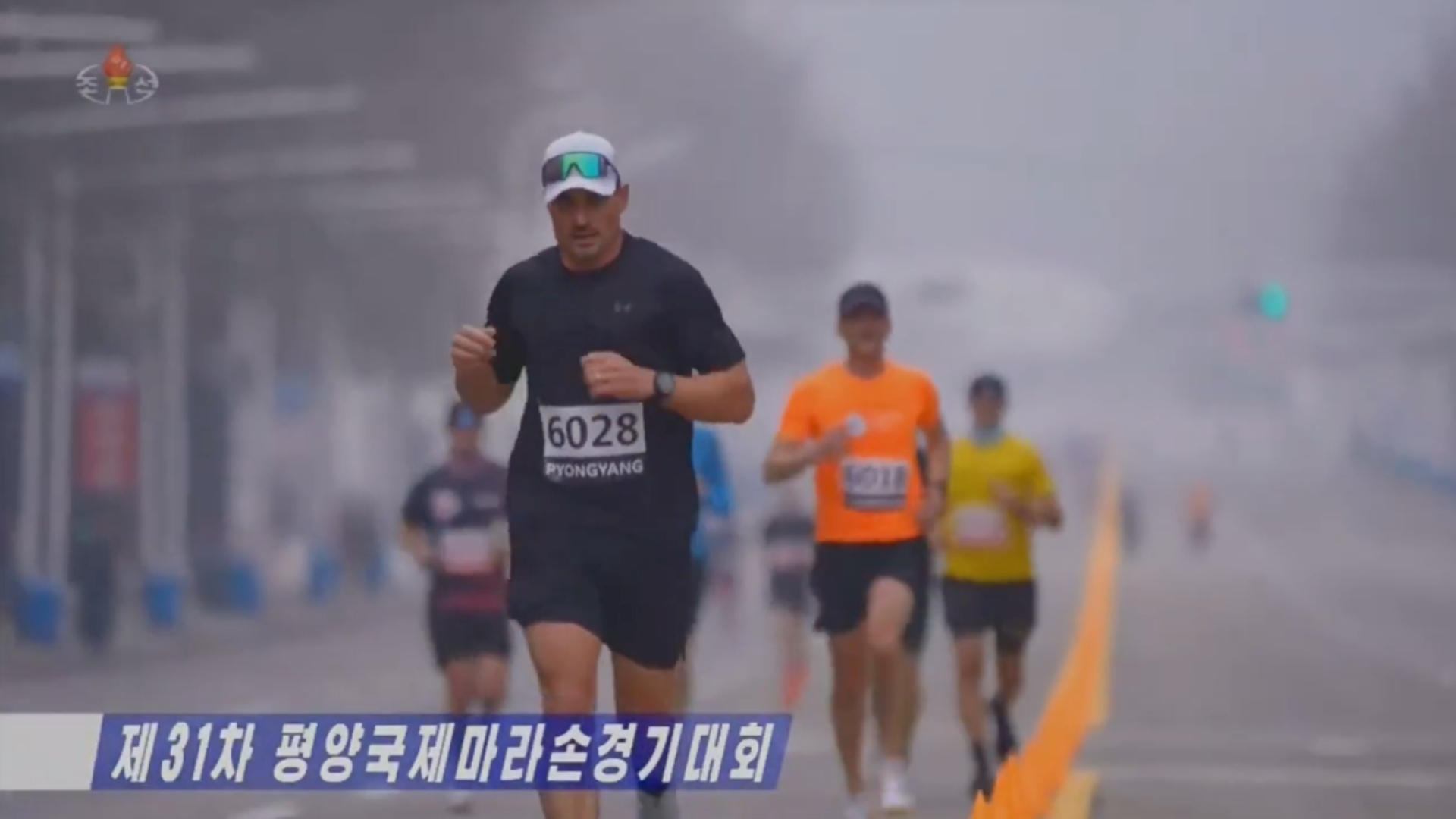
Perhaps the most damaging piece of evidence concerns her participation in the race itself. Tollet identifies herself as holding race bib #1407. According to Simon Cockerell, general manager of Koryo Tours, this number is a red flag.
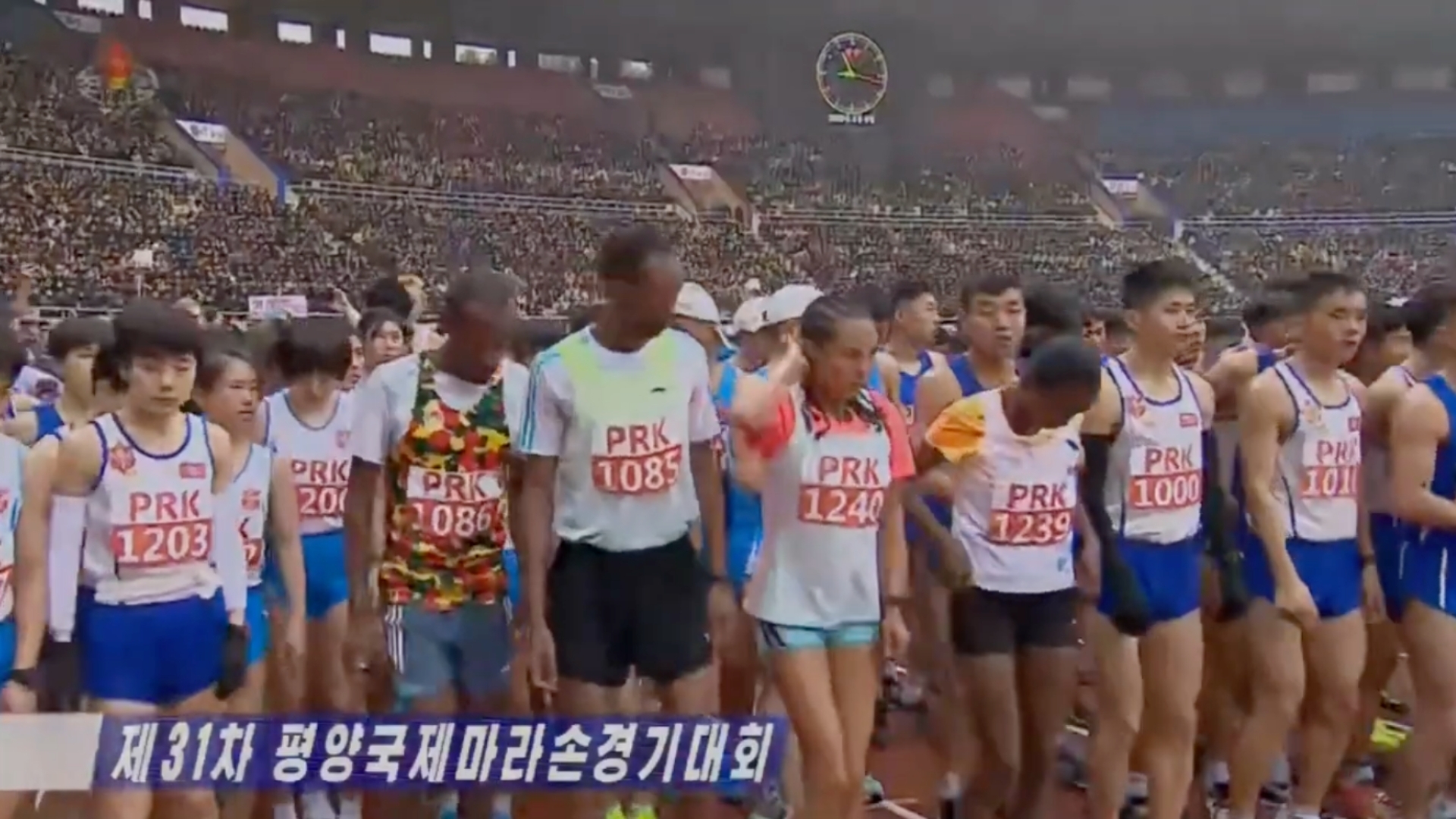
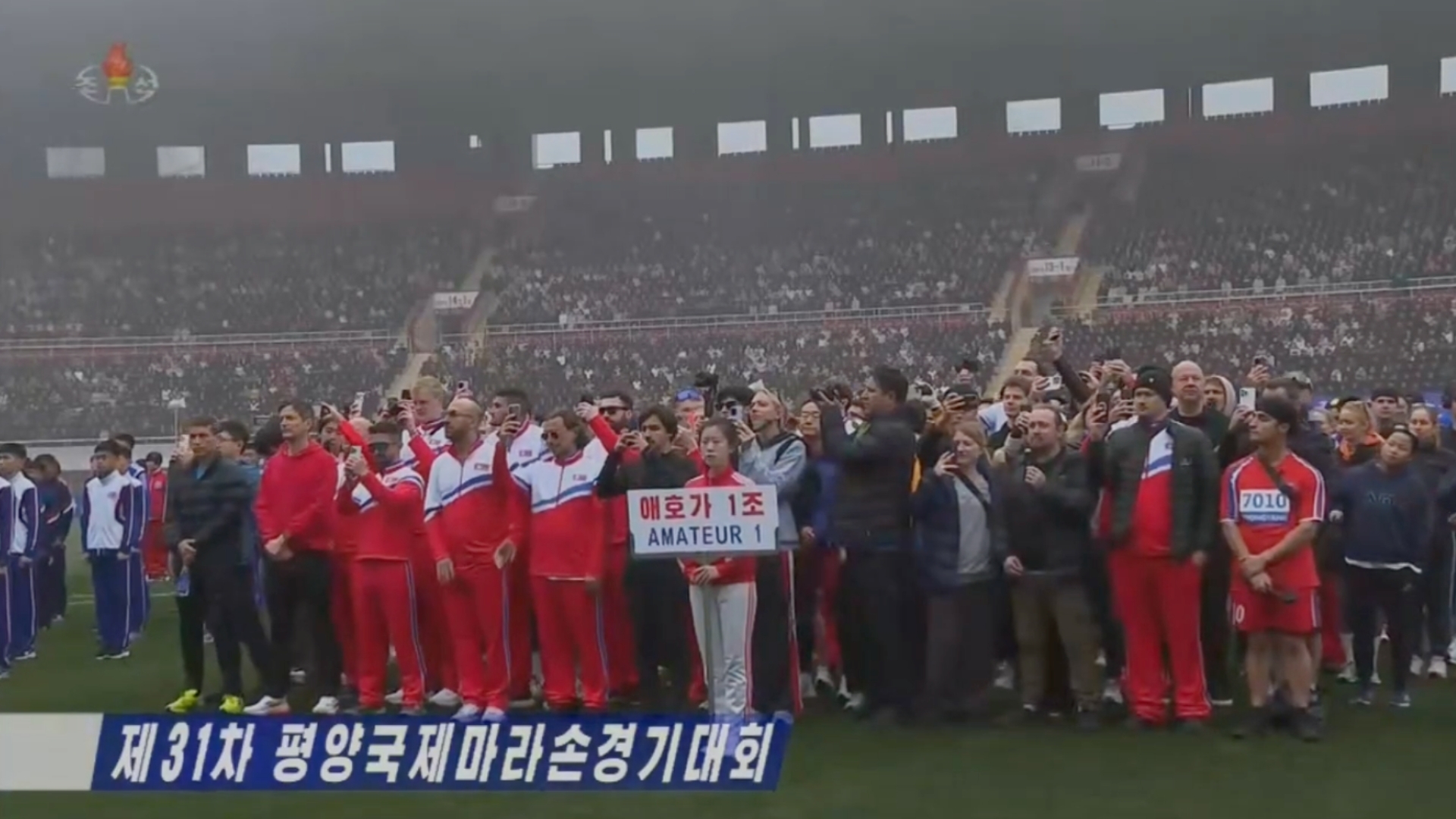
In the 2025 race, bib numbers were strictly categorized. Elite North Korean athletes were assigned numbers in the 1200s, while amateur foreigners were issued bibs labeled "Pyongyang." There was no bib #1407 in the amateur registry. When NK News analyzed official race results and photo archives from the event—which included extensive state media coverage—Tollet was notably absent. Multiple independent observers, including professional tour guides who were on the ground that day, have no recollection of her presence, despite the small and closely monitored nature of the group of foreign participants.
Hotel and Itinerary Anomalies
The book describes a stay at the Koryo Hotel, characterized by elevators that "skip the fifth floor." Experts in North Korean travel, including Cockerell, point out that while the Koryo Hotel does have specific elevator quirks, this description matches the Yanggakdo Hotel—a different property entirely. Furthermore, the 2025 amateur participants were housed exclusively at the Sosan Hotel, a facility affiliated with the sports ministry.
Perhaps the most significant discrepancy involves a visit to a Pyongyang hospital. Tollet describes an encounter with a "world-class" facility with thousands of beds, complete with medical staff and new equipment. However, the Pyongyang General Hospital—the only facility matching her description—did not open until October 2025, six months after the race occurred. This retrospective inclusion of a facility that was technically a construction site during her alleged visit suggests a fundamental fabrication of the timeline.
The "Secret" Communication
The book concludes with a cinematic flourish: after departing the country, Tollet receives a text message from her guide—a person she identifies as having suspected her true identity all along. The text, she claims, was sent to her phone via the DPRK’s +850 country code.
This detail is dismissed as technologically impossible by those familiar with the North Korean telecommunications infrastructure. While foreigners are sometimes issued temporary SIM cards, these are strictly for international voice calls. Domestic and international SMS functionality is not available to such cards, and local tour guides are categorically barred from sending or receiving international texts.
Official Responses and the Publisher’s Stance
When confronted with these findings, Tollet remained defiant, suggesting that her work is not a travelogue but a "geopolitical documentary" where the marathon was merely a "pretext." She argues that for someone of her experience, "finding ways around what’s normally done" is part of the job.
Her publisher, Le Cherche Midi, offered a notably hands-off response. Spokesperson Valerie Borgese stated, "It is not the publishers’ responsibility to investigate and verify the accuracy of a story, especially when the author is a well-known journalist and correspondent. We trust the author of the story if it seems plausible."
This stance highlights a growing tension in the publishing industry between the demand for gripping, "undercover" narratives and the duty of due diligence. When an author’s brand is built on clandestine, high-stakes reporting, the burden of proof becomes essential to the credibility of the medium.
Implications for Investigative Journalism
The case of Anne-Isabelle Tollet raises profound questions about the ethics of "undercover" journalism in authoritarian contexts. If the narrative is indeed a reconstruction or an embellishment, it risks undermining the work of journalists who truly face immense danger to report from within such regimes.
If the events described in the book did not happen, the work ceases to be an act of journalism and shifts into the realm of fiction. By presenting a fabricated account as a "factual" reflection of life in North Korea, the author risks providing the regime with an easy target for criticism. Any factual error in a high-profile exposé allows the North Korean state media to dismiss all legitimate reporting as Western propaganda.
Conclusion
"In North Korea, everything is fake," Tollet writes in her epigraph. "The only way to see the truth is to lie." It is a compelling sentiment, one that resonates with readers eager for tales of subversion. However, when a journalist employs that same logic to construct their own account, the line between "seeing the truth" and creating a mirage becomes blurred.

Based on the evidence provided by those who managed the logistics of the 2025 Pyongyang Marathon, the accounts presented in North Korea: Marathon in a Forbidden Country are irreconcilable with the established facts of the event. As the literary and journalistic communities continue to scrutinize the work, the book stands as a cautionary tale: in an era of global information, the truth of a narrative is not found in the adrenaline of the prose, but in the cold, hard data of reality. For now, the "clandestine incursion" remains a mystery, not because of the secrecy of the regime, but because of the lack of evidence that it ever took place.

 Evan Lee Salim
 Nila Kartika Wati
 Muslim

