
 By Nila Kartika Wati
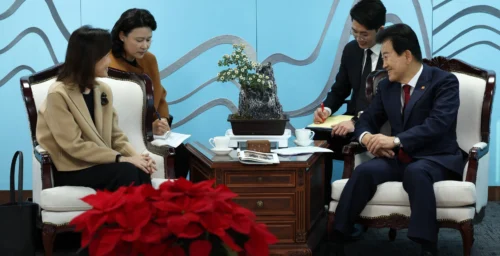
SEOUL – In a high-stakes diplomatic engagement aimed at recalibrating the ROK-U.S. alliance, South Korean Unification Minister Chung Dong-young held his first formal meeting with the newly arrived U.S. Ambassador to South Korea, Michelle Steel, on Friday. The meeting, which follows a period of protracted vacancy in the ambassadorship, signals a renewed effort by the Seoul government to synchronize its North Korea policy with the incoming diplomatic leadership in Washington.
The discussions, held in Seoul on November 20, 2026, focused on the imperative of "close coordination" regarding the Korean Peninsula’s security architecture and the urgent necessity of restarting stalled channels of communication with Pyongyang.
Main Facts: A New Chapter in Alliance Diplomacy
The meeting between Minister Chung and Ambassador Steel represents a pivotal moment for the South Korean Ministry of Unification. Following a monthslong delay in the appointment of a permanent U.S. envoy to Seoul, the arrival of Michelle Steel—a figure with deep, established ties to the Korean-American community and the broader ROK-U.S. relationship—has been viewed by the Yoon administration as a potential catalyst for policy alignment.
Minister Chung emphasized that the bedrock of any successful engagement with North Korea remains the "ironclad" coordination between Seoul and Washington. By prioritizing this alignment, the Ministry of Unification seeks to avoid the diplomatic friction that has occasionally characterized past attempts to engage the North, where differing perceptions of "denuclearization" versus "peace-building" often led to mixed signals.
The agenda of the meeting covered three primary pillars:
- Strategic Synchronization: Establishing a shared roadmap for engagement with the DPRK.
- Security Assurances: Discussing the status of the Combined Forces Command (CFC) and regional deterrence.
- Dialogue Resumption: Formulating a collaborative approach to lure North Korea back to the negotiating table.
Chronology: The Road to the Ambassador’s Arrival
The path to this week’s meeting has been marked by significant geopolitical turbulence. To understand the significance of this diplomatic sit-down, one must look at the timeline of events that defined the preceding year.
- June 2026: The U.S. Senate formally confirms Michelle Steel as the U.S. Ambassador to South Korea, ending a period of uncertainty regarding U.S. diplomatic representation in Seoul. Her confirmation was lauded for bridging political divides, given her legislative background and history of championing ROK-U.S. ties.
- July–September 2026: A period of heightened regional tension as North Korea conducts a series of short-range ballistic missile tests. During this time, the lack of a permanent ambassador in Seoul was felt acutely, with much of the communication handled by the Charge d’Affaires.
- October 2026: The ROK Ministry of Unification announces a shift in its "audacious initiative," signaling a readiness to offer more tangible economic incentives in exchange for verifiable progress on North Korean nuclear restraint.
- November 20, 2026: Ambassador Steel arrives in Seoul and meets with Minister Chung Dong-young and the top American military commander on the Korean Peninsula. This marks the official commencement of a high-level consultative process aimed at stabilizing the peninsula.
Supporting Data: The Current Security Landscape
The urgency of the Chung-Steel meeting is underscored by the deteriorating security environment on the Korean Peninsula. Recent data from the Korea Risk Group and regional defense monitors indicates a marked increase in North Korean provocations and a corresponding hardening of the military posture along the Demilitarized Zone (DMZ).
The Denuclearization Gap
While Seoul continues to push for a "step-by-step" approach—offering small-scale economic cooperation in exchange for freezing specific nuclear facilities—Washington has historically remained skeptical, insisting on more robust transparency and verification measures. The "gap" in these approaches has been a source of diplomatic friction for decades.
Military Readiness Metrics
The presence of the top U.S. military commander at the meeting alongside the Ambassador highlights the shift toward an "integrated deterrence" strategy. According to the 2026 ROK-U.S. joint defense report, the two nations have increased their joint military exercises by 15% compared to the 2024–2025 period. These exercises, while intended to deter aggression, are viewed by Pyongyang as rehearsals for invasion, further complicating the prospects for dialogue.
Official Responses: Aligning Objectives
Following the meeting, the ROK Ministry of Unification issued a formal statement highlighting the "sincere and productive" nature of the exchange.
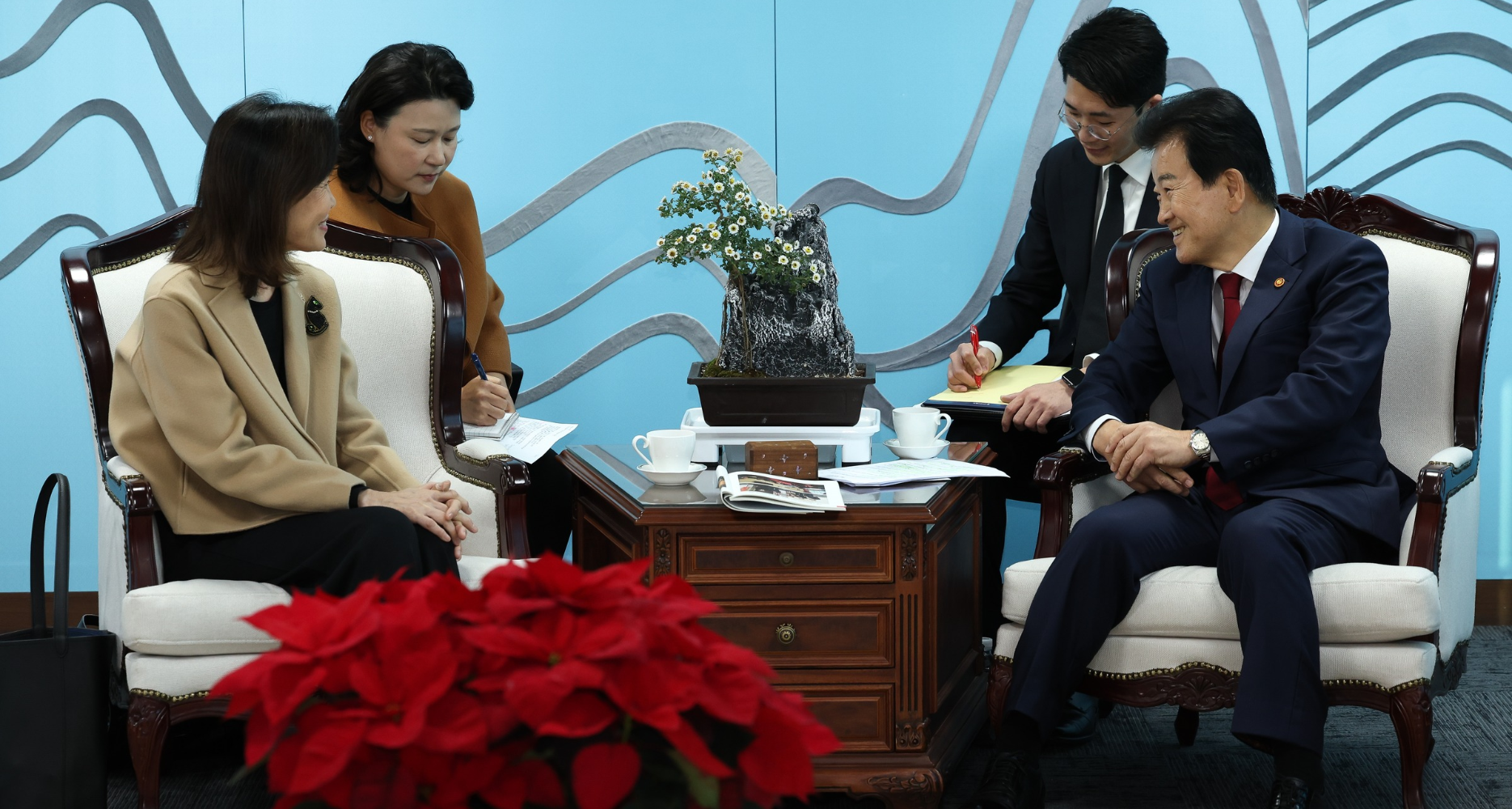
"The Minister expressed his expectation that Ambassador Steel’s deep ties with South Korea would serve as a vital bridge in these challenging times," the statement read. "Coordination between Seoul and Washington is not merely a preference; it is an essential requirement for regional stability and the eventual denuclearization of the Korean Peninsula."
From the U.S. side, while specific details of the Ambassador’s private remarks remain under wraps, the tone from the State Department has consistently emphasized the "unwavering commitment" to the ROK’s security. Ambassador Steel, during her confirmation hearings earlier this year, noted that "the North Korean threat is evolving, and our alliance must evolve with it. We cannot afford a fractured response to Pyongyang’s provocations."
Implications: What Lies Ahead for the Korean Peninsula?
The meeting between Minister Chung and Ambassador Steel carries profound implications for the future of regional security.
1. The End of "Diplomatic Solitude"
By prioritizing this meeting, Seoul is signaling that it no longer intends to pursue independent overtures to Pyongyang without first ensuring Washington is on board. This reduces the risk of "diplomatic drift," where North Korea might attempt to drive a wedge between the two allies.
2. A New Framework for Dialogue?
Analysts are speculating whether this meeting marks the beginning of a "new-look" engagement strategy. If Seoul and Washington can agree on a unified definition of "meaningful progress," they may present a joint package of incentives to Pyongyang by early 2027. This would test whether North Korea is genuinely interested in negotiations or if their current recalcitrance is a permanent strategic choice.
3. The Role of the Military
The inclusion of the top U.S. military commander in the meeting is a subtle but critical signal. It implies that future diplomacy will be inextricably linked to military readiness. Any talk of "peace" will be backed by a clear demonstration of the alliance’s defense capabilities. This "peace through strength" approach, favored by the Yoon administration, is now being fully integrated into the U.S. diplomatic strategy under Ambassador Steel.
4. Domestic Challenges
Domestically, Minister Chung faces pressure from conservative factions in South Korea who are wary of any concessions to the North, as well as from progressive groups who argue that the government has been too passive. Balancing these domestic demands while maintaining a united front with Washington will be the defining challenge of the Minister’s tenure.
Conclusion
The meeting between Unification Minister Chung Dong-young and Ambassador Michelle Steel is more than a formal diplomatic pleasantry; it is a vital recalibration of the ROK-U.S. alliance in the face of an increasingly unpredictable North Korea. By emphasizing coordination, the two nations are setting the stage for a more unified, resilient, and strategic approach to the Korean Peninsula.
As 2026 draws to a close, the focus shifts to whether these high-level discussions can translate into actionable policy. For now, the "Steel-Chung" connection provides a fresh, albeit cautious, sense of optimism that the two allies are moving in lockstep toward the common goal of a stable, nuclear-free, and peaceful Korean Peninsula.
The eyes of the international community remain fixed on Seoul and Washington, waiting to see if this renewed alignment will finally force a change in Pyongyang’s calculus. As the Minister noted, the path to peace is long, but it is a path that must be walked together.


 Muslim
 Iffa Jayyana
 Suro Senen

