
 By Nila Kartika Wati
The Debut and Immediate Dissolution
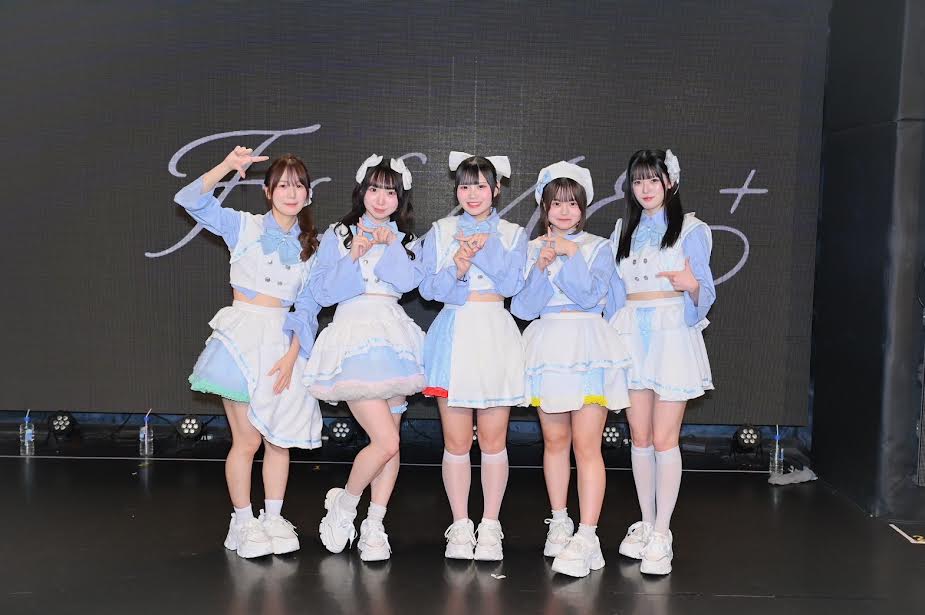
FILME+ officially entered the Tokyo idol scene on November 5, 2026, with a debut performance held at Ebisu CreAto, a well-known live music venue in the Shibuya ward of Tokyo. The venue, often used for "chika" (underground) and independent idol showcases, served as the launchpad for what was intended to be a long-term musical project. Following their debut, the group maintained their schedule by performing at a local music festival on November 7. At the time, there were no outward indications to the public or the fanbase that the group was on the verge of a total shutdown.
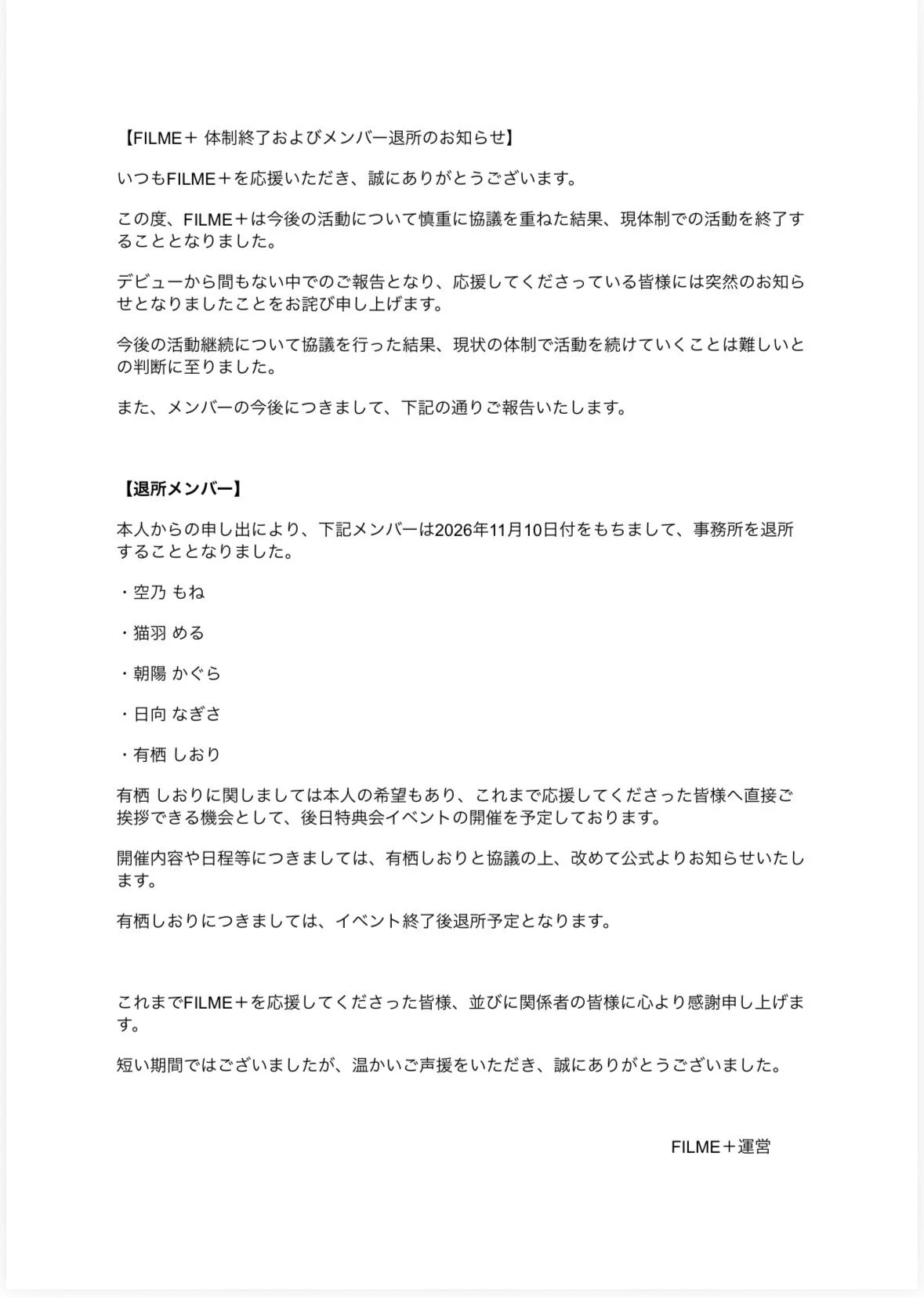
However, the situation changed abruptly on November 10, when the group’s official management team released a formal statement via social media. The announcement confirmed that FILME+ would disband effective immediately. The primary reason cited was the departure of all five members from the agency. According to the management’s statement, subsequent discussions regarding the group’s trajectory revealed irreconcilable differences or logistical hurdles that made continued operations impossible. "After discussions about the group’s future, we determined it would be difficult to continue operating under the current circumstances," the agency stated, providing little specific detail regarding the nature of the "circumstances" in question.
A Chronology of the Five-Day Career
The timeline of FILME+ is perhaps one of the shortest in the history of the Japanese "chika idol" ecosystem. To understand the gravity of the disbandment, it is necessary to look at the condensed window of their activity:
- Pre-Debut Period (May – October 2026): According to member testimonies, the group spent approximately six months in rigorous training, rehearsals, and promotional preparation.
- November 5, 2026: Official debut performance at Ebisu CreAto in Tokyo. The five members were introduced to the public, and the group’s branding was launched.
- November 7, 2026: The group’s second and final public appearance at a multi-group festival.
- November 10, 2026: The management issues a formal disbandment notice. The official reason is the mass resignation of the members.
- Post-Disbandment: Individual members begin releasing personal statements, and the announcement goes viral, surpassing 1.7 million views on the platform X (formerly Twitter).
The disparity between the six-month preparation period and the five-day active lifespan has become a focal point of discussion among industry analysts and fans alike. It highlights the extreme volatility inherent in the independent idol market, where small agencies often operate with thin margins and limited legal protections for both the talent and the investors.

Member Perspectives and the Emotional Toll
In the wake of the announcement, the members themselves have begun to speak out, shedding light on the internal friction that led to the group’s sudden demise. Asahi Kagura, one of the five members, took to social media to express her frustrations and heartbreak. In a candid post, she revealed that the internal stability of the group was compromised long before they ever stepped onto the stage for their debut.
Kagura noted that she had a sense the group was "doomed" even before the November 5 performance. This suggests that the issues—whether financial, interpersonal, or related to management—were deeply ingrained and that the debut went ahead despite significant red flags. Kagura’s statement resonated with many followers, as she emphasized the irony of spending half a year preparing for a career that lasted less than a week.
Another member, Arisu Shiori, signaled a different path forward. While the group is defunct, Shiori announced plans to hold a private fan event. Such events are common in the idol industry as a way for performers to provide closure to their supporters and potentially pivot toward solo careers or different creative ventures. These individual responses indicate that while the collective entity of FILME+ has dissolved, the members are still attempting to salvage their personal brands from the wreckage of the failed launch.
The "Chika Idol" Ecosystem and Market Saturation
The story of FILME+ is a micro-reflection of a much larger trend within the Japanese music industry. Tokyo alone is home to hundreds, if not thousands, of "chika" or "underground" idols. Unlike major-label idols who are backed by massive conglomerates like Sony Music or Johnny & Associates, chika idols are often managed by small, independent companies or even self-managed.
The barrier to entry in this market is relatively low: an agency needs a small amount of capital for costumes, a song, and a rental space for auditions. However, the barrier to sustainability is astronomical. The market is currently saturated, with new groups debuting almost weekly. This saturation leads to intense competition for "wota" (dedicated fans) and venue slots.

In the case of FILME+, the rapid disbandment suggests a failure in the agency’s foundational business model. Often, small agencies rely on immediate revenue from merchandise sales (such as "cheki" or instant polaroid photos with fans) to fund ongoing operations. If the debut does not meet specific financial targets immediately, or if the members realize the management is unable to provide promised resources, the structure can collapse within days.
Viral Impact and the Digital Legacy
The disbandment notice for FILME+ achieved a level of fame that the group’s music likely never would have reached on its own. Within hours of the post on X, the announcement had garnered over 1.7 million views. In the digital age, "failure" often travels faster than "success," and the novelty of a five-day career turned the group into a trending topic.
This viral phenomenon is partly driven by the internet’s fascination with "speed-run" style failures in professional industries. However, it also serves as a cautionary tale for aspiring performers. The high engagement on the disbandment post brought international attention to the group, with K-pop and J-pop fans globally discussing the ethics of small-scale talent management.
The digital legacy of FILME+ will likely be defined not by their performances at Ebisu CreAto, but by the screenshot of their disbandment notice. This "viral through tragedy" or "viral through failure" path is a recurring theme in modern social media, where the absurdity of a situation becomes its own form of entertainment.
Industry Analysis: Implications for the Future
The collapse of FILME+ raises several critical questions about the regulation and professional standards of the independent idol industry.
- Contractual Vulnerability: The fact that all members could leave simultaneously suggests either a collective breach of contract or, more likely, a contract that was unenforceable or lacked the necessary support systems to keep the talent engaged.
- Investment Risks: For the members, the investment of six months of unpaid or low-paid training represents a significant personal and financial loss. For the agency, the costs of debut—venue rental, costume design, and choreography—were likely not recouped.
- Mental Health and Stability: The "debut at all costs" mentality can be damaging. Asahi Kagura’s admission that she felt the group was doomed before it started highlights the psychological pressure on young performers to follow through with public appearances even when the internal reality is chaotic.
Market analysts suggest that the FILME+ incident may lead to a more skeptical approach from fans and potential idols toward new, small-scale agencies. As the "idol bubble" continues to show signs of strain, the industry may see a shift toward more consolidated, better-funded projects, as the "startup" model of idol groups becomes increasingly risky.
Conclusion
The five-day lifespan of FILME+ stands as a stark reminder of the volatility of the modern entertainment landscape. While the group’s musical contributions were limited to two performances, their sudden end has sparked a massive conversation about the sustainability of the idol industry, the transparency of talent management, and the reality of the "dream" sold to young performers. As the members move on to separate paths, the name FILME+ remains a viral footnote in the history of Japanese pop culture—a group that became famous not for their start, but for how quickly they reached the end.

