
 By Ali Ikhwan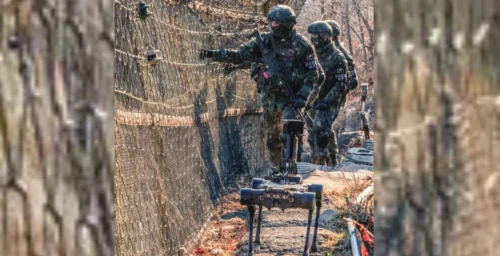
South Korea’s military leadership has launched a robust defense of its operational posture following reports suggesting that frontline troops have been instructed to exercise greater restraint—or potentially overlook—North Korean incursions across the Military Demarcation Line (MDL). The controversy, ignited by a recent investigative report, has sparked a fierce debate regarding the South’s defensive readiness and the delicate balance of maintaining deterrence without inadvertently triggering a kinetic conflict.
Main Facts: The Allegation and the Denial
The ROK Joint Chiefs of Staff (JCS) issued a categorical denial on Wednesday, refuting claims that commanders have softened their rules of engagement (ROE) regarding border crossings. The controversy stems from a report by the South Korean outlet Chosun Ilbo, which alleged that a senior official within the Ministry of National Defense issued a directive late last year calling for a review of the military’s use of warning shots and standard defensive responses along the heavily fortified border.
The Chosun Ilbo report suggested that this internal push for a "revised" approach has led to a perceived increase in North Korean soldiers crossing the MDL—an invisible but heavily guarded line that separates the two Koreas—without facing the immediate, aggressive deterrence historically characteristic of the ROK Army’s frontline posture.
In a statement provided to NK News, the JCS countered these assertions, emphasizing that its operational integrity remains uncompromised. "Our military is taking firm operational measures against North Korean violations of the MDL in accordance with established standards and principles," the JCS stated. The military maintains that every incursion is met with appropriate force escalation, including broadcasting warnings, visual signaling, and, where necessary, warning fire, to ensure the sanctity of the border is maintained.
Chronology of Escalation and Recent Friction
The current climate of uncertainty along the MDL is not an isolated event but the result of a long-term deterioration in inter-Korean relations.
- Late 2025: The period identified by the Chosun Ilbo as the timeframe in which the alleged "review" of warning shot protocols was initiated. This period saw the deployment of advanced surveillance technology, including quadrupedal robots and AI-integrated monitoring systems, to the frontline.
- December 22, 2025: A notable public display of ROK technological prowess occurred, as soldiers were photographed patrolling with advanced robotic assets. Analysts at the time suggested this was an effort to augment human patrols in hazardous zones.
- Early 2026: Following a series of North Korean drone incursions and "trash balloon" campaigns, the atmosphere along the border reached a fever pitch. Military analysts began noting a pattern of North Korean personnel stepping briefly across the MDL, ostensibly for vegetation clearing or boundary marker maintenance, but often interpreted by Seoul as probes for vulnerabilities.
- September 2026: The publication of the Chosun Ilbo report brought the internal debate regarding the "threshold of response" into the public domain, forcing the JCS to address allegations that frontline troops are being "held back" by political caution.
Supporting Data: The Complexity of the MDL Environment
The MDL, a 155-mile stretch of land, is arguably the most sensitive border on the planet. The difficulty in managing this space is compounded by the rugged, mountainous terrain of the Demilitarized Zone (DMZ).
Historically, warning shots were a routine, almost mechanical response to any North Korean movement across the line. However, in recent years, the ROK military has transitioned toward a more "nuanced" approach. Data from defense observers indicates that the frequency of "accidental" or "minor" incursions by North Korean patrols has fluctuated.

The rationale behind the alleged directive—as suggested by critics of the current administration—is that the Ministry of Defense is wary of an accidental skirmish escalating into a full-scale artillery exchange. If a warning shot were to hit a North Korean soldier, the risk of retaliatory fire from Pyongyang’s forward-deployed batteries is significant. By opting for non-lethal deterrents or simply monitoring these incursions from afar via high-resolution cameras and sensors, the military can preserve stability. However, this strategy risks being interpreted by Pyongyang as a sign of weakness or a lack of resolve to defend the border.
Official Responses and Political Fallout
The ROK Ministry of National Defense has faced intense pressure from conservative lawmakers to clarify the exact nature of the instructions given to frontline commanders. Critics argue that any ambiguity in the rules of engagement emboldens North Korean "gray-zone" tactics.
"If the soldiers on the ground are confused about when to pull the trigger, the deterrence fails," noted one defense analyst familiar with ROK military doctrine. "The JCS must walk a fine line between avoiding unnecessary escalation and ensuring that the North understands that a red line exists."
The JCS, however, remains insistent that no change in policy has occurred. Their official stance is that operational guidelines are constantly reviewed to match modern threats—such as drone technology and small-unit infiltration—but that the fundamental commitment to repel any hostile incursion remains the cornerstone of their mission. The military leadership has cautioned against "speculative reports" that they claim undermine the morale of the soldiers currently deployed in the freezing conditions of the border region.
Implications for Regional Security
The dispute highlights a growing disconnect between political strategy and frontline realities. The implication of "overlooking" incursions—if true—could have profound effects on the security architecture of the Korean Peninsula:
- Erosion of Deterrence: If North Korea perceives that the cost of crossing the MDL has decreased, they may be incentivized to conduct more frequent, deeper incursions to map South Korean reaction times, identify gaps in surveillance coverage, or engage in psychological operations.
- Internal Military Cohesion: The perception of political interference in tactical decisions can be deeply damaging to military culture. If frontline commanders believe their decisions are being second-guessed by officials in Seoul who are primarily concerned with diplomatic optics, it may lead to hesitation during critical, high-stress moments.
- Regional Alliance Strain: The United States, which maintains a significant troop presence in South Korea and a Combined Forces Command (CFC) structure, relies on a predictable and firm ROK defensive posture. Any uncertainty regarding the defense of the MDL could lead to friction within the ROK-U.S. alliance, as Washington might feel the need to advocate for a more proactive stance.
As the situation develops, the onus remains on the ROK military to prove that its "firm operational measures" are more than just rhetoric. The reliance on advanced technology—such as the quadrupedal robots seen in late 2025—is intended to provide an objective, data-driven record of events. However, technology cannot replace the necessity of clear, decisive command intent.
For now, the border remains in a state of high alert. While the Ministry of Defense continues to deny any shift in policy, the public and the political opposition remain skeptical. In the high-stakes chess match that is the Korean Peninsula, the interpretation of a single warning shot—or the lack thereof—can be the difference between a minor border incident and a major regional crisis. The JCS is currently tasked with the difficult job of convincing both the South Korean public and their North Korean adversaries that the MDL remains a firm, inviolable boundary, regardless of the political winds blowing in Seoul.


 Ammar Sabilarrohman
  Pevita Pearce
  Nana Wu
