
 By Nila Kartika Wati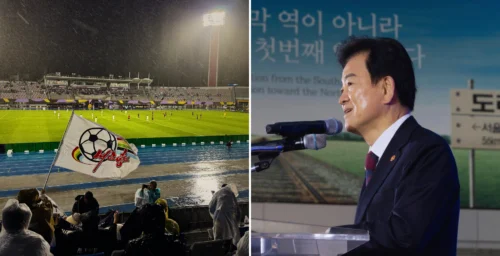
By NK News Staff
In a rare disclosure regarding the financial mechanics of sports diplomacy, South Korea’s Unification Ministry revealed this week that it spent approximately $158,000 (235.29 million won) to facilitate a joint cheering campaign during the Asian Football Confederation (AFC) Women’s Champions League held in May. The event marked a significant, albeit brief, moment of thaw in inter-Korean relations, as it signaled the first visit of a North Korean football club to South Korean soil in eight years.
While the government had initially authorized a budget ceiling of 319.45 million won (roughly $215,000), the Ministry confirmed that a post-event audit led to the return of approximately 84 million won ($57,000) to the state-run Inter-Korean Cooperation Fund, underscoring a rigorous approach to fiscal accountability in cross-border engagements.
Main Facts: The Financials of Sporting Diplomacy
The expenditure, drawn directly from the Inter-Korean Cooperation Fund, was primarily allocated to logistical support for the visit of North Korea’s Naegohyang Women’s Football Club. The funds covered a spectrum of operational requirements, including transport, accommodation, security, and the organization of joint cheering activities that sought to promote a message of unity during the high-profile tournament.
According to the Ministry’s breakdown, the cheering campaign alone accounted for 148.74 million won ($100,000). This included specialized costs such as the production of unified banners, the coordination of volunteer groups, and the complex logistics of managing large crowds in a politically sensitive environment. The remainder of the disbursed funds went toward the essential maintenance of the North Korean delegation during their stay in South Korea, including lodging at pre-vetted facilities and regional transport between training sites and the Suwon Sports Complex.
The discrepancy between the authorized budget and the actual spend—a surplus of 84 million won—highlights the South Korean government’s current policy of "frugal engagement." By conducting an internal audit of the project, the Ministry aims to insulate itself from domestic political criticism, which often focuses on the potential for inter-Korean funds to be misused or inflated.
Chronology: A Rare Visit Amidst Tensions
The presence of the Naegohyang Women’s Football Club in May 2026 was not merely a sporting event; it was a calibrated diplomatic signal. To understand the significance of this $158,000 expenditure, one must look at the timeline of the visit and the context in which it occurred.
Pre-Arrival Preparations (Early 2026)
In the months leading up to the AFC Women’s Champions League, South Korean officials engaged in quiet, back-channel negotiations to ensure the safety and participation of the North Korean team. The decision to host the team required high-level security clearances and complex negotiations regarding flag-waving, anthem protocols, and media access.
The Arrival and Tournament (May 2026)
Upon the team’s arrival, the atmosphere in Suwon was electric. For the first time in nearly a decade, a North Korean squad walked onto a South Korean pitch. The joint cheering campaign, a staple of inter-Korean sports diplomacy, was implemented to mitigate the usual hostility that characterizes North-South encounters. Volunteers from both sides of the DMZ, along with South Korean citizens, were coordinated to provide a supportive environment for the athletes.
Post-Event Audit (June–July 2026)
Following the conclusion of the matches, the Unification Ministry launched a standard internal review. The goal was to reconcile the actual costs of the delegation’s stay against the projected estimates. By July, the Ministry confirmed that the final audit was complete, leading to the public disclosure of the exact figures.
Supporting Data: The Inter-Korean Cooperation Fund
The Inter-Korean Cooperation Fund (IKCF) is a government-managed pool of capital designed specifically to foster dialogue and economic exchange. Its use for sporting events is categorized under "social and cultural exchange."

Historically, the IKCF has been subject to intense scrutiny by South Korean conservative factions, who often argue that money spent on North Korean visitors could be better utilized for domestic social programs or that such spending provides "blood money" to the regime in Pyongyang. Consequently, the Ministry’s transparency in this instance—specifically noting the return of unspent funds—is a strategic move to preempt accusations of fiscal negligence.
The $100,000 allocated for the cheering campaign specifically highlights the high cost of "soft power" operations. In the context of modern inter-Korean relations, where official government-to-government dialogue has largely stalled, the South Korean government has increasingly relied on these "proxy" diplomatic events to keep communication lines open, even if only at a symbolic level.
Official Responses and Political Context
The Unification Ministry’s decision to release the figures has drawn varied responses. A spokesperson for the Ministry stated, "Our objective was to facilitate a successful international sporting event while maintaining strict adherence to financial transparency. The return of the unused portion of the budget demonstrates our commitment to the responsible management of public funds."
Political analysts suggest that the Ministry is walking a tightrope. By funding the visit, the administration demonstrates its commitment to the "peace through sport" narrative favored by current leadership. However, by publicizing the cost-saving measures, they attempt to appease domestic critics who are wary of financial transfers to the North.
"The spending reflects the reality that hosting North Korean teams is expensive due to the massive security and logistical protocols required," noted a researcher at a Seoul-based think tank. "When you factor in the diplomatic sensitivity, the cost is actually quite modest compared to the potential political benefit of preventing a complete freeze in bilateral relations."
Implications: The Future of Sports Diplomacy
The $158,000 expenditure raises fundamental questions about the sustainability of using sports as a bridge for reconciliation. As South Korea faces increasing pressure from both internal domestic challenges and external geopolitical shifts, the appetite for funding such high-cost, low-yield diplomatic gestures is fluctuating.
1. The Normalization of Sports Diplomacy
If such visits become more frequent, the logistical costs may decrease due to better established protocols. However, if the political climate continues to deteriorate, these events may remain isolated, expensive anomalies that provide little long-term diplomatic leverage.
2. Domestic Political Backlash
The transparency regarding the funds is unlikely to silence all critics. The ideological divide in South Korea ensures that any expenditure involving North Korea, no matter how small or well-audited, will remain a point of contention. Future administrations will likely continue to face calls for even greater austerity when dealing with inter-Korean engagements.
3. The "Soft Power" Deficit
The most significant implication is the realization that the cost of "soft power" is rising. The complexity of modern security, media management, and the necessity of high-level diplomatic coordination mean that even a "simple" football match requires significant financial backing. The South Korean government must now decide if the symbolic value of a cheering campaign justifies a six-figure price tag in an era of fiscal tightening.
Conclusion
The expenditure of $158,000 to support the Naegohyang Women’s Football Club’s visit serves as a microcosm of the current state of inter-Korean relations. It is a calculated, scrutinized, and expensive effort to maintain a veneer of normalcy between two neighbors that remain technically at war. While the Ministry of Unification has framed the event as a success—bolstered by the return of unused funds—the broader challenge remains: can sports diplomacy continue to function as a meaningful tool when the financial and political costs of hosting the North continue to rise? For now, the legacy of the May visit remains a snapshot of a fleeting, yet carefully managed, moment of peace on the pitch.
 Ammar Sabilarrohman
  Pevita Pearce
  Nana Wu
