
 By Neng Nana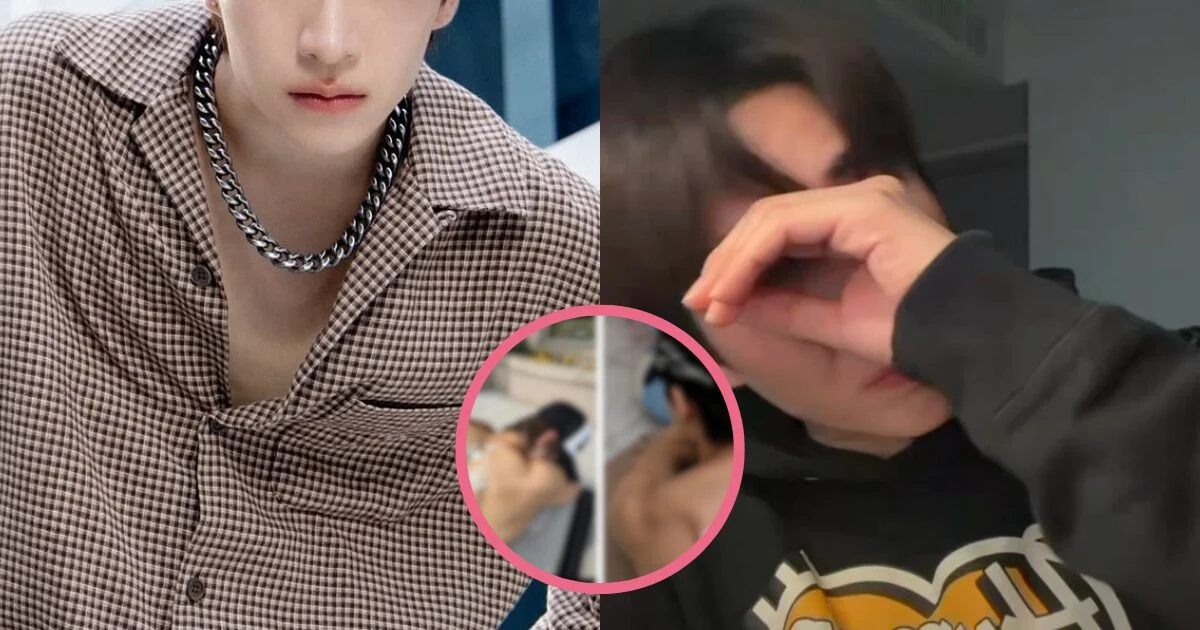
The entertainment industry in Southeast Asia and South Korea has been drawn into a significant discourse regarding creative integrity and intellectual property following allegations of plagiarism against Jung, a prominent member of the Thai boy group PERSES. The controversy centers on the promotional materials and visual aesthetic for Jung’s highly anticipated solo project titled "Fly," a collaboration with the renowned Thai rapper F.HERO. Within hours of the project’s teaser releases, eagle-eyed fans and netizens began documenting striking similarities between Jung’s promotional content and the previous creative works of Tomorrow X Together (TXT) member Yeonjun, specifically his "Coma" project and the NO LABELS: Part 01 series.
The situation escalated rapidly as digital evidence circulated across social media platforms, leading to an official apology from both the artist and his management agency, G’NEST. The incident has sparked a broader conversation about the responsibilities of creative directors within the T-Pop (Thai Pop) industry and the increasing scrutiny placed on global music productions in the age of digital interconnectedness.
The Genesis of the "Fly" Project and the Initial Teasers
PERSES, a five-member Thai boy group under the management of G’NEST, a subsidiary of GMM Grammy, has been a rising force in the T-Pop scene since their debut. Jung, known for his versatility and performance skills, was set to mark a major milestone in his career with the "UNCENSORED SOLO PROJECT." The project, titled "Fly," featured a collaboration with F.HERO, one of Thailand’s most influential music figures, promising a high-budget production and a sophisticated artistic direction.
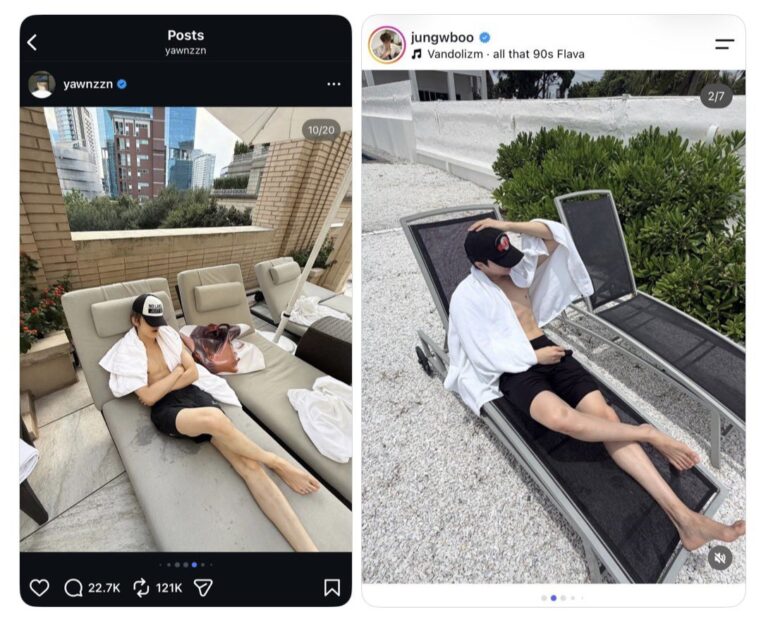
On July 21, 2026, G’NEST released a teaser video for the "Fly" music video on their official YouTube and social media channels. The teaser utilized a gritty, industrial warehouse setting, characterized by high-contrast lighting and a reflective, spoken-word monologue. Simultaneously, a series of promotional photographs were uploaded to Jung’s personal Instagram account and the agency’s official pages. These images featured Jung in various settings, most notably a poolside shoot where the artist was seen in specific poses that mirrored a high-fashion, melancholic aesthetic.
While the initial reception from PERSES fans, known as PIECES, was one of excitement, the mood shifted as members of the TXT fandom, MOA, began to notice familiar visual motifs. The comparisons were not limited to general themes but extended to specific framing, color grading, and conceptual execution that appeared nearly identical to Yeonjun’s solo endeavors from 2025.
Comparative Analysis of Visual Similarities
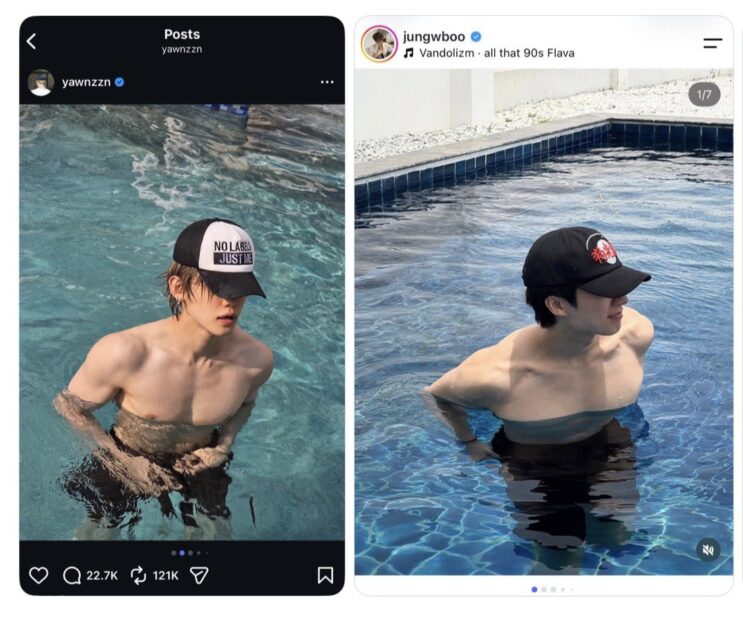
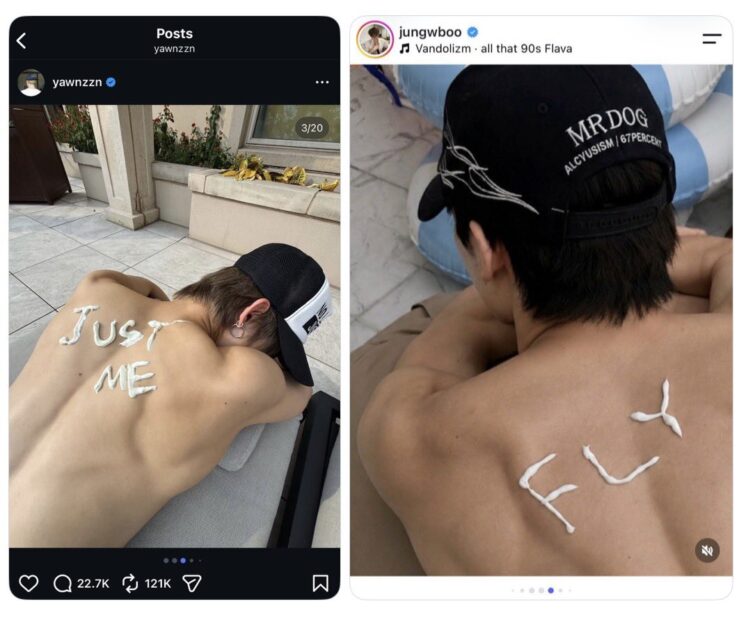
The plagiarism allegations were primarily rooted in two sets of visual content. The first involved a series of poolside photographs. In October 2025, Yeonjun had released a set of promotional images to advertise his personal merchandise and solo creative direction. These photos were noted for their unique "lo-fi" yet polished aesthetic, featuring the idol in a relaxed, contemplative state by a swimming pool. Netizens pointed out that Jung’s deleted Instagram posts featured almost identical compositions—from the angle of the camera to the specific way the artist leaned against the pool’s edge.
The second point of contention was the "Fly" music video teaser itself. Critics compared the warehouse setting and the use of a voiceover monologue to Yeonjun’s "Coma" video and the NO LABELS: Part 01 promotional series. In Yeonjun’s work, the warehouse served as a metaphor for internal confinement and creative struggle. The lighting schemes—utilizing harsh overhead lamps and deep shadows—and the pacing of the cuts in Jung’s teaser were described by many as being "frame-for-frame" replicas of the K-pop star’s established visual identity.
The speed with which these comparisons went viral on platforms like X (formerly Twitter) and TikTok forced a reconsideration of the project’s rollout. By the morning of July 22, the hashtag associated with the controversy had reached trending status in both Thailand and South Korea, prompting an immediate response from the stakeholders involved.
Chronology of Events and Rapid Escalation
To understand the gravity of the situation, a timeline of the 48-hour period following the teaser release is essential:

July 21, 2026 (6:00 PM ICT): G’NEST officially drops the teaser for JUNG x F.HERO – "Fly." The video and accompanying photos are shared across all major social media platforms.
July 21, 2026 (10:00 PM ICT): Fans begin posting side-by-side comparisons of Jung’s photos and Yeonjun’s 2025 promotional shoots. The thread gains thousands of retweets within hours.
July 22, 2026 (10:00 AM ICT): The controversy expands to include the cinematography of the "Fly" teaser video. International fans call for a statement from G’NEST, citing a breach of creative ethics.
July 22, 2026 (2:00 PM ICT): G’NEST begins quietly removing the disputed images from their official Instagram and X accounts. Jung also deletes the specific poolside photos from his personal profile.
July 22, 2026 (5:00 PM ICT): G’NEST issues a formal public statement in Thai and English addressing the concerns.

July 22, 2026 (8:00 PM ICT): Jung holds a live broadcast on Instagram to personally address his fans and the TXT community.
July 22, 2026 (9:30 PM ICT): Jung follows up the live broadcast with a written apology on his official X account, taking "full responsibility" for the oversight.
Official Responses from G’NEST and the Artist
The official notice from G’NEST was a measured attempt to mitigate the damage while defending the intent of their creative team. In the statement, the agency acknowledged the public’s concerns regarding the "Fly" promotional photos. They stated that upon reviewing the feedback and the comparisons made by the public, they decided to remove the content to show respect for other artists and the creative community.
However, the agency maintained that there was "no intentional plagiarism" involved in the production process. They suggested that the similarities were an unfortunate coincidence resulting from common industry trends, but conceded that the execution was too close for comfort. This "half-denial" did not sit well with many fans, who felt the agency was shifting the burden of the mistake onto the artist rather than the creative directors who curated the mood boards for the shoot.
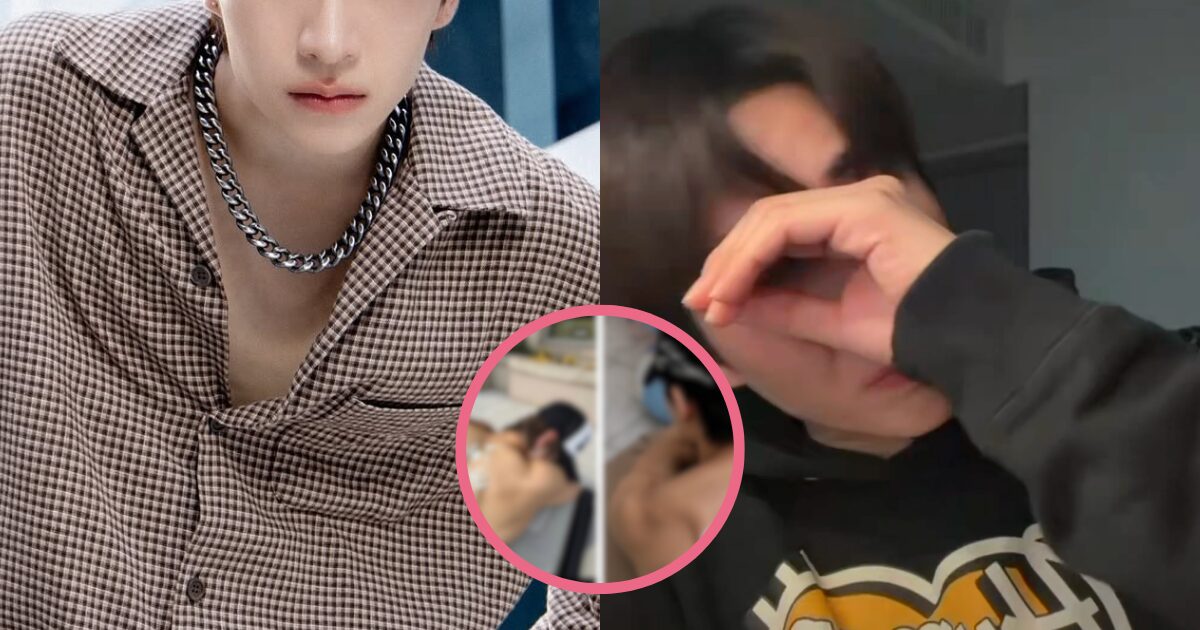
In contrast, Jung’s personal response was far more emotional and direct. During an Instagram Live session, the idol appeared visibly distressed and was seen tearing up as he apologized to Yeonjun and the MOA fandom. He expressed deep regret for any hurt caused and admitted that as an artist, he should have been more diligent in overseeing the creative direction of his solo debut.
In his subsequent written statement on X, Jung wrote: "I take full responsibility for what happened. As an artist, I respect the work of everyone in this industry, both on stage and behind the scenes. I never intended to copy or disrespect anyone’s hard work. I will use this as a lesson to be more careful and thorough in the future."
Public Sentiment and the Shift in Accountability
The reaction from the global music community was multifaceted. Initially, the sentiment was one of disappointment and anger, particularly from TXT fans who felt Yeonjun’s unique artistic voice was being diluted. However, following Jung’s tearful apology, the narrative began to shift.
Many netizens began to direct their frustration toward G’NEST rather than Jung himself. In the idol industry, both in K-Pop and T-Pop, the artists often have limited control over the conceptualization of music videos and promotional shoots. These elements are typically handled by a creative department, external directors, and stylists who provide the "mood boards" for the artist to follow.
Social media users argued that it was the agency’s professional responsibility to conduct thorough research and ensure that their concepts were original. "Someone on that team knew, and G’NEST needs to do something about it because right now Jung is taking the heat," one fan noted in a post that garnered significant engagement. Others criticized the agency for allowing the artist to "take the hit" on a live broadcast while the company issued what they described as a "half-assed statement."
This incident has highlighted a growing protective sentiment among fans toward artists who are perceived as being failed by their management’s lack of professional oversight.
Analysis of Creative Ethics in the Age of Globalization
The Jung-Yeonjun controversy is not an isolated incident but rather a symptom of a larger challenge facing the global entertainment industry. As T-Pop seeks to expand its reach and compete on an international stage alongside K-Pop, the pressure to produce high-quality, "trend-forward" content is immense.
In the creative process, there is a fine line between "inspiration" and "plagiarism." Mood boards, which are standard in the industry, often pull references from existing successful works. However, when those references are followed too closely—down to the lighting, color palettes, and specific poses—it ceases to be an homage and becomes a liability.
For T-Pop agencies like G’NEST, this serves as a cautionary tale. As the "Thai Wave" gains momentum, their productions are being watched by a global audience that is intimately familiar with the visual language of K-Pop and Western pop. The digital footprint of artists like Yeonjun is vast, and any attempt to replicate their specific "brand" is almost certain to be detected by the collective intelligence of global fandoms.
Furthermore, this event underscores the power of "fandom policing." In the past, such similarities might have gone unnoticed or stayed within small circles. Today, the ability of fans to compile evidence and trend topics worldwide means that agencies can no longer afford to be lax with their creative research.
Implications for the Future of PERSES and Jung
Despite the rocky start to his solo project, the immediate and sincere nature of Jung’s apology may have saved his solo career from long-term damage. In the world of idol music, a quick acknowledgment of wrongdoing and a display of genuine remorse are often enough to earn a "second chance" from the public.
G’NEST has indicated that they will proceed with the release of "Fly," but with revised promotional materials that do not infringe upon the creative territory of other artists. The collaboration with F.HERO remains a significant draw, and industry analysts believe the song may still perform well on Thai charts, provided the agency can pivot the narrative back to the music itself.
However, the reputation of G’NEST’s creative department has undoubtedly taken a hit. Moving forward, the agency will likely face increased scrutiny regarding their future productions. This incident may prompt a restructuring of their internal creative protocols, including more rigorous "plagiarism checks" and a greater emphasis on developing a unique visual identity for their artists that is distinct from the K-Pop giants they often look to for inspiration.
Ultimately, the "Fly" controversy serves as a reminder that in the modern music industry, the "eye" of the fan is everywhere. Authenticity is the most valuable currency an artist can possess, and protecting that authenticity requires vigilance from the boardroom to the film set. For Jung, this chapter is a painful but necessary lesson in the complexities of solo stardom; for the industry at large, it is a call for higher standards of creative accountability.

