 By Ali Ikhwan
Taiwan, an island nation vibrant with a rich tapestry of cultural influences, is home to over 23 million people. While the majority identify with Han Chinese ethnicity, a significant segment, approximately 20% of the population, proudly traces their lineage and cultural roots to the Hakka people. This enduring heritage, often expressed through distinct dialects, customs, and traditions, was spectacularly celebrated at the recent Hakka Fashion Awards. The second edition of this prestigious competition, which culminated in an award ceremony this past July, aimed to bridge the gap between literature and the tangible world of fashion, transforming narratives into wearable art. Under the evocative theme, "Inheritance Through Clothing, Weaving the Future" (衣傳承,織未來), designers drew profound inspiration from the literary works featured in the Hakka Young Writers’ Literature Award. The winning creations were subsequently showcased at the Hakka Cultural Center in Taipei during the mid-October Taipei Fashion Week, presenting the public with eleven breathtaking pieces that embody "wearable Hakka literature." These designs intricately connect with the land, inter-generational memories, and the very essence of Hakka identity, meticulously woven into the fabric of each garment.
A Legacy Reimagined: The Genesis of the Hakka Fashion Awards
The Hakka Fashion Awards emerged as a pivotal initiative to foster a deeper appreciation and understanding of Hakka culture among younger generations and the broader public. Established with the vision of revitalizing traditional Hakka arts and crafts through contemporary design, the awards serve as a unique platform for designers to explore the rich literary heritage of the Hakka community. This year’s theme, "Inheritance Through Clothing, Weaving the Future," specifically encouraged participants to delve into the narratives penned by emerging Hakka writers, thereby imbuing their creations with storytelling and cultural depth. The competition not only celebrated sartorial innovation but also championed the preservation and evolution of Hakka identity in the 21st century. The organizers emphasized the importance of translating the nuanced emotions, historical struggles, and enduring resilience found within Hakka literature into visual and tactile expressions through fashion.
Gold, Silver, and Bronze: A Triumph of Literary Interpretation in Design
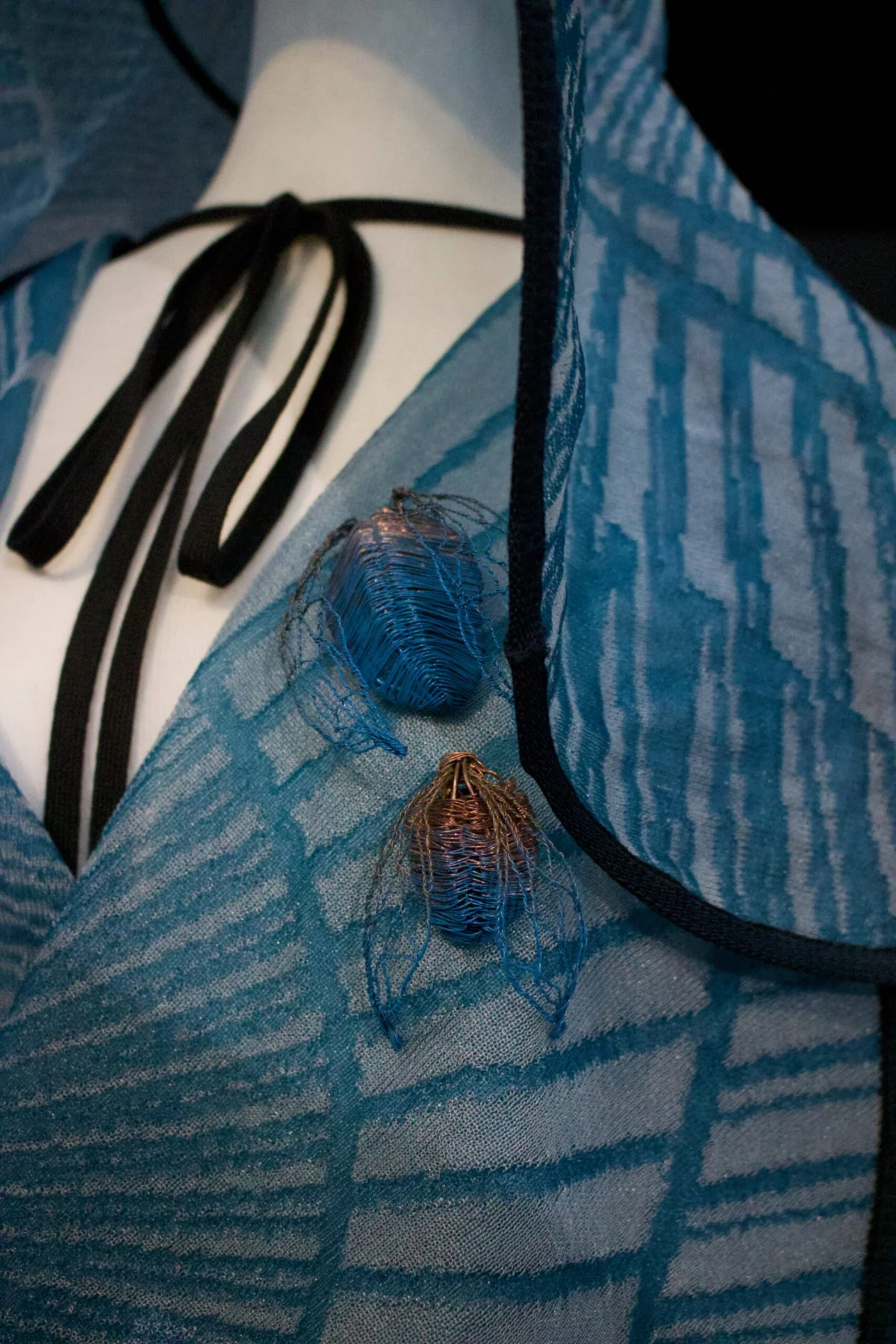
The pinnacle of the Hakka Fashion Awards saw designers meticulously translate literary themes into stunning sartorial statements. Designer Kao Yuan-lung secured the coveted Gold Award for his masterpiece, "Cicada’s Guest Inn." This creation is a profound interpretation of Hsu Sheng-yun’s poignant essay, "Cicada." Kao masterfully captured the ephemeral essence of the cicada’s life cycle through the use of semi-transparent Jacquard knit fabric, which lends a structural yet soft quality to the garment. Thicker threads, spiraling through the main body of the look, evoke the natural progression from soil and decay to emergence and the final, resonant song of the insect. The design, in its entirety, is a visual metaphor for transformation and the cyclical nature of life, deeply rooted in the natural world often depicted in Hakka literature.
The Silver Award was bestowed upon designer Fusion Hung for "Light Under the Stove." Hung’s design thoughtfully explores the duality of comfort and labor within the domestic sphere, specifically the kitchen, a central hub of Hakka family life. The ensemble features a striking interplay of tan dye against a backdrop of indigo, a color deeply ingrained in Hakka craftsmanship. This contrast not only creates visual interest but also subtly references the burn marks and the ever-present fire that characterized traditional kitchens. The practicality of the design is further emphasized through modular fastenings and strap details on the pants and jacket. The integration of traditional Hakka embroidery and the signature indigo dye firmly anchors the piece within its cultural heritage, offering a tangible connection to ancestral practices.
Claiming the Bronze Award, Chang Ya-che presented "Burning Characters Into Flowers." This intricate design weaves together fiery red Ugandan yarn, ethereal transparent layers, and delicate lace stitched onto the outermost fabric. The gauze layers are artfully arranged to mimic the soft unfurling of flower petals, creating a gently layered, floral-like structure. However, beneath this delicate beauty lies a deeper, more resonant narrative. Interspersed among the floral motifs are paper-like curls bearing text, a subtle yet powerful allusion to Taiwan’s "White Terror" period. This era of authoritarian rule, spanning nearly four decades, saw the suppression of languages other than Mandarin Chinese, including the Hakka dialect. Chang’s work, therefore, becomes a quiet yet potent symbol of resilience. The "Burning Characters Into Flowers" piece, much like Hakka culture itself, appears fragile on the surface, yet possesses an underlying strength and enduring spirit that has weathered historical adversies. This duality underscores the profound ability of art to convey complex historical and cultural messages.
Land, Memory, and the Body: Weaving Personal Narratives
Beyond the top awards, several other designers presented works that deeply resonated with the theme of connecting personal narratives to Hakka heritage. Designer Yeh Chia-ching received the Popularity Award for "Grandma." This creation masterfully blends an intimate connection to nature with cherished memories of her grandmother. Employing a zero-waste design approach, the gauzy dress is characterized by its softness and thoughtful construction. Materials are folded and extended as needed, ensuring no waste. The color palette, featuring white and soft pastel yellows and greens, further enhances the garment’s gentle aesthetic. The design embodies a sense of quiet remembrance and familial love, translated through sustainable and sensitive craftsmanship.
The Rookie Award-winning designer Liu Ya-ting’s "The Footwear of Farming and Weaving" delves into cultural memory through the medium of clothing. The overcoat draws inspiration from the Hakka people’s esteemed tradition of bamboo weaving, while the underlying layer is dyed indigo, another significant element in Hakka cultural expression. The inclusion of silver flowers threaded onto the woven overcoat serves as a poignant reminder that delicate beauty and unwavering strength can coexist harmoniously. This piece speaks to the duality of life, the blend of artistry and resilience that defines the Hakka spirit.
Wang Cheng-han, another recipient of a Rookie Award, presented "Terraced Field Texture." This design literally melds the landscape with the human form. Inspired by the iconic terraced fields, Wang’s work is a tribute to his ancestral village of Xinpu in Hsinchu County, a region historically shaped by Hakka migrants. These early settlers, who arrived from China’s Fujian and Guangdong provinces during the Ming and Qing dynasties, demonstrated immense perseverance by transforming challenging terrains into fertile agricultural lands. The stepped construction of terraced fields is mirrored in the silhouette of Wang’s piece, featuring textured appliqués that create a layered, step-like effect. Shades of gauzy green fabric drape elegantly, complemented by a woven fishnet-like bag, further reinforcing the connection to the land and agricultural heritage. As the piece was described, Wang transforms clothing into a "landscape worn on the body," a profound statement about the intrinsic link between identity and environment.
Patching Together History: Resilience and Remembrance in Fabric
The theme of history and its enduring presence in contemporary life was powerfully explored by several designers. Li Chia-chuan’s "Rest," a Popularity Award winner, juxtaposes a casual denim hoodie with a vibrant, textured gown. The gown features triangular, double-layered pockets and is crafted from pleated oil paper, offering a striking textural contrast to the soft denim jacket. This combination creates a look that is both bold and serene, immediately capturing attention while conveying a sense of calm fortitude.
Chung Shang-ye and Hsiao Yun-chen, collaborators and winners of a Rising Star Award, presented "One Persimmon, One Shape." This bubble patchwork piece is a moving tribute to the resilience of Hakka women. The curved silhouette, with its stuffed circular sections at the hips, and the multi-colored fringe are inspired by the physical toll that hard labor took on these women’s bodies. The exhibition description eloquently stated that the look "reconstructs the deformed bones of their ancestors’ labor." The designers also incorporated persimmon dyeing, a traditional Hakka craft, into their creation process. Through this piece, they have masterfully stitched memory into contemporary fashion, offering a tangible way to "wear Hakka history."
Ou Xiu-wei, another Rising Star Award winner, presented "Blue Field," a design that further stitches together fragments of history. The inner layer of the long coat is made from recycled denim, while the outer layer is constructed from reconstructed denim, creating a collage-like texture through its patched-together panels. Various sizes of black beads are strategically placed near the hem, cuffs, and lapels, providing both visual and textural contrast. The ensemble is topped with a traditional Hakka liangmao, a bamboo hat historically worn by laborers. Floral lace cascades around the head, and the black beads reappear, weaving together elements of Hakka craftsmanship and historical context.
Hakka Craftsmanship: A Foundation for Modern Innovation
Several designers focused on the foundational elements of Hakka cultural craftsmanship, reinterpreting them for a modern audience. Lin Yi-chen’s "Return to Cocoon," a Rookie Award recipient, exemplifies this focus. This knitted dress is deeply rooted in Hakka indigo dyeing traditions, incorporating natural gardenia dyeing techniques. Lin embraced a zero-waste philosophy, constructing the dress through folding, looping, and stitching, without any cutting or discarding of material. The use of ramie fabric blended with Tencel yarn creates a garment that highlights the natural texture of fibers while maintaining a soft drape. The name "Return to Cocoon" suggests a process of transformation and renewal, mirroring the evolution of traditional crafts.
Kuo Wei, the designer behind the brand INF and winner of the Special Jury Award for "Metamorphosis," presented a stacked indigo ensemble. This creation features a Hakka blue-shirt silhouette, reimagined through contemporary fashion techniques. Kuo is renowned for his conceptual approach to "transformation," and this piece is no exception. He ingeniously repurposed a bag into a coat, a striking tribute to the significance of indigo dye in Hakka culture. Further embodying its name, "Metamorphosis" deconstructs a traditional Hakka straw hat and fuses it with a gentleman’s cap, creating a novel piece that harmoniously blends the traditional and the modern.
The exhibition showcasing the winning designs from the 2026 Hakka Fashion Awards, a testament to the enduring legacy and dynamic evolution of Hakka culture, remained on view at the Hakka Cultural Center in Taipei until November 25th. This event not only provided a dazzling display of fashion creativity but also served as a vital cultural dialogue, ensuring that the rich heritage of the Hakka people continues to inspire and resonate with future generations. The Hakka Fashion Awards stand as a beacon, illuminating the profound connection between literature, art, and the tangible expression of cultural identity, weaving a future where tradition and innovation flourish hand in hand.

