
 By Neng Nana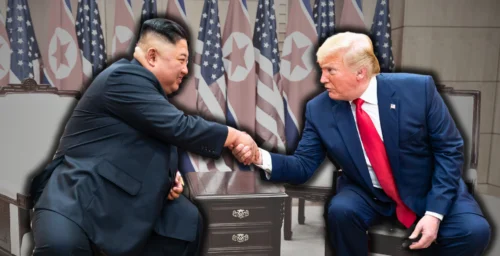
As the geopolitical landscape of the Korean Peninsula shifts, former U.S. officials are expressing deep concern over President Donald Trump’s latest attempts to jumpstart diplomatic engagement with Pyongyang. By invoking the personal rapport he once claimed to share with Kim Jong Un and signaling a willingness to scale back joint U.S.-South Korea military exercises, Trump is attempting to recreate the diplomatic theater of 2018. However, experts warn that the current environment is fundamentally different, characterized by a more confident North Korean regime, a hardened alliance with Moscow, and a U.S. administration operating from a position of relative domestic and strategic instability.
The Strategic Landscape: Then vs. Now
In 2018, the initial overtures from the Trump administration were viewed as a radical departure from the "strategic patience" of the Obama era. Today, the context has darkened. Kim Jong Un, no longer the isolated leader seeking international legitimacy, has successfully solidified his nuclear deterrent and deepened military and economic ties with Russia and China.

These alliances have effectively blunted the impact of long-standing international sanctions, giving Pyongyang little incentive to discuss the one objective Washington remains committed to: denuclearization. While Trump markets his "very good relationship" with Kim as a key diplomatic asset, Pyongyang has largely responded with public denials of any active communication, leaving the U.S. President in a state of diplomatic limbo.
A Chronology of Engagement and Impasse
- 2018: The Era of "Fire and Fury" to Summits: President Trump’s first term saw a rapid transition from bellicose rhetoric to direct leader-to-leader diplomacy, culminating in the Singapore and Hanoi summits.
- 2019: The Hanoi Breakdown: The failure of the Hanoi summit, where the U.S. walked away from a "nothing burger" proposal from North Korea that sought massive sanctions relief without verifiable disarmament, marked a turning point. Kim Jong Un felt humiliated, and the diplomatic window slammed shut.
- 2020-2025: The Deepening Freeze: Pyongyang pivoted toward a "Russia-centric" international strategy, taking advantage of global instability to advance its missile capabilities and secure security guarantees from Moscow.
- 2026: The New Overture: Faced with domestic political pressure ahead of midterm elections and the challenges of an unpopular conflict elsewhere, Trump has again begun to publicly flirt with the idea of a summit, sparking friction within the U.S.-ROK alliance.
The Mechanics of Alliance Coercion
The recent decision to truncate the annual Ulchi Freedom Shield (UFS) military exercises—a decision that reportedly caught Seoul officials off guard—has ignited a debate over the nature of the U.S.-ROK alliance.

Critics argue that President Trump is viewing the alliance through a "mafia boss" lens, where security is a commodity to be traded for personal political wins. Gen. Robert Abrams, reflecting on the situation, noted that while the military still extracts training value from shorter drills, the lack of coordination is "regrettable." The danger, according to analysts like Frank Aum, is that this "transactional" approach undermines the credibility of the U.S. extended deterrence commitment, potentially forcing South Korea to seek its own security assurances or accelerate its own defense capabilities.
Expert Perspectives: The Risks of Unilateralism
NK News consulted several former officials to assess the viability of this strategy. The consensus is one of profound skepticism.

Evans Revere, former U.S. diplomat: Revere views Trump’s outreach as a desperate bid for a "win" to distract from domestic failures. "North Korea is exploiting President Trump’s eagerness for a summit," Revere argues. "By making unilateral concessions, such as scaling back exercises, the U.S. is weakening its own deterrence and providing Pyongyang with leverage without receiving anything of substance in return."
Mintaro Oba, former State Department official: Oba dismisses the current reports of communication as "fan fiction." He suggests that Trump is narrating a scenario he desires rather than reporting on reality. "North Korea has little to gain by engaging now," Oba states. "They are holding the door open to future summits to maintain leverage, but they are clearly signaling that they are not interested in the kind of denuclearization deal Washington wants."

Sydney Seiler, former intelligence official: Seiler emphasizes that the lack of dialogue is a conscious choice by Kim Jong Un. "Kim has been backfooted somewhat by Trump’s outreach," Seiler notes. "But he sees no value in talking to the U.S. while things are going so well for him in his Russia-centric strategy. He is a nuclear power now, and he intends to act like one."
Implications for Future Diplomacy
The core question remains: What could a second Trump-Kim summit possibly achieve?

1. The Denuclearization Hurdle
Any attempt to re-engage on denuclearization is likely to face immediate rejection from Pyongyang. North Korea’s current position is that it is a de facto nuclear power, and it expects the international community to treat it as such. Any summit that includes the word "denuclearization" is likely to be a non-starter for the North.
2. The Case for Interim Agreements
Some analysts suggest that rather than pursuing the "big deal" of total disarmament, the administration should aim for an interim agreement. This would involve a mutual moratorium on strategic testing in exchange for limited sanctions relief. While this would be a departure from the official U.S. objective of full denuclearization, proponents argue it is the only way to reduce tensions and prevent an escalation that could lead to miscalculation.

3. The "Talking for Talking’s Sake" Risk
The most likely outcome of a third summit, according to several experts, would be a superficial agreement. Both leaders would benefit from the optics of a handshake and a photo opportunity, potentially masking the reality that the underlying nuclear problem remains unresolved. The danger, as warned by General Abrams, is that such a summit might only provide the North with the "bare minimum" of recognition and aid without actually securing any long-term stability for the region.
The Road Ahead: Can the Alliance Survive?
The long-term health of the U.S.-ROK alliance is currently under stress, but it is not necessarily in collapse. While Trump’s rhetoric and unilateral actions create "diplomatic messes," the underlying security architecture—the mutual defense treaty and the integration of military forces—remains robust.

However, the "shock effect" of Trump’s diplomacy creates a persistent risk of instability. If the U.S. continues to treat alliance management as an exercise in coercion, Seoul may eventually find it necessary to build a stronger buffer against U.S. policy shifts. As Ambassador Kang Kyung-wha and other South Korean officials work to build stronger ties on Capitol Hill and within the private sector, they are effectively creating a hedge against the unpredictability emanating from the White House.
Conclusion: A High-Stakes Gamble
President Trump’s approach to North Korea is a gamble that values personal diplomacy over institutional process. While proponents might argue that any channel of communication is better than none, the evidence suggests that the current path is heavily tilted in favor of Pyongyang. By telegraphing desperation, the U.S. may be inadvertently signaling that its commitment to regional security is secondary to the President’s desire for a headline-grabbing success.

As the 2026 midterm elections approach, the potential for "uncomfortable surprises" at the negotiating table remains high. Whether this leads to a breakthrough that stabilizes the region or a further erosion of the U.S.-ROK alliance depends on whether the administration can pivot from a transactional, personality-driven strategy to one that respects the complexities of the security environment and the necessity of coordination with its allies. For now, the world watches as Washington and Pyongyang engage in a high-stakes game where the cost of failure may be far higher than a mere diplomatic disappointment.

 rifanmuazin
  Suro Senen
  Asro
Asro 
