
 By Siti Muinah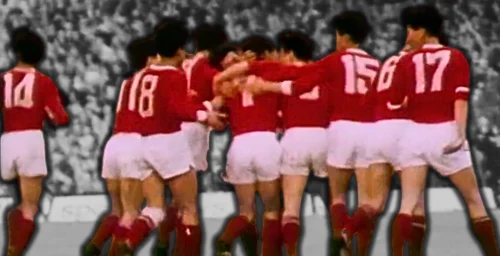
Sixty years ago, the footballing world witnessed one of its most improbable fairy tales. In the summer of 1966, a squad of unknown, disciplined, and technically gifted players from the Democratic People’s Republic of Korea (DPRK) arrived in England for the FIFA World Cup. They were an enigma to the Western public, hailing from a nation that the United Kingdom did not even officially recognize. Yet, through sheer grit and tactical brilliance, they navigated a labyrinth of geopolitical hostility to become the tournament’s ultimate underdogs, culminating in a historic victory over Italy that remains etched in sports folklore.
This is the first part of a two-part investigation into the political and athletic journey of the North Korean national team, exploring how they defied the isolation of the Cold War to step onto the global stage.
The Geopolitical Minefield: Diplomacy Through Sport
In the mid-1960s, the international landscape was defined by the binary tension of the Cold War. For the DPRK, participating in a major Western-hosted sporting event was not merely a matter of athletics; it was a high-stakes diplomatic maneuver.
At the time, the United Kingdom—the host nation for the 1966 tournament—did not maintain diplomatic relations with Pyongyang. This created an immediate, agonizing bureaucratic hurdle: if North Korea qualified, how could they enter the country? How would the British government treat the team? Would they be allowed to fly their national flag, or would the presence of a communist delegation from the North provoke a diplomatic incident with the South and their Western allies?
These questions were not hypothetical. The 1966 World Cup was the first to be held in England, the birthplace of the game, and the British government was under immense pressure to ensure the tournament proceeded without a breakdown in international decorum.
Chronology of the Qualification Campaign
The road to England was paved with logistical nightmares and political maneuvering.
1. The African Boycott and the Road to Asia
The qualification process was initially intended to include teams from Africa and Asia competing for a single spot. However, when FIFA decided to allocate only one slot for the combined regions of Africa, Asia, and Oceania, the African nations staged a mass boycott in protest. This left the DPRK to face only the Australian national team in a two-legged playoff held in neutral territory—Phnom Penh, Cambodia.
2. The Cambodian Showdown (November 1965)
The choice of Phnom Penh was a strategic necessity. North Korea won both legs against Australia convincingly (6-1 and 3-1), proving that they were not just making up the numbers. The team’s athleticism and rapid-fire passing style caught the few observers present off guard. They were, quite simply, a team forged in the crucible of military-style discipline and intensive, collective training.
3. The Entry Visa Dilemma (Spring 1966)
Following their victory, the looming specter of the "two Koreas" issue threatened to derail their participation. The British Foreign Office was terrified of offending the Republic of Korea (South Korea) or the United States. For months, the status of the North Korean team remained in limbo. It was only after intensive back-channel negotiations involving FIFA and the British Football Association that the DPRK was granted visas—on the condition that their presence be kept strictly to the athletic sphere, avoiding political demonstrations.
Supporting Data: The Anatomy of an Underdog
To understand why the North Korean performance was so shocking, one must look at the data of the era. Prior to 1966, North Korean football was almost entirely isolated from the European professional circuits.

- Tactical Prowess: The team utilized a high-pressing, "total football" precursor style that focused on extreme physical endurance.
- The "Flying Horse" Reputation: Lacking the star power of Brazil’s Pelé or England’s Bobby Charlton, the North Koreans played as a singular, cohesive unit. Their endurance was significantly higher than their European counterparts, a result of the rigorous physical training regimes implemented by the state.
- Squad Composition: The team was composed of amateur or semi-professional players who were essentially state employees, allowing them to train together for months at a time—a luxury most professional squads in 1966 did not have.
Official Responses and the "Flag Incident"
As the tournament drew near, the British government sought to minimize the visibility of the DPRK. There were rumors that the British authorities would refuse to play the North Korean national anthem or display their flag.
Sir Stanley Rous, the then-president of FIFA, faced immense pressure. The official stance of the UK was that they did not recognize the North Korean regime; therefore, the team was officially referred to as "North Korea" rather than the "Democratic People’s Republic of Korea."
When the team finally arrived in Middlesbrough—the northern industrial city that would host their group matches—the local population, initially confused by the visitors, eventually adopted them as their own. The North Koreans were a breath of fresh air: polite, disciplined, and mysterious. However, the diplomatic friction remained. When the team beat Italy 1-0 in a match that shocked the world, the BBC and the British press struggled to reconcile the victory of a "non-existent" state over a footballing superpower.
The Cultural and Political Implications
The 1966 World Cup run did more than just boost the DPRK’s international profile; it solidified the concept of "Chollima" (the mythical winged horse) as a central theme in North Korean national identity—symbolizing speed, power, and the ability to overcome impossible odds.
1. Soft Power and Legitimacy
By competing against the likes of Italy, Chile, and Portugal, the DPRK achieved a level of global visibility that no amount of diplomatic lobbying could have purchased. For a brief moment, North Korea was not defined by the Korean War or ideological rhetoric, but by its ability to hold its own against the best in the world.
2. The Legacy of the "Middlesbrough Miracle"
The victory against Italy remains the singular defining moment of North Korean sports history. It forced a re-evaluation of the nation’s capabilities and created a lasting, if complex, relationship between the DPRK and the international sporting community.
3. The Cold War Context
The fact that the team could compete in the UK—a staunch U.S. ally—demonstrated the power of sport to transcend ideological barriers. However, it also underscored the precarious nature of North Korea’s position; the team was always under the watchful eye of state handlers, and their performance served as a vital propaganda tool for the regime back home.
Conclusion: A Footnote in History, or a Template for the Future?
The North Korean journey in 1966 was not just a sporting curiosity; it was a landmark event that highlighted the tension between globalism and nationalism during the Cold War. As we look back sixty years later, the story of those players—who arrived as ghosts of a unrecognized nation and left as icons of a historic upset—remains a testament to the unpredictable nature of the beautiful game.
In the second part of this series, we will delve into the dramatic final matches of the 1966 tournament, the internal pressures faced by the players upon their return to Pyongyang, and how this historic campaign continues to influence the North Korean approach to international sports today.
Stay tuned for Part 2, where we analyze the quarterfinal clash against Portugal and the lasting myths that surround the "Middlesbrough Miracle."

 Ammar Sabilarrohman
  Pevita Pearce
  Nana Wu
