
 By Ammar Sabilarrohman

In a candid revelation that has sent ripples through the South Korean entertainment industry, Lee Chanhyuk, one-half of the critically acclaimed sibling duo AKMU (Akdong Musician), has detailed the motivations behind his decision to transition toward independent management and creative production. During a featured appearance on the October 31st broadcast of MBC’s popular variety program "The Manager" (also known as "Omniscient Interfering View"), the singer-songwriter and producer provided a rare glimpse into the internal pressures and creative constraints that ultimately led him to seek a path outside the traditional "Big 4" agency structure.
The episode, which served as a special deep-dive into the lives of AKMU members Lee Chanhyuk and Lee Suhyun, highlighted the stark contrast between their early years as protégés of YG Entertainment and their current status as self-governing artists. Lee Suhyun, Chanhyuk’s sister and musical partner, served as a primary witness to this transformation, disclosing to the program’s panel that the success of their recent high-profile concerts was almost entirely the result of Chanhyuk’s exhaustive personal efforts.
According to Suhyun, the shift in their operational model has been profound. She noted that while she previously followed established plans provided by their agency or her brother’s earlier creative drafts, this most recent project saw Chanhyuk take the helm of every facet of production. "Before, I followed the plans my brother came up with, but this time, he became independent from the company and created everything from start to finish," Suhyun explained. Her pride was evident as she described how her brother’s involvement extended to the most minute details, including the specific buttons on the dancers’ outfits—a level of oversight rarely seen in the highly compartmentalized world of K-pop production.
The Pursuit of Creative Autonomy and Individual Responsibility
The crux of Lee Chanhyuk’s confession centered on the inherent limitations of working within a major corporate entity, even one as influential as YG Entertainment. While acknowledging that YG provided substantial support throughout AKMU’s decade-long career, Chanhyuk pointed to an invisible ceiling that often exists within the agency model. "YG did support me well," he admitted during the broadcast, "but when working with a company, there are always things I feel I should only do up to a certain point."

This sentiment reflects a broader discourse within the music industry regarding the "idol system," where creative decisions are often vetted by multiple layers of management, marketing teams, and executive boards. For a visionary like Chanhyuk, whose career has been defined by a unique and often avant-garde artistic sensibility, these institutional guardrails eventually became a hindrance rather than a help.
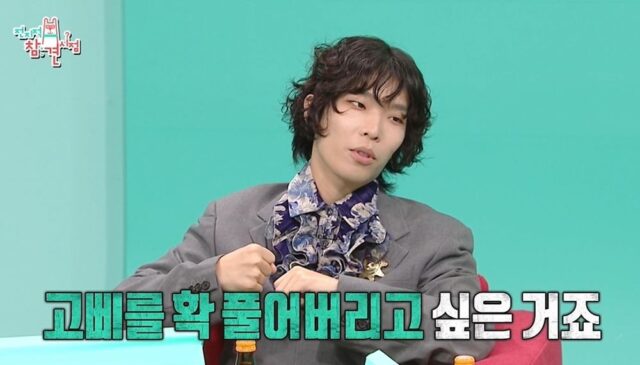
Chanhyuk articulated a desire for total accountability, stating, "I wanted to completely let go of the reins. I wanted to take full responsibility, gather my own people, and lead the way." This move toward independence is not merely about creative control; it is about the establishment of a personal brand and a business infrastructure that reflects his specific values. By "gathering his own people," Chanhyuk has effectively moved from being an asset within a corporation to the CEO of his own creative vision.
The Physical and Psychological Toll of Independence
However, the transition to independence has not been without its costs. The broadcast revealed the intense physical and mental strain that accompanies the role of an independent producer-artist. Lee Chanhyuk admitted that the weight of responsibility led to significant health challenges during the lead-up to his latest performances.
The panel on "The Manager" noted the visible changes in Chanhyuk’s appearance, which he confirmed were the result of overwork and stress. He revealed that he lost approximately 5 kilograms (roughly 11 pounds) within a single month. "I couldn’t eat," he confessed, explaining that his physical sensitivity reached a peak as the concert date approached.
The most alarming revelation involved the week prior to the concert, during which Chanhyuk suffered from severe muscle spasms and chronic insomnia. "I was physically sensitive from overwork when I got home," he noted. Despite these challenges, he maintained that the burden was not a result of "pressure" in the traditional sense, but rather a byproduct of his own "high ambitions." This distinction highlights the mindset of a perfectionist who is willing to sacrifice physical well-being to ensure that a creative vision is executed without compromise.

A Chronology of AKMU’s Evolution
To understand the weight of Chanhyuk’s decision, one must look at the timeline of AKMU’s rise to prominence. The siblings first captured the public’s imagination in 2012 as contestants on the second season of the survival audition show "K-pop Star." Their witty lyrics and organic acoustic sound stood in stark contrast to the highly manufactured pop of the era.
- 2012-2013: AKMU wins "K-pop Star 2" and subsequently signs with YG Entertainment, choosing the agency over rivals SM and JYP due to the perceived creative freedom promised by then-chairman Yang Hyun-suk.
- 2014: The duo debuts with the album "Play," which becomes a commercial and critical juggernaut, establishing them as "digital monsters" on the Korean charts.
- 2017-2019: Lee Chanhyuk enlists in the Republic of Korea Marine Corps. During his service, he continues to write music, including the official marching song for the Marines.
- 2021: Following the expiration of their initial seven-year contract, AKMU makes headlines by renewing with YG Entertainment for an additional five years. At the time, the renewal was seen as a testament to the strong bond between the artists and the agency.
- 2023-2024: Chanhyuk begins to diversify his activities, releasing solo experimental work and eventually establishing his own independent creative label/production house to manage his individual projects and the technical direction of AKMU’s live shows.
This chronology suggests that the move toward independence was not a sudden fracture, but a gradual evolution. The 2021 contract renewal likely provided the financial security and brand stability needed for Chanhyuk to eventually pivot toward the autonomous model he operates under today.
Broader Industry Implications: The Rise of the "Artist-CEO"
Lee Chanhyuk’s move is emblematic of a significant shift in the South Korean music industry. For decades, the "Big 3" (and later "Big 4") agencies held absolute power over an artist’s career trajectory. However, the current era is witnessing a "Great Migration" of established stars toward independent labels or "one-man agencies."
Similar moves have been observed with members of BLACKPINK—Jennie, Lisa, and Jisoo—who have all established their own labels (ODDATELIER, LLOUD, and BLISSOO, respectively) for their solo activities while maintaining a group connection with YG. Similarly, members of EXO and Super Junior have sought independent paths for their individual creative pursuits.
The benefits of this model are twofold. For the artist, it allows for a higher percentage of revenue retention and absolute creative veto power. For the industry at large, it encourages a more diverse range of musical styles that are not beholden to the "agency sound." However, as Chanhyuk’s experience shows, the drawback is the loss of the massive administrative and logistical safety net that a conglomerate provides. When a dancer’s button is misplaced, or a lighting cue is missed, the blame now rests solely on the artist’s shoulders.
Analysis of the Independent Path
From a strategic standpoint, Chanhyuk’s decision to "gather his own people" suggests a desire to build a sustainable ecosystem that can outlast the typical lifespan of a K-pop idol. By taking charge of concert production, he is gaining invaluable experience in the "back-end" of the industry—skills that will allow him to transition into a full-time executive or producer role in the future.
Industry analysts suggest that Chanhyuk’s confession on "The Manager" serves as both a personal catharsis and a signal to the industry. It humanizes the struggle of the "genius producer" trope, showing that even the most successful artists grapple with the fear of failure when the safety net is removed. Furthermore, his willingness to discuss his physical health issues—such as the 5kg weight loss and muscle spasms—highlights the often-ignored "human cost" of creative excellence in the competitive Korean market.
Conclusion and Future Outlook
As AKMU approaches its second decade in the industry, the group finds itself in a unique position. They remain one of the few acts capable of achieving "Perfect All-Kills" on the charts with every release, yet they are no longer the "young siblings" the public first met a decade ago.
Lee Chanhyuk’s independence marks the beginning of a mature era for the duo. By taking full responsibility for their output, he is ensuring that AKMU’s legacy is defined by their own artistic growth rather than corporate strategy. While the physical toll of this transition has been significant, the sense of fulfillment expressed by Chanhyuk during the broadcast suggests that for him, the price of freedom is one worth paying.
Fans and industry observers alike will be watching closely to see how this newfound independence influences AKMU’s future discography. If the success of their recent concerts is any indication, Chanhyuk’s "high ambitions" are likely to lead the duo into even more experimental and uncharted musical territories, further solidifying their status as the definitive voices of their generation.

