
 By Suro Senen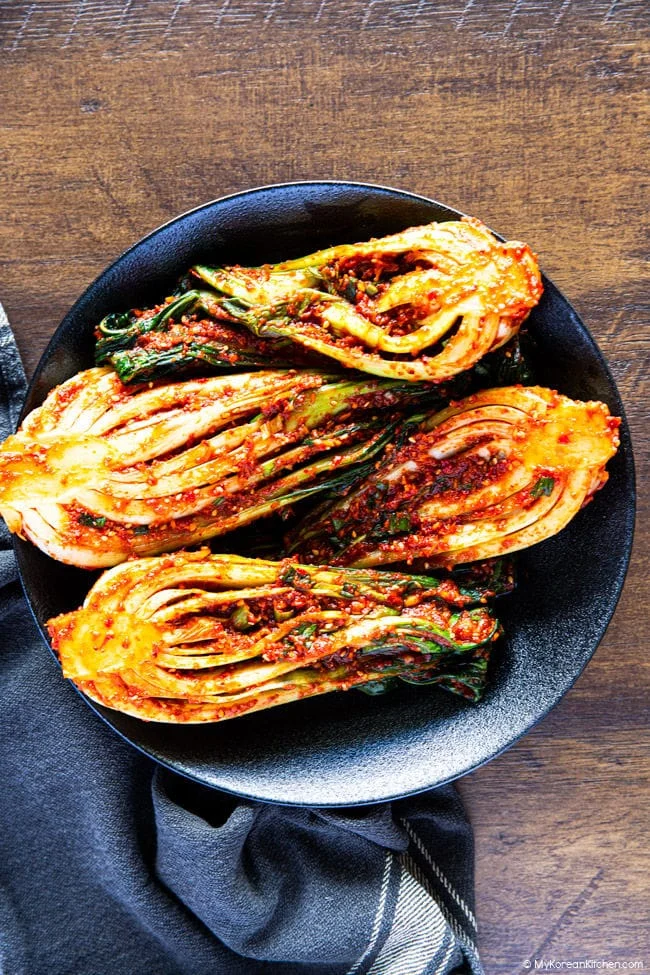
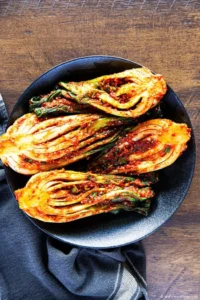
In the expansive and storied world of Korean fermentation, napa cabbage kimchi—or baechu-kimchi—reigns supreme as the quintessential staple. However, for home cooks, gardeners, and culinary enthusiasts looking to diversify their pantry, there is another contender that offers a distinct, vibrant profile: bok choy kimchi. Far from being a mere substitute for its larger, leafier cousin, bok choy kimchi stands as an independent culinary expression, celebrated for its unique texture, refreshing flavor, and remarkable versatility.
Main Facts: Redefining the Kimchi Paradigm
At its core, bok choy kimchi is a seasonal delight, often crafted when gardens are brimming with fresh, tender stalks of bok choy. Unlike napa cabbage, which is prized for its soft, expansive leaves that wilt beautifully into a tangy, umami-rich pickle, bok choy brings a structural integrity to the table that is entirely its own.
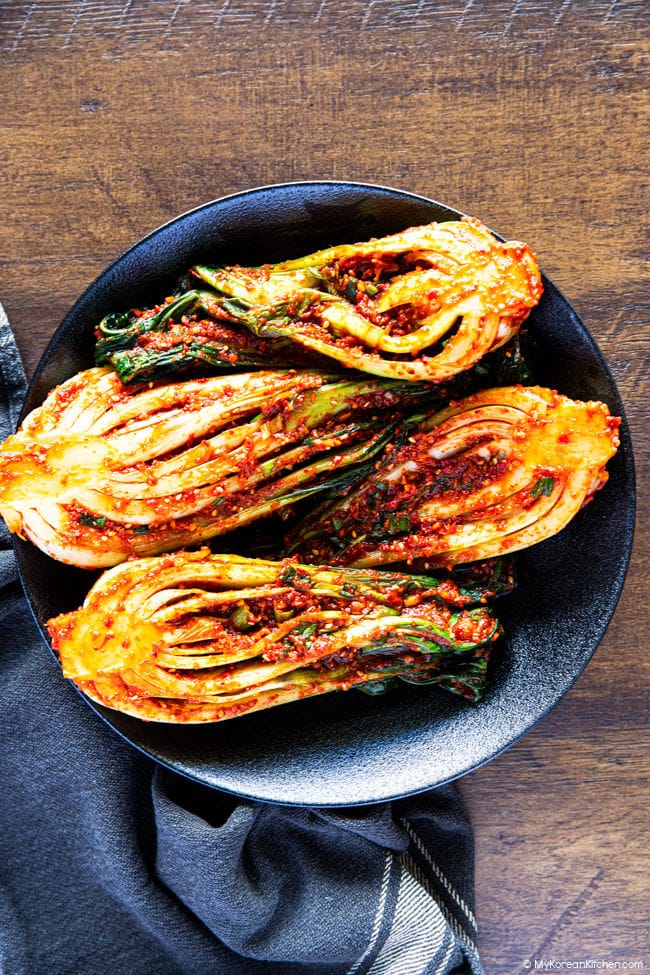
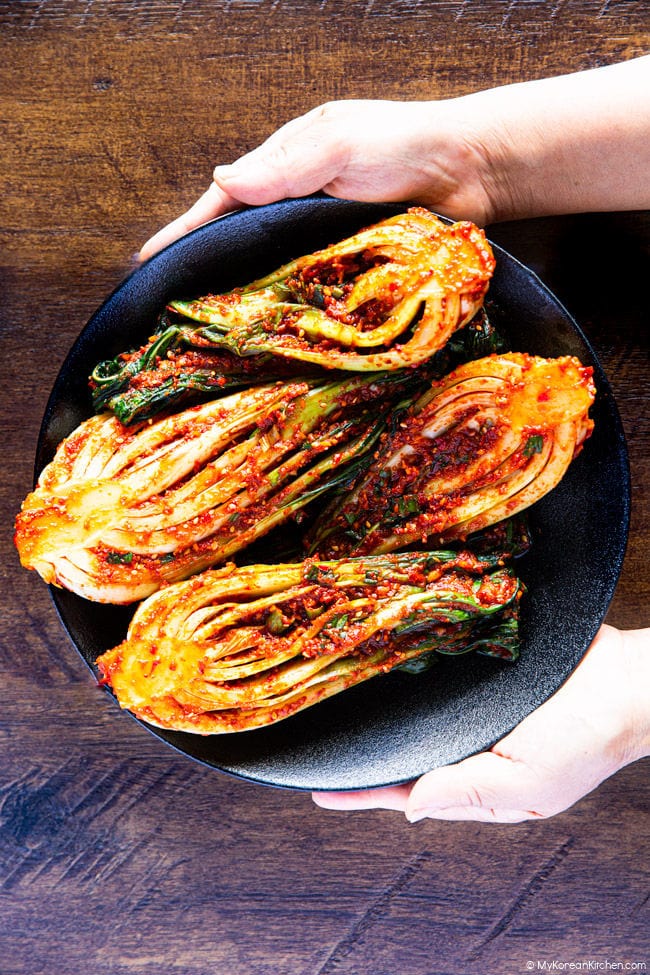
The defining characteristic of this variety is the stem. The thick, juicy stalks of the bok choy provide a clean, crisp bite—reminiscent of celery—that maintains its crunch even after the fermentation process has begun. This creates a fascinating contrast against the spice-laden, savory paste typically used in traditional kimchi recipes. While it adheres to the fundamental principles of Korean fermentation—brining, seasoning, and controlled aging—the final product offers a "green" flavor profile that feels lighter and more contemporary than the more robust napa cabbage variety.
A Chronological Guide to Crafting Perfection
Achieving the perfect batch of bok choy kimchi is a meticulous process that balances patience with technique. The transformation from raw produce to a fermented masterpiece follows a strict, time-honored chronology.
1. Preparation and Meticulous Cleaning
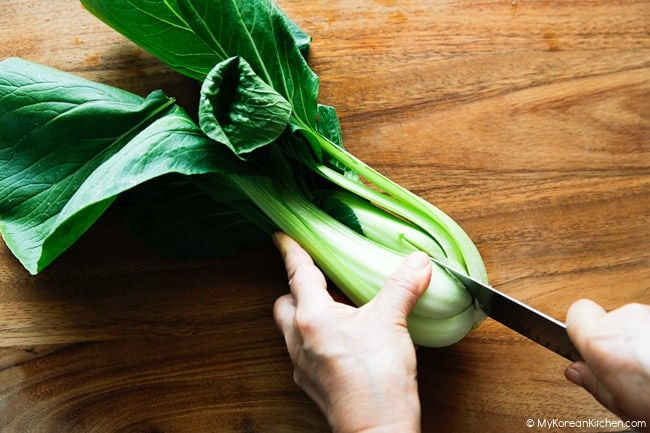
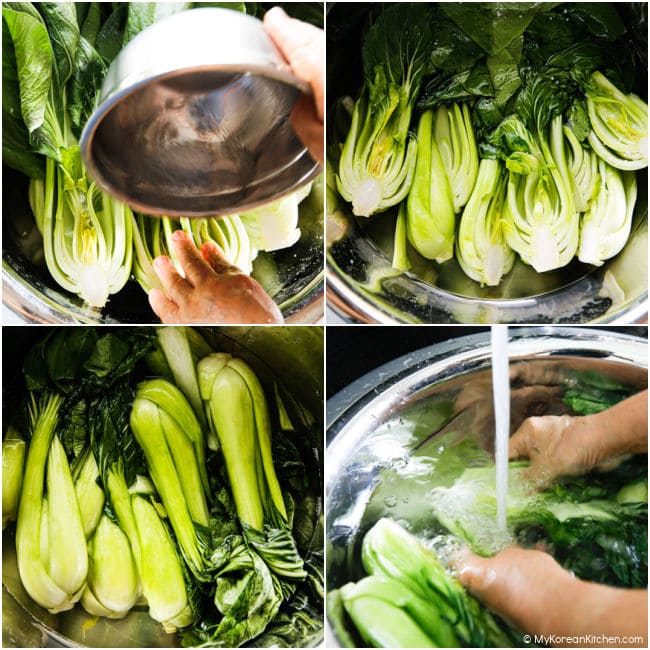
The process begins with the selection and trimming of the bok choy. Unlike larger vegetables, the goal here is to retain the plant’s structural integrity. A thin slice is removed from the root end, just enough to ensure the leaves stay attached, followed by a clean, vertical halving. The rinse is arguably the most critical step; dirt and grit often hide deep within the crevices of the base, necessitating thorough attention under cold, running water.
2. The Science of Brining
Brining is not merely about seasoning; it is the fundamental act of dehydration that alters the texture of the vegetable. The bok choy is submerged in a saline solution. The duration is dictated by the size and firmness of the stems—a delicate dance between 60 and 90 minutes. For larger, thicker stalks, 90 minutes ensures that the salt penetrates the cellulose, allowing the vegetable to soften without losing its signature "snap." Frequent rotation during this phase ensures an even distribution of salinity.
3. The Composition of the Seasoning Paste
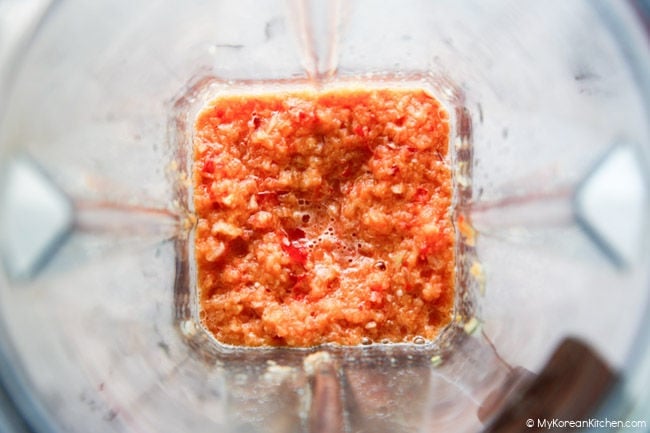
The "soul" of the kimchi lies in its seasoning. A harmonious blend of aromatic and savory elements is pulsed in a blender: fresh apple (for natural sweetness), pungent garlic, earthy ginger, salted shrimp, and high-quality fish sauce. The inclusion of plum syrup adds a complex acidity that balances the heat. The final touch—the addition of red sweet pointed pepper—adds visual depth and texture without overwhelming the palate.
4. The Binding Flour Paste
To ensure the seasoning adheres to the slick surface of the bok choy leaves, a porridge-like flour paste is created. By heating a simple mixture of flour and water until it reaches a thin, glue-like consistency, the cook creates a base that holds the spices, sesame seeds, and chili flakes in place, preventing the mixture from sliding off the vegetable.
5. Integration and Fermentation
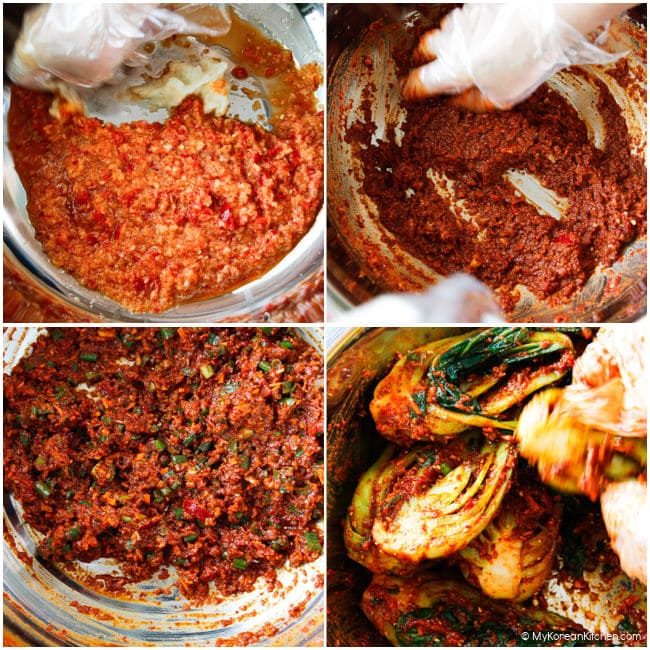
Once the seasoning and flour paste are combined with the aromatics—onions, carrots, and green onions—the bok choy is gently massaged with the mixture. Because the leaves are fragile, this step requires a gentle hand. The kimchi is then transferred to an airtight container. The final stage is a brief period of room-temperature fermentation, typically lasting 24 hours, before it is moved to the refrigerator to continue its development.
Supporting Data and Nutritional Context
For the health-conscious home chef, bok choy kimchi is a nutritional powerhouse. A single serving of this dish—when prepared according to the traditional ratios—provides a significant boost of vitamins, particularly Vitamin A and C, which are essential for immune function.
According to standard nutritional analysis for this specific recipe, one serving (as per the 1.5-serving yield) contains approximately 457 kcal, 22g of protein, and 85g of carbohydrates. The fiber content is particularly noteworthy at 24g, reflecting the vegetable-heavy nature of the dish. While the sodium content is high—a hallmark of traditional fermentation methods—the presence of probiotics, developed during the aging process, provides a significant benefit to gut health, offsetting the dietary trade-offs.
Professional Perspectives on Flavor Profiles
The debate between the use of gochugaru (Korean red chili flakes) and paprika is a frequent topic among culinary experts. While paprika was once touted as a mild alternative for those averse to heat, testing has revealed that it lacks the deep, smoky complexity and vibrant red pigment inherent to gochugaru.
Culinary professionals often advise that for a truly authentic experience, gochugaru is non-negotiable. However, for those seeking a "fusion" or "milder" profile, a hybrid approach—using 2 tablespoons of gochugaru to 3–4 tablespoons of paprika—is the industry standard for maintaining color without the intense capsaicin levels. This technique, coupled with the inclusion of sliced red sweet pointed peppers, allows the cook to achieve a high-texture, visually stunning product that remains accessible to a broader range of palates.
Implications for Modern Korean Cuisine
The rise of bok choy kimchi signals a broader trend in Korean culinary arts: the evolution of "seasonal convenience." As global interest in fermented foods continues to climb, the ability to adapt traditional methods to locally available produce (such as bok choy) demonstrates the resilience and adaptability of Korean culinary philosophy.
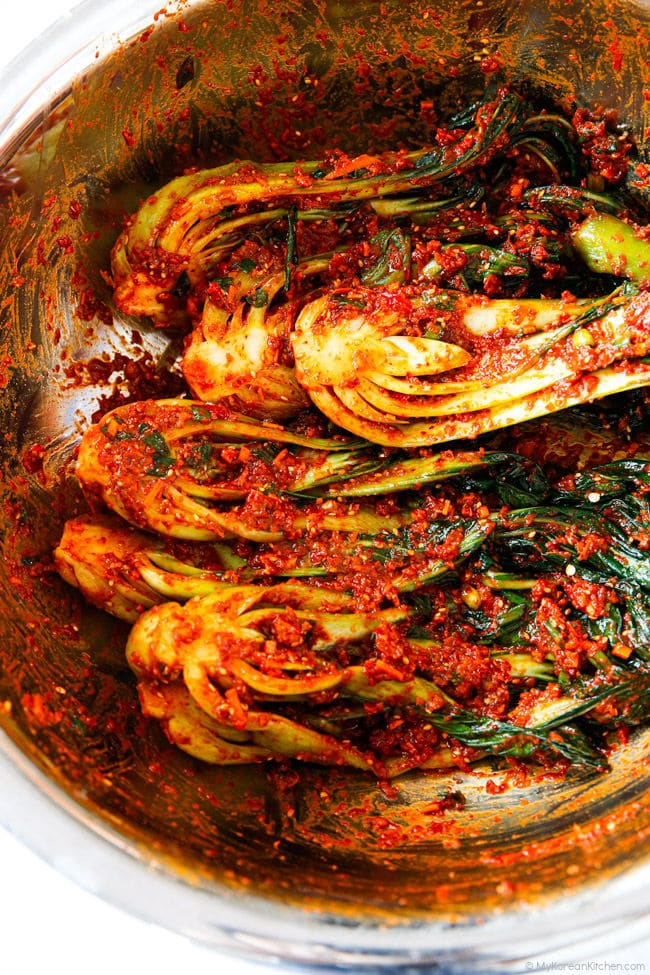
Furthermore, the recommendation to enjoy this kimchi in the "young" stage—within 3 to 5 days—speaks to a shift in consumer behavior. Unlike the long-term fermentation of winter kimjang cabbage, which is designed to last through the cold months, bok choy kimchi is an immediate gratification food. It serves as an ideal pairing for high-fat dishes like samgyeopsal (grilled pork belly) or bossam (boiled pork wraps). The acidity and crunch of the bok choy act as a palate cleanser, cutting through the richness of the meat in a way that traditional, older, and softer kimchi cannot.
In conclusion, while napa cabbage remains the titan of the kimchi world, the bok choy variety offers a refreshing, sophisticated, and technically fascinating alternative. By mastering the balance of the brine, the delicate application of the spice paste, and the timing of the fermentation, the home cook can elevate a humble vegetable into a centerpiece of the dinner table. It is, quite simply, a testament to the fact that tradition is not a static set of rules, but a living, breathing, and ever-evolving practice of flavor.
 Raul Delapena Setiawan
  Asep Darmawan
  Nana Wu
