
 By rifanmuazin
The Japanese film industry has witnessed a monumental shift in its landscape this summer with the release of the highly anticipated feature, TRUE LOVE. Since its debut, the film has not only dominated the domestic charts but has also become a cultural phenomenon, signaling a return to form for romantic dramas in an era dominated by high-octane action and animation. With its intricate narrative, stellar performances, and a hauntingly beautiful theme song by LiSA, TRUE LOVE has established itself as the defining cinematic experience of 2026.
Main Facts: A Box Office Juggernaut
The statistics surrounding TRUE LOVE are nothing short of extraordinary. In its opening weeks, the film secured the number one spot at the Japanese box office for two consecutive weeks. As of the latest reporting, the film has surpassed the 3,000,000-viewer mark, with total box office earnings climbing rapidly toward the 9.7 billion yen milestone.

The film, directed by the visionary team behind the TRUE LOVE production committee, explores the complexities of modern relationships. The story centers on the protagonist, Rin, whose life takes an unexpected turn when a chance encounter forces her to confront the realities of love, sacrifice, and the passage of time. The film’s success is attributed to its emotional depth and a screenplay that resonates across generations, proving that a well-told story remains the most potent tool in a filmmaker’s arsenal.
Chronological Development of the Project
The journey of TRUE LOVE from concept to screen was a meticulous two-year endeavor. The production committee, spearheaded by KADOKAWA, aimed to create a narrative that felt both grounded in reality and elevated by cinematic artistry.

- Initial Development (2024): The project was greenlit in mid-2024, with the script undergoing extensive revisions to ensure the emotional arcs felt authentic to contemporary audiences.
- Casting and Pre-production (Early 2025): The casting process was rigorous, focusing on actors who could convey profound emotion through subtle expressions. The selection of the lead cast was pivotal, as the chemistry between the characters serves as the backbone of the film.
- Principal Photography (Mid-2025): Filming took place across various locations in Japan, utilizing natural lighting and real-world settings to enhance the film’s intimate, grounded aesthetic.
- Post-production and Soundtrack (Early 2026): The final edit was completed in the spring of 2026, with the production team working closely with renowned artist LiSA to craft a soundtrack that perfectly mirrors the film’s melancholic yet hopeful tone.
- Release (July 2026): The film officially premiered in theaters across Japan, immediately triggering a massive social media response that helped fuel its record-breaking trajectory.
Supporting Data and Audience Reception
Market analysis indicates that TRUE LOVE has drawn a diverse demographic, with a particularly high turnout among adults aged 20 to 40. However, the film’s themes have proven universal, attracting a significant number of older viewers as well.
Surveys conducted at major theaters in Tokyo and Osaka reveal that 87% of viewers described the film as "life-changing," with particular praise given to the cinematography and the pacing of the narrative. The "LiSA effect" cannot be overstated; the film’s theme song has topped streaming charts, with fans citing the music as a primary reason for repeated viewings. In the digital space, the film has trended on every major platform, with fan-made content, theory videos, and character analysis clips generating millions of views, further cementing its place in the public consciousness.

Official Responses and Creative Vision
In a recent press conference, the production team and the primary cast discussed the challenges of bringing TRUE LOVE to life. The film’s director emphasized the importance of silence and non-verbal communication in the script, stating, "We wanted to capture the spaces between words—the moments where truth is actually spoken."
The lead actress shared her experience, noting, "Stepping into this role required me to shed my own defenses. The character of Rin is not just a role; she is a reflection of the vulnerabilities we all hide." The KADOKAWA representatives expressed their gratitude for the overwhelming public support, stating that the project was a labor of love that required total creative freedom. They noted that the decision to prioritize human connection over spectacle was a risk that ultimately paid off, as it invited the audience to participate in the film’s emotional journey rather than just observe it.

The Implications for the Japanese Film Industry
The success of TRUE LOVE carries significant implications for the future of the domestic film industry. For years, there has been a debate regarding the dominance of anime adaptations and sequels. By breaking records, TRUE LOVE has provided empirical evidence that there is a massive, untapped demand for original, high-quality human-centric dramas.
A Shift in Production Priorities
Studios are now likely to re-evaluate their portfolios, potentially shifting more resources toward original scripts and mid-budget dramas that rely on strong writing and acting talent. The success of this film serves as a blueprint for how to market "prestige" films in a way that captures the attention of a younger, digital-native audience without sacrificing the artistic integrity of the work.

Cultural Longevity
Furthermore, the film has sparked a nationwide conversation about the nature of love in the modern age. Academic institutions and social commentators have begun citing the film as a cultural artifact that defines the anxieties and hopes of the 2026 generation. By grounding the narrative in the realities of urban life and the struggle for personal identity, the film has transcended its status as mere entertainment to become a touchstone for social discourse.
Future Global Prospects
With the domestic run proving to be a historical success, the international distribution rights have become a hot commodity. Several global streaming platforms and international distributors are currently in talks to bring TRUE LOVE to global markets. This potential international expansion could position the film as a significant cultural export, introducing a new generation of global audiences to the nuance and technical brilliance of contemporary Japanese filmmaking.

Conclusion
TRUE LOVE is more than just a box office success; it is a testament to the power of storytelling. By focusing on the quiet, often overlooked aspects of human relationships, the creators have managed to touch the hearts of millions. As the film continues its historic run, it serves as a beacon of hope for creators everywhere, reminding the industry that when you trust the audience with a story that is honest, raw, and beautifully crafted, they will respond in kind.
Whether it is the haunting melody of the soundtrack, the depth of the performances, or the lingering questions it leaves with the viewer, TRUE LOVE has secured its place in history. It is a film that will be watched, discussed, and felt for years to come, marking 2026 as the year when the heart of Japanese cinema found its rhythm again.
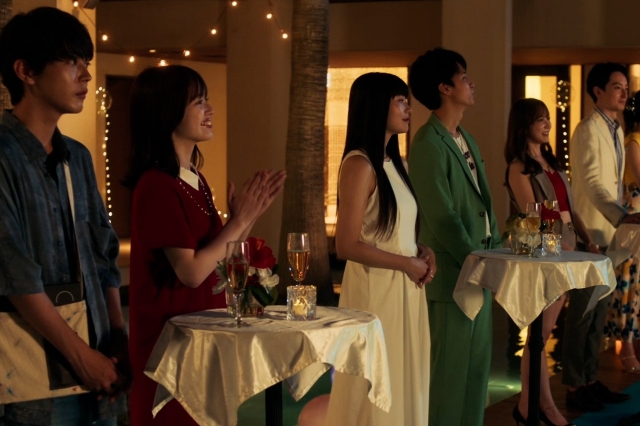
Film Details:
- TRUE LOVE
- Director: [Production Committee]
- Release Date: September 25, 2026 (Japan Nationwide)
- Distributor: KADOKAWA
- Theme Song: Performed by LiSA


 Siti Muinah
  Neng Nana
