
 By Ali Ikhwan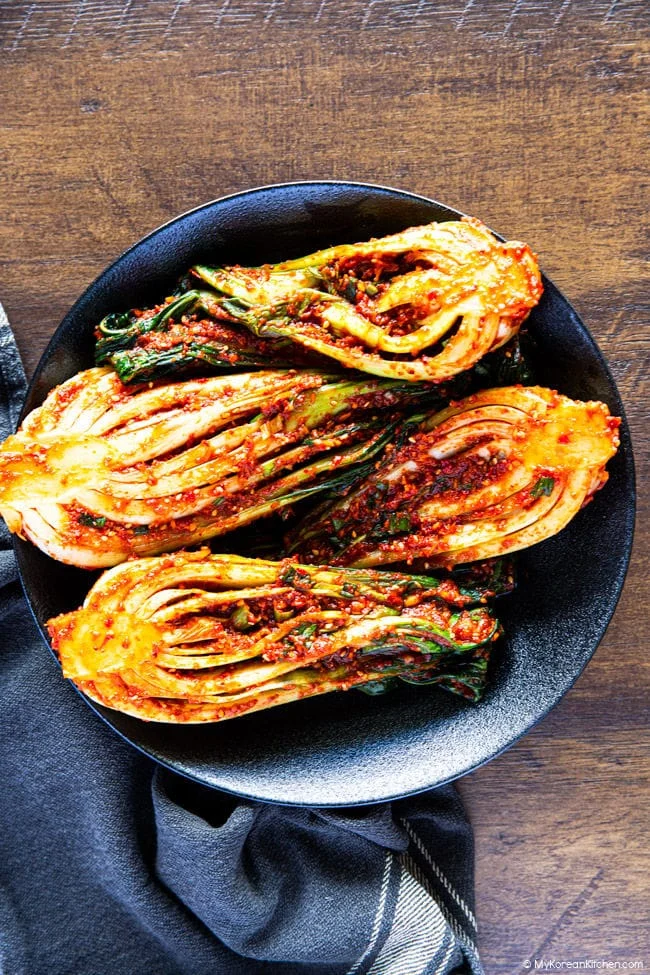
In the pantheon of Korean cuisine, kimchi stands as the undisputed sovereign—a probiotic powerhouse that defines the national palate. While the classic napa cabbage variety remains the global face of this culinary tradition, a burgeoning movement of home cooks and professional chefs is turning their attention to a more delicate, vibrant, and surprisingly crisp alternative: Bok Choy Kimchi.
This isn’t merely a variation; it is a distinct expression of the art of fermentation. By utilizing the juicy, succulent stems and tender leaves of bok choy, creators are discovering a flavor profile that offers a "clean" bite, reminiscent of celery, yet deeply rooted in the traditional umami-rich seasoning of Korean banchan.
The Evolution of a Seasonal Staple: Main Facts
Bok choy, a staple of Asian gardening, has long been a secondary player in the fermentation world. However, as home gardening sees a resurgence and the demand for diverse, gut-healthy foods grows, bok choy kimchi has moved from a creative "garden-to-table" solution to a sought-after delicacy.
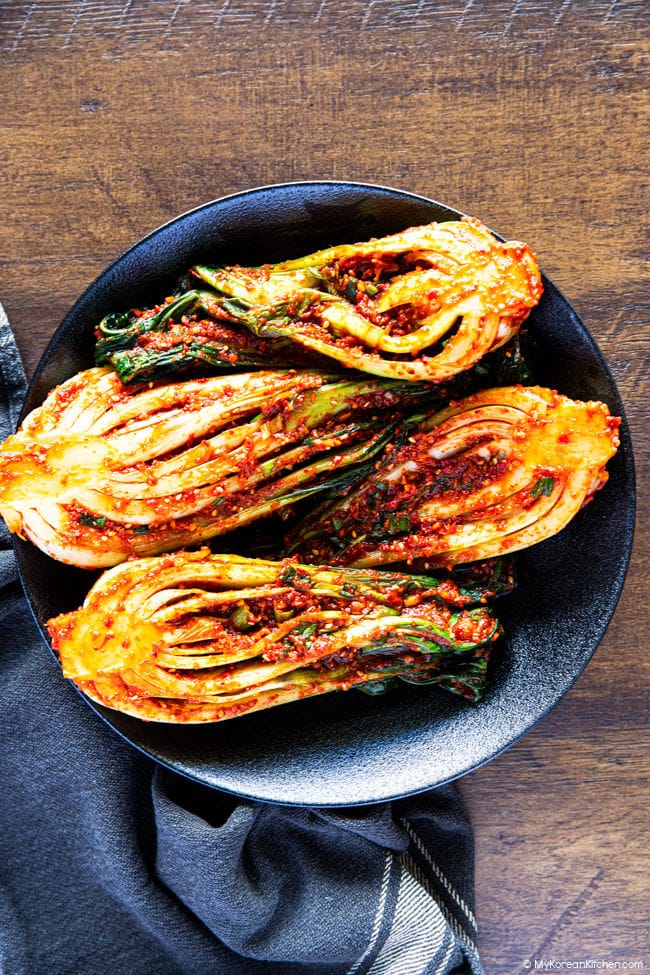
Unlike napa cabbage, which is prized for its hearty, fibrous structure that holds up to long-term fermentation, bok choy offers a different experience. It is a "fresh" style of kimchi. It is designed to be consumed relatively young, often within days of preparation. This makes it an ideal entry point for those intimidated by the weeks-long, complex fermentation processes required for traditional tongbaechu-kimchi (napa cabbage kimchi).
The primary difference lies in the architecture of the vegetable. The thick, juicy stems of the bok choy act as a sponge for the seasoning paste, absorbing the garlic, ginger, and salted shrimp while maintaining a structural crispness that contrasts beautifully with the softness of the fermented leaves.
The Craft of Fermentation: A Chronological Guide
For those looking to master this craft, the process is a study in precision and timing. The transformation from raw greens to a fermented masterpiece follows a rigorous, time-tested chronology.
Phase 1: The Preparation
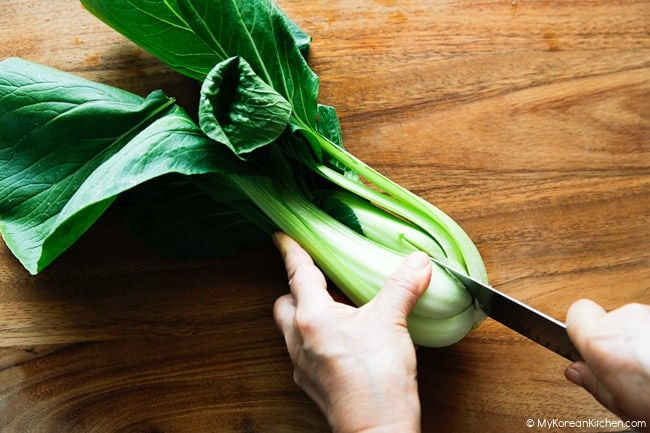
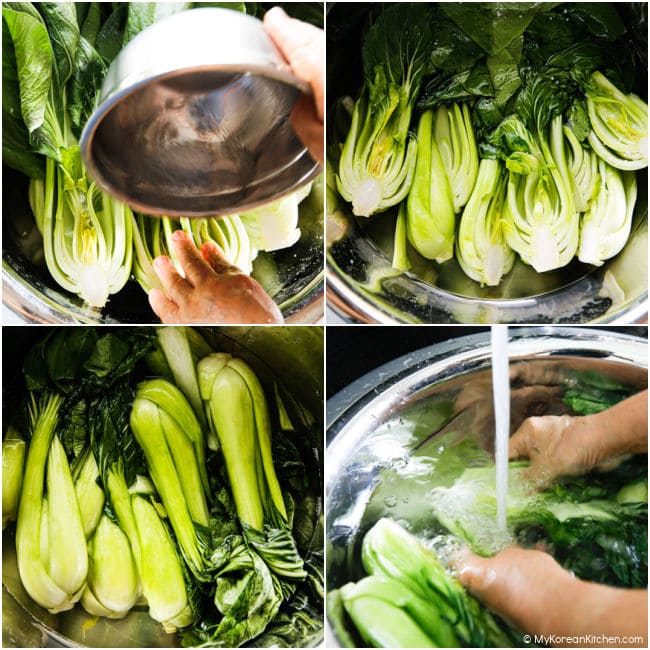
Success begins with the trim. A thin slice is removed from the root end, ensuring the leaves remain attached—a critical detail that keeps the vegetable intact during the salting process. The bok choy is then halved, rinsed under cold water, and scrubbed at the base, where debris often hides.
Phase 2: The Brining (The Crucial Window)
The brining phase is where the texture is determined. The bok choy is submerged in a saline bath, with the duration dictated by the thickness of the stems. Thinner, younger bok choy requires roughly 60 minutes, while sturdier stalks may need up to 90 minutes. During this period, the salt draws out excess moisture, ensuring the finished product remains crisp rather than mushy. Turning the vegetables two to three times during this process is essential for uniform seasoning.
Phase 3: The Alchemy of Seasoning
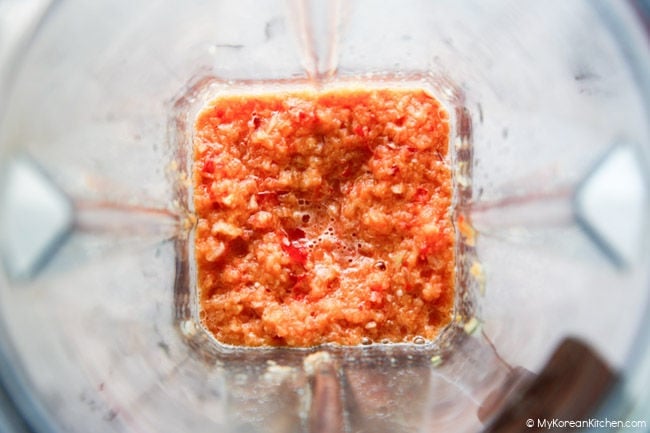
While the greens are draining, the "heart" of the kimchi is created. A blender is used to emulsify apple, garlic, ginger, salted shrimp, and fish sauce. This creates the flavor foundation. The introduction of a "flour paste"—a simple mixture of flour and water cooked into a thin, porridge-like consistency—acts as the binding agent, ensuring the vibrant, chili-laden seasoning clings to every fold of the bok choy.
Phase 4: Integration and Fermentation
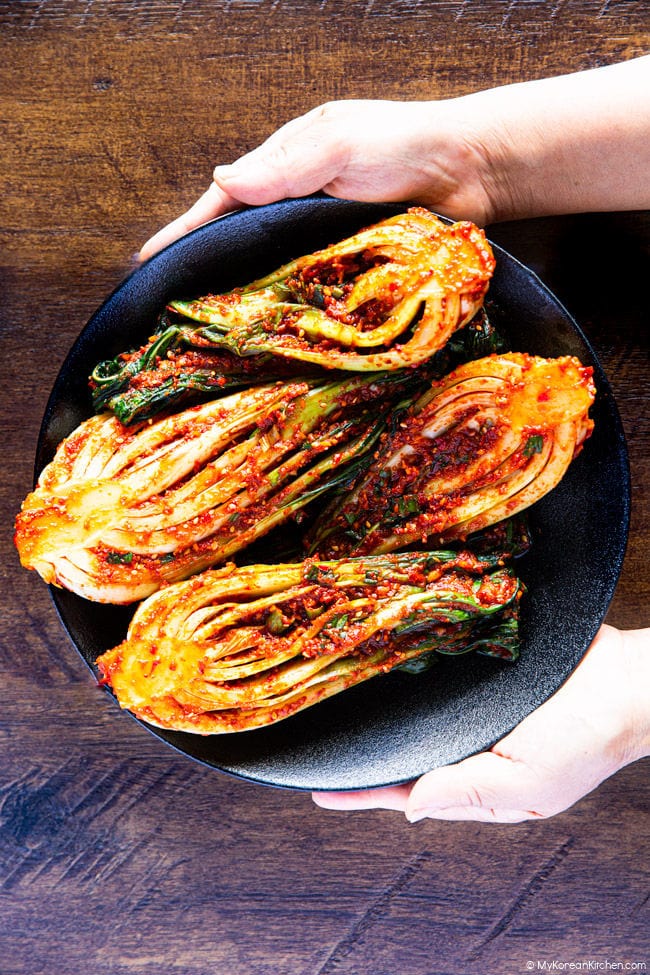
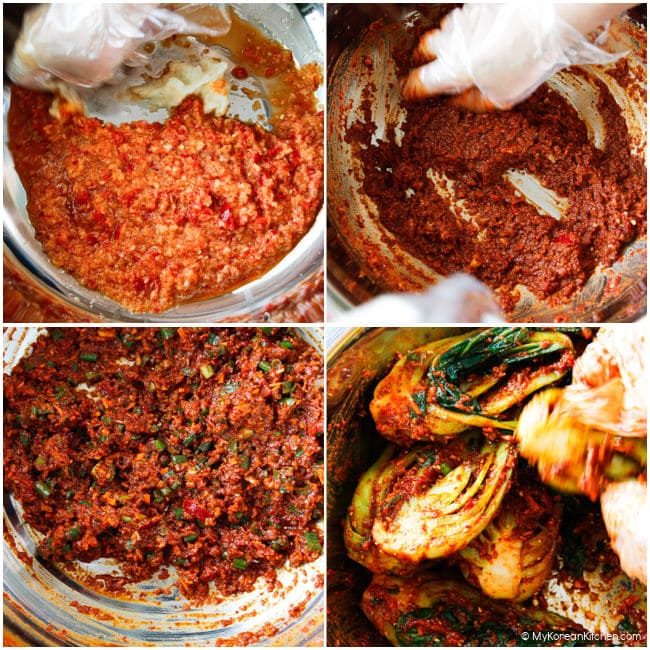
The final stage involves the gentle hand. The seasoning is mixed with gochugaru (Korean red chili flakes), sugar, sesame seeds, and fresh aromatics like scallions and carrots. The bok choy is then coated with delicate care to avoid bruising the leaves. Once packed into an airtight container, the kimchi is left at room temperature for roughly 24 hours to initiate the fermentation process before being moved to the refrigerator.
Supporting Data: Nutritional and Culinary Profiles
The nutritional profile of bok choy kimchi is as impressive as its flavor. As a fermented food, it is a potent source of probiotics, which are essential for gut microbiome health.
According to nutritional estimates, a serving of this kimchi is relatively lean, clocking in at approximately 457 kcal per batch (shared across multiple servings). It is rich in vitamins A and C, calcium, and iron. Notably, the high fiber content (approx. 24g per batch) aids in digestion, while the sodium content, while high due to the salt-curing process, is a necessary component for the fermentation environment that inhibits harmful bacteria.
Ingredient Breakdown
- Gochugaru: The lifeblood of the color and heat. While some recipes suggest swapping for paprika for a milder heat, purists argue that gochugaru is irreplaceable for its deep, complex flavor.
- Plum Syrup: A common secret weapon in Korean kitchens, adding a subtle sweetness that balances the salinity of the fish sauce and salted shrimp.
- Red Sweet Pointed Pepper: Used particularly in milder versions, these provide texture and visual flair without the overwhelming heat of pure chili.
Professional Perspectives and Industry Nuances
Culinary experts emphasize that bok choy kimchi should be treated as a "fresh" kimchi. Unlike napa cabbage, which can ferment for months, the biological structure of bok choy is not designed for long-term aging.
"The beauty of bok choy kimchi lies in its immediacy," says one fermentation consultant. "It is meant to be eaten while it still retains its crunch. By the fifth day, you are looking at a different product than what you had on day one. It’s a dynamic, living food."
Furthermore, the "seasoning at the base" phenomenon is often a point of confusion for beginners. Seasoning tends to pool in the natural grooves of the stems. Experts advise against over-mixing, noting that as the kimchi sits in the refrigerator, these juices naturally redistribute, flavoring the entire batch through osmosis.
Implications: The Future of Fermentation
The rise of bok choy kimchi signals a broader trend in global cooking: the "democratization of fermentation." As more people move away from highly processed, shelf-stable foods, the act of making kimchi at home has become a therapeutic, health-conscious ritual.
Why it Matters
- Sustainability: Using garden-grown bok choy reduces food waste and reliance on imported, mass-produced cabbages.
- Cultural Exchange: It allows for a bridge between traditional Korean methods and local, seasonal produce from around the world.
- Culinary Versatility: Its crisp, clean flavor profile makes it an ideal pairing for modern dishes—from avocado toast to grilled pork belly (samgyeopsal) or even as a side for fusion tacos.
A Note on Customization
For those who find traditional kimchi too spicy, the inclusion of paprika powder is a viable, albeit distinct, pathway. By substituting a portion of the gochugaru with paprika, home cooks can achieve a brilliant red hue and the essential "kimchi look" while significantly lowering the Scoville count. However, the depth of flavor—the earthy, smoky notes of the sun-dried chili—will be less pronounced.
Final Verdict: The New Essential
Whether you are a seasoned fermenter or a curious novice, bok choy kimchi is a recipe that rewards the practitioner. It demands patience during the brining, respect for the delicate leaves during the mixing, and a timely consumption that ensures the best texture.
As we look toward the future of home cooking, the shift toward these lighter, faster-fermenting varieties of kimchi suggests that we are moving toward a more intuitive, seasonal way of eating. It is a dish that honors the past through traditional techniques while embracing the convenience and accessibility required by the modern lifestyle.
So, next time you find your garden overflowing with bok choy or your local grocer offering a fresh, crisp bunch, don’t just stir-fry it. Transform it. Embrace the tang, the crunch, and the deep, probiotic complexity that only a well-made, homemade kimchi can provide. Your gut—and your dinner guests—will thank you.
 Raul Delapena Setiawan
  Asep Darmawan
  Nana Wu
