
 By Ammar Sabilarrohman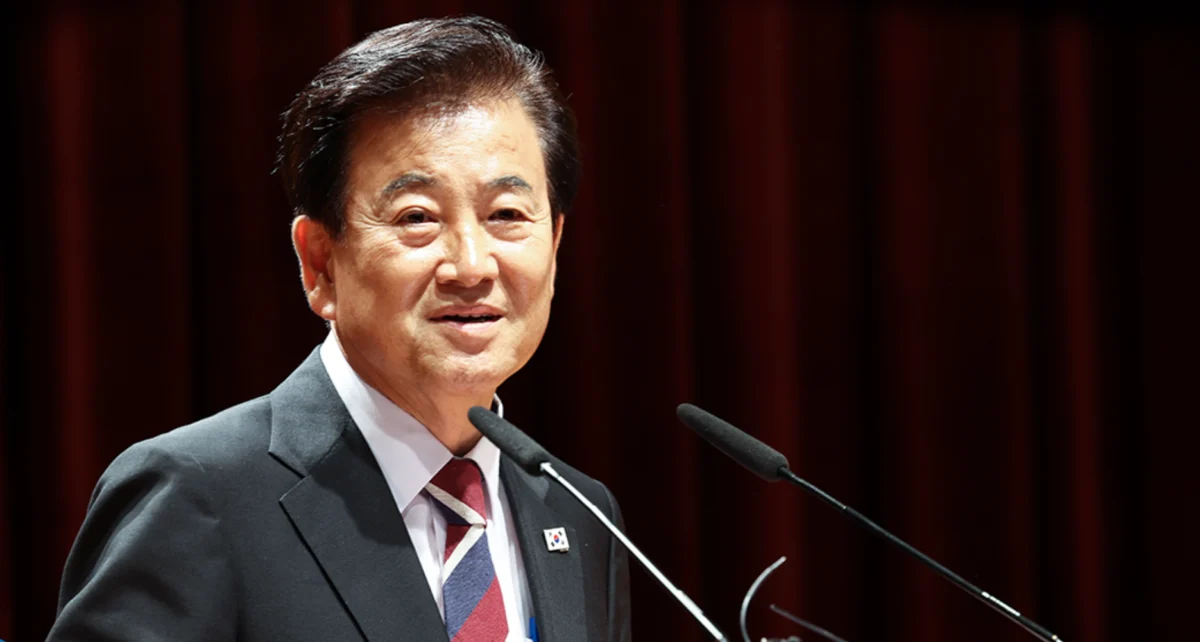
By Editorial Staff
South Korean Unification Minister Chung Dong-young has officially walked back a controversial initiative to formally refer to North Korea by its official state title, the Democratic People’s Republic of Korea (DPRK), following a sharp reprimand from President Lee Jae-myung. The reversal, which occurred during a session with an advisory council, marks a significant moment in the administration’s handling of inter-Korean diplomatic nomenclature and highlights the sensitive political landscape surrounding the peninsula’s divided identity.
The Unification Ministry confirmed on Monday that it would prioritize public consensus over unilateral policy shifts, effectively shelving a proposal that had sparked intense backlash from conservative lawmakers and members of the president’s own cabinet.
The Core Conflict: Identity, Sovereignty, and Semantics
For decades, the South Korean government has operated under a policy of referring to the North as "North Korea" (Bukhan) rather than acknowledging its official state title, the DPRK. This distinction is far more than a mere grammatical preference; it is rooted in the constitutional stance of the Republic of Korea (ROK), which asserts that it is the sole legitimate government on the Korean Peninsula.
To refer to the North as the "DPRK" implies a recognition of sovereignty that many in the South view as a direct challenge to the ROK Constitution. Minister Chung’s initial suggestion—that utilizing the official name could be a pragmatic, neutral step toward improving diplomatic engagement—was met with immediate internal resistance.
Critics argue that by adopting the North’s preferred terminology, the Seoul government risks legitimizing the Pyongyang regime at a time when nuclear tensions and military provocations remain at an all-time high. The administration’s pivot underscores the fragility of any attempt to modernize inter-Korean discourse.
Chronology of the Policy U-Turn
The events leading to the Minister’s public apology unfolded over a compressed period of intense political scrutiny:
- July 25, 2025: Chung Dong-young is formally inaugurated as the Unification Minister, signaling a desire for a "new era" of communicative flexibility in inter-Korean relations.
- Early September 2025: During a closed-door policy briefing, Minister Chung floats the idea of adopting more "objective" terminology, including the use of "DPRK," in official government reports to align with international diplomatic standards.
- Mid-September 2025: The proposal leaks to the public, igniting immediate condemnation from the opposition party and skepticism from within the Blue House.
- September 18, 2025: President Lee Jae-myung issues a public warning, stating that the administration must avoid "unnecessary confusion regarding the state’s fundamental identity."
- September 22, 2025: Minister Chung addresses the ministry’s advisory council, formally announcing that the proposal is being suspended in favor of broader public discourse.
Official Responses and Internal Friction
The speed at which the proposal was retracted speaks to the centralized control President Lee Jae-myung exerts over his cabinet. In the wake of the President’s critique, the Unification Ministry has adopted a tone of conciliation.
"Keeping the president’s remarks firmly in mind, we will listen carefully to voices from all sectors of society and continue to review the relevant matters in a more sophisticated and nuanced manner," a ministry spokesperson told NK News.
The tension within the cabinet is reflective of a wider ideological divide. While Minister Chung’s team viewed the name change as a low-cost confidence-building measure—a way to demonstrate that Seoul is willing to treat the North as an equal diplomatic partner—other cabinet members viewed it as a "strategic blunder." Defense and foreign policy officials reportedly argued that the timing was disastrous, given the ongoing volatility of the Kim Jong Un regime.
The Presidential office has maintained that any change to how the South addresses the North must be a top-down strategic decision, not a bottom-up bureaucratic proposal. The President’s office emphasized that "national unity on matters of sovereignty is non-negotiable."
The Weight of History: Why "DPRK" Matters
To understand why this issue became a flashpoint, one must consider the historical context of the Korean War and the subsequent decades of rivalry.

The Constitutional Dilemma
Article 3 of the South Korean Constitution defines the territory of the ROK as the entire Korean Peninsula and its adjacent islands. Consequently, the South has historically treated the North not as a separate sovereign state, but as an anti-state organization currently occupying the northern half of its territory.
International vs. Domestic Standards
In international forums like the United Nations, South Korea has no choice but to recognize the "DPRK" because both nations are member states. However, within the domestic sphere, the ROK government has maintained a "firewall" between international nomenclature and domestic political reality. Minister Chung’s attempt to bridge this gap by bringing "international standards" into the domestic lexicon was perceived as an attempt to erode that firewall.
Implications for Inter-Korean Relations
The failure of the "DPRK naming initiative" carries several long-term implications for the Lee Jae-myung administration.
1. The Chilling Effect on Diplomacy
By forcing a walk-back of a policy suggestion from a cabinet minister, the President has signaled that the Unification Ministry has very little room for creative diplomacy. Future efforts to engage the North—whether through humanitarian aid or cultural exchanges—may now be viewed through the lens of extreme caution.
2. The Power of Public Sentiment
Minister Chung’s retreat is a testament to the power of conservative media and public opinion in South Korea. The incident serves as a warning to other ministries: policy shifts regarding North Korea are not merely administrative—they are core identity issues that resonate deeply with the South Korean electorate.
3. A Signal to Pyongyang
How will North Korea interpret this retreat? In the past, Pyongyang has often mocked Seoul for its "double standards." The fact that the South Korean government cannot even agree on how to name its neighbor suggests to the North that Seoul is deeply divided. This could, ironically, make the North less likely to engage in serious dialogue, as they may view the current South Korean administration as too unstable or ideologically fractured to make long-term commitments.
Looking Ahead: The Path of "Sophisticated Nuance"
The Unification Ministry’s stated goal of approaching the matter in a "more sophisticated and nuanced manner" suggests that while the term "DPRK" is off the table for now, the ministry is not abandoning the broader goal of finding new ways to talk about the North.
Observers believe the ministry will likely shift its focus toward less controversial linguistic changes, such as modifying administrative phrasing in humanitarian assistance reports or focusing on regional development terminology that avoids direct constitutional debates.
However, the episode has clearly defined the boundaries of the Lee Jae-myung administration’s North Korea policy. The government will continue to project a posture of strength and constitutional rigidity, prioritizing internal consensus over the risks of being seen as "soft" on the North.
As the peninsula remains in a state of suspended conflict, the words used to describe the "other side" remain a powerful proxy for the larger, unresolved struggle for legitimacy. For now, the terminology remains unchanged, but the political capital spent on the failed initiative has left a visible mark on the current administration’s trajectory.
The task for Minister Chung in the coming months will be to repair his standing within the cabinet and regain the trust of a public that is increasingly wary of any shift in policy that could be construed as appeasement. The "DPRK naming" debate may have subsided, but the underlying tensions that fueled it remain as potent as ever.
 Pevita Pearce
  Nana Wu
