
 By Lina Irawan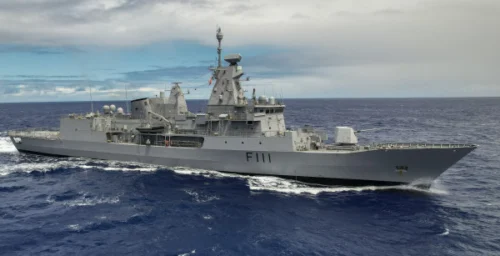
TOKYO – The Royal New Zealand Navy (RNZN) has successfully concluded a month-long maritime security operation in the waters surrounding the Japanese archipelago, marking a significant escalation in Wellington’s commitment to enforcing international sanctions against the Democratic People’s Republic of Korea (DPRK).
According to an official announcement from Japan’s Ministry of Foreign Affairs (MOFA) released this week, the deployment—which spanned from mid-August through early September—involved two of the RNZN’s most capable assets: the Anzac-class frigate HMNZS Te Mana and the fleet sustainment vessel HMNZS Aotearoa. The mission focused on detecting and deterring illicit maritime activities, specifically ship-to-ship transfers that serve as a lifeline for North Korea’s sanctioned nuclear and ballistic missile programs.
The Operational Scope: Monitoring the "Lifeline"
The deployment represents the third time since 2024 that New Zealand has projected its naval power into the North Pacific to support the United Nations Security Council (UNSC) sanctions regime. The mission, often described as "sanctions enforcement surveillance," is part of a broader, multilateral effort to close the gaps in maritime monitoring that North Korea exploits to bypass international trade restrictions.
The primary objective of the Te Mana and Aotearoa was to monitor for prohibited ship-to-ship transfers. These transfers, often conducted in the dead of night or under the cover of adverse weather, involve the movement of refined petroleum products, coal, and other prohibited goods from tankers to North Korean vessels. These illicit exchanges provide the DPRK with the resources necessary to continue its weapons development programs despite stringent U.N. prohibitions.
Chronology of the Mission
The mission unfolded in several distinct phases, reflecting the logistical complexity of maintaining naval presence thousands of kilometers from New Zealand’s home ports.
- Mid-August 2026: HMNZS Te Mana and HMNZS Aotearoa arrived in their assigned operational area in the waters surrounding Japan. The deployment was coordinated in close consultation with the Japanese Self-Defense Forces (JSDF) and the Japan Coast Guard.
- Late August 2026: The vessels maintained a constant patrol pattern, utilizing sophisticated radar and electro-optical sensors to scan for suspicious maritime patterns. Intelligence sharing was a cornerstone of the mission, with data gathered by the New Zealand ships being integrated into the broader regional maritime domain awareness (MDA) picture.
- Early September 2026: As the operational window closed, the ships conducted final assessments and debriefs with Japanese counterparts. The mission concluded, with both vessels transitioning out of the operational theater to continue their broader regional engagement exercises.
Supporting Data: Why the Indo-Pacific Matters
The importance of this deployment cannot be overstated. North Korea’s strategy of "maritime evasion" has become increasingly sophisticated. According to reports from the U.N. Panel of Experts, the DPRK utilizes a "ghost fleet" of tankers—often with deactivated Automatic Identification Systems (AIS)—to facilitate transfers in international waters.
The Role of Multilateral Cooperation
New Zealand’s participation is not an isolated act of diplomacy; it is a critical component of the "Enforcement Coordination Cell," a coalition that includes the United States, United Kingdom, Canada, Australia, France, Germany, and South Korea. By deploying vessels to this theater, New Zealand contributes to:
- Increased Deterrence: A constant naval presence forces illicit actors to change their behavior, making it more difficult and costly for the DPRK to secure illegal imports.
- Intelligence Gathering: The data collected during these patrols—photographic evidence, vessel identification, and behavioral patterns—is funneled to the U.N. Security Council’s 1718 Committee, which oversees North Korean sanctions.
- Strengthening Alliances: Through these operations, the RNZN interoperates with the Japan Maritime Self-Defense Force (JMSDF), fostering a deeper security partnership that is essential for regional stability in the Indo-Pacific.
Official Responses and Diplomatic Context
The Japanese Foreign Ministry expressed deep appreciation for New Zealand’s commitment. In a formal statement, a MOFA spokesperson noted, "Japan highly appreciates the efforts of the government of New Zealand to ensure the effective implementation of the relevant United Nations Security Council resolutions, particularly in light of the need to maintain the international order based on the rule of law."
From the Wellington perspective, the deployment underscores the government’s shift toward a more proactive defense posture. While New Zealand has traditionally maintained a focus on South Pacific humanitarian and disaster relief, the growing volatility in the North Pacific has necessitated a "security-first" approach.
"Our contribution to the monitoring of North Korean sanctions is a tangible demonstration of New Zealand’s commitment to global nuclear non-proliferation and the maintenance of a rules-based international system," a defense official stated during a press briefing in Wellington.
Implications for Regional Security
The deployment of HMNZS Te Mana and HMNZS Aotearoa comes at a time of heightened tension on the Korean Peninsula. Pyongyang has continued to conduct provocative missile tests, while the geopolitical divide between Washington and Beijing continues to complicate U.N. enforcement efforts.
The Challenge of Sanctions Fatigue
Despite the diligent work of the RNZN and other allied navies, the effectiveness of the U.N. sanctions regime is under pressure. Russia and China have increasingly used their veto power in the Security Council to block stricter enforcement measures, leading to what some analysts call "sanctions fatigue."
However, by maintaining a physical presence, New Zealand ensures that the international community does not turn a blind eye to the DPRK’s activities. The deployment serves as a "tactical reminder" to Pyongyang that the global community remains vigilant.
Maritime Domain Awareness (MDA)
The mission also highlights the critical importance of naval technology in modern surveillance. The HMNZS Aotearoa, as a sustainment vessel, proved vital in extending the range and endurance of the Te Mana. Without such logistics capabilities, the patrol would have been significantly shorter. This mission reinforces the need for New Zealand to continue investing in blue-water naval capabilities if it intends to remain a relevant security player in the broader Indo-Pacific theater.
Conclusion: A Strategic Pivot
The conclusion of this mission serves as a bookend to a successful period of regional security cooperation. While the ships have returned to their routine duties, the intelligence gathered during this period will be analyzed for months to come, helping the international community map out the evolving methods used by the DPRK to circumvent the law.
For New Zealand, the message is clear: geography no longer dictates the boundaries of its national security interests. As the Indo-Pacific remains the primary theater of global geopolitical competition, Wellington’s decision to commit its naval assets to the waters near Japan signals a definitive alignment with its traditional security partners and a firm commitment to the global effort to curb nuclear proliferation.
As the world looks toward future developments on the Korean Peninsula, the successful surveillance operation by the Royal New Zealand Navy stands as a testament to the power of multilateralism. By working in concert with Japan and other democratic nations, New Zealand is helping to ensure that the rule of law at sea—and the peace that depends upon it—is not easily dismantled by those who seek to evade it.
© 2026 Korea Risk Group. All rights reserved. This report is based on information provided by the Japan Ministry of Foreign Affairs and internal defense monitoring data. Reproduction or distribution of this report without written consent is strictly prohibited.


 Ali Ikhwan
  Evan Lee Salim
