
 By Pevita Pearce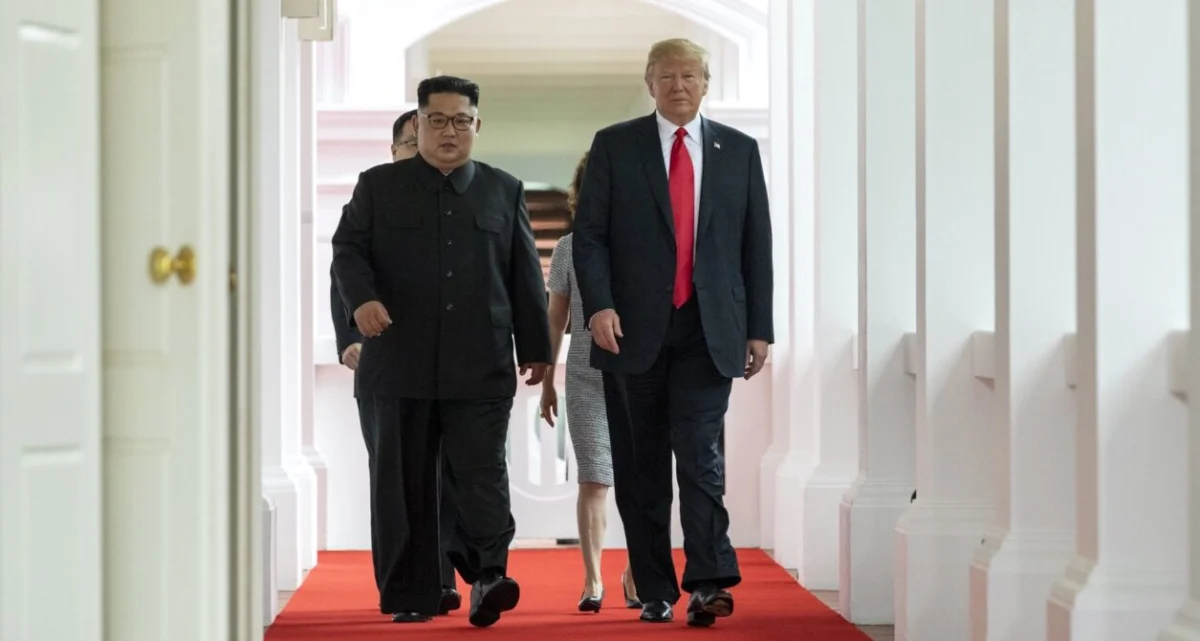
SEOUL — Amidst a climate of heightened geopolitical uncertainty and shifting alliances in the Indo-Pacific, South Korea’s National Intelligence Service (NIS) has delivered a cryptic yet provocative assessment: a summit between North Korean leader Kim Jong Un and U.S. President Donald Trump remains “possible at any time.”
The disclosure, delivered during a closed-door briefing at the National Assembly on Tuesday, has reignited global speculation regarding the potential for a third round of high-stakes diplomacy between Washington and Pyongyang. While the intelligence community admits that concrete evidence of direct contact remains elusive, the mere suggestion of “signs of dialogue” has sent shockwaves through the diplomatic corridors of Seoul, Washington, and Beijing.
The Intelligence Assessment: Decoding “Signs of Dialogue”
During a press briefing following the National Assembly session, Democratic Party lawmaker Yoon Kun-young relayed the NIS findings to a room of expectant journalists. The messaging was carefully calibrated to avoid overstatement while signaling a shift in the status quo.
“There have been no facts confirmed regarding specific contact between North Korea and the U.S., but there are signs of dialogue,” Yoon stated.
This nuanced stance by the NIS serves as a deliberate departure from the total diplomatic freeze that has characterized the U.S.-DPRK relationship for the past several years. Intelligence analysts suggest that “signs of dialogue” could refer to a variety of intelligence indicators: back-channel communications through third-party intermediaries, changes in North Korean propaganda tone, or subtle shifts in military posturing along the Demilitarized Zone (DMZ).
Despite the intrigue, the NIS stopped short of providing granular detail, likely to protect sensitive sources and methods. The assessment follows President Trump’s recent public signaling of a renewed interest in personal diplomacy with Kim Jong Un, a move that harkens back to his unconventional “top-down” approach during his first term.
A Chronology of Engagement: From Singapore to the Present
To understand the weight of the NIS announcement, one must look at the volatile history of the Trump-Kim relationship, a saga defined by dramatic summits and abrupt collapses.
2018: The Singapore Breakthrough
The relationship began with the historic June 2018 summit in Singapore, the first meeting between a sitting U.S. president and a North Korean leader. The summit produced a vague declaration on denuclearization, which supporters heralded as a new era of peace and critics dismissed as a victory for North Korean propaganda.
2019: The Hanoi Impasse
Hopes for a lasting deal were dashed in February 2019 at the Hanoi summit. President Trump walked away from the negotiating table after Kim Jong Un reportedly demanded a total lifting of sanctions in exchange for the dismantling of only a portion of North Korea’s nuclear infrastructure. The failure in Hanoi marked the beginning of a cooling period that would last for years.
2019: The DMZ Handshake
In June 2019, the two leaders held an impromptu meeting at the DMZ. While symbolic, this encounter failed to bridge the fundamental gap between Washington’s demand for "complete, verifiable, and irreversible denuclearization" (CVID) and Pyongyang’s insistence on security guarantees and sanctions relief.
2020–2024: The Long Silence
As the COVID-19 pandemic forced North Korea to shutter its borders and the global political climate shifted, communication channels effectively dried up. North Korea spent these years accelerating its missile testing program and refining its tactical nuclear capabilities, leaving the door for diplomacy firmly closed.
2025–2026: The Renewed Interest
With President Trump’s recent re-emergence into the geopolitical spotlight, the “playbook” of 2018 has been dusted off. The NIS assessment is the first official indication that this renewed interest is being met with potential, albeit quiet, receptivity from the North.

Supporting Data: North Korea’s Current Strategic Calculus
The NIS assessment must be viewed through the lens of North Korea’s current internal and external pressures. Analysts from the Korea Risk Group and other regional think tanks point to three critical factors:
- Economic Strain: North Korea continues to grapple with the long-term effects of self-imposed isolation during the pandemic and the impact of international sanctions. A summit could offer a pathway to economic relief or a loosening of the international blockade.
- Military Modernization: Since 2022, North Korea has conducted an unprecedented number of ballistic missile tests, including ICBMs capable of reaching the U.S. mainland. From Kim’s perspective, he is entering potential negotiations from a position of “nuclear maturity,” believing he holds more cards than he did in 2018.
- The Russia Factor: The warming relationship between Pyongyang and Moscow has provided North Korea with a new geopolitical safety net. This alignment gives Kim more leverage, as he is no longer solely dependent on Beijing or a U.S.-led diplomatic breakthrough for regime survival.
Official Responses and Regional Implications
The reaction to the NIS report has been mixed, reflecting the deep-seated anxieties of regional powers.
The Washington Perspective
While the White House has not issued an official confirmation of the NIS report, the Biden-era emphasis on "allied coordination" suggests that any move toward a summit would be handled with extreme caution. The U.S. policy remains focused on "denuclearization," but there is growing debate within Washington circles about whether a "freeze-for-relief" deal is now the only realistic outcome given North Korea’s advanced nuclear status.
The Seoul Stance
The South Korean government, currently led by an administration that has prioritized a strong security posture, finds itself in a delicate position. President Yoon Suk-yeol’s administration has consistently warned against "appeasement," yet they recognize that a U.S.-led diplomatic process is the only mechanism that could potentially de-escalate the situation on the peninsula.
The Beijing and Moscow View
Beijing remains the most significant variable. Historically, China prefers the status quo on the Korean Peninsula—a North Korea that acts as a buffer against U.S. influence. If a Trump-Kim summit were to materialize, China would likely move to ensure its interests are protected, potentially leveraging its influence over Pyongyang to influence the agenda.
Implications: The Risks of High-Stakes Diplomacy
The possibility of a renewed summit brings both promise and peril.
The Potential for De-escalation:
A face-to-face meeting could reduce the risk of accidental conflict. In an era where military exercises are frequent and rhetoric is heated, a direct line of communication between the two leaders acts as a crucial circuit breaker.
The Risk of Normalization:
Critics argue that by engaging in another summit, the U.S. risks legitimizing North Korea as a nuclear-armed state without actually achieving denuclearization. Furthermore, there is the fear that a failed summit—much like Hanoi—could lead to an even more aggressive round of missile testing as North Korea lashes out in frustration.
The "New" North Korea:
The North Korea of 2026 is vastly different from the North Korea of 2018. The country’s integration into a Moscow-backed security bloc means that any deal involving the U.S. will have to account for Russia’s interests. This adds a layer of complexity that was absent during the initial Singapore summit.
Conclusion: Watching the Horizon
As the NIS assessment ripples through the international community, the world remains in a state of watchful waiting. The phrase “possible at any time” is as much a warning as it is a prediction. It underscores the erratic nature of modern diplomacy, where the fate of regional security can pivot on the personal relationship of two leaders who have historically operated outside the boundaries of conventional statecraft.
For now, the “signs of dialogue” remain obscured behind the veil of state intelligence. Whether these signs will manifest into a concrete diplomatic process or fade away like previous initiatives remains to be seen. What is certain, however, is that the diplomatic chessboard has been reset, and the players are once again positioning themselves for a game that will have profound implications for the security of the Pacific and beyond.
As the Korea Risk Group continues to monitor the situation, the international community must weigh the lessons of the past against the volatile realities of the present. The path to a denuclearized Korean Peninsula remains as steep and treacherous as ever, but for the first time in years, the possibility of a detour—however uncertain—is back on the table.
 Ammar Sabilarrohman
  Nana Wu
