
 By Layla Zulfa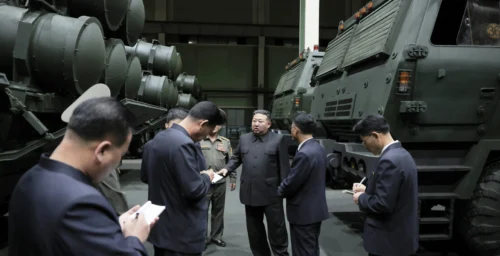
By International Affairs Desk
North Korean leader Kim Jong Un has concluded a high-profile, three-day inspection of the country’s core munitions facilities, signaling a strategic pivot toward integrating artificial intelligence (AI) and advanced automation into the nation’s defense manufacturing sector. Accompanied by his sister and senior defense officials, Kim’s tour highlights Pyongyang’s persistent drive to modernize its arsenal despite ongoing international sanctions and economic strain.
State media outlet Rodong Sinmun reported on Saturday that the leader spent the period from Wednesday to Friday visiting several undisclosed enterprises under the Second Economic Commission—the powerful bureaucratic body responsible for the North’s defense industry. The inspection underscores a shift from purely quantitative production goals to a qualitative focus on “smart” weapons technology, specifically emphasizing the development of suicide drones and high-precision artillery systems.
The Chronology of the Inspection Tour
The tour, which spanned 72 hours, suggests a meticulously planned effort to project military readiness and industrial vitality.
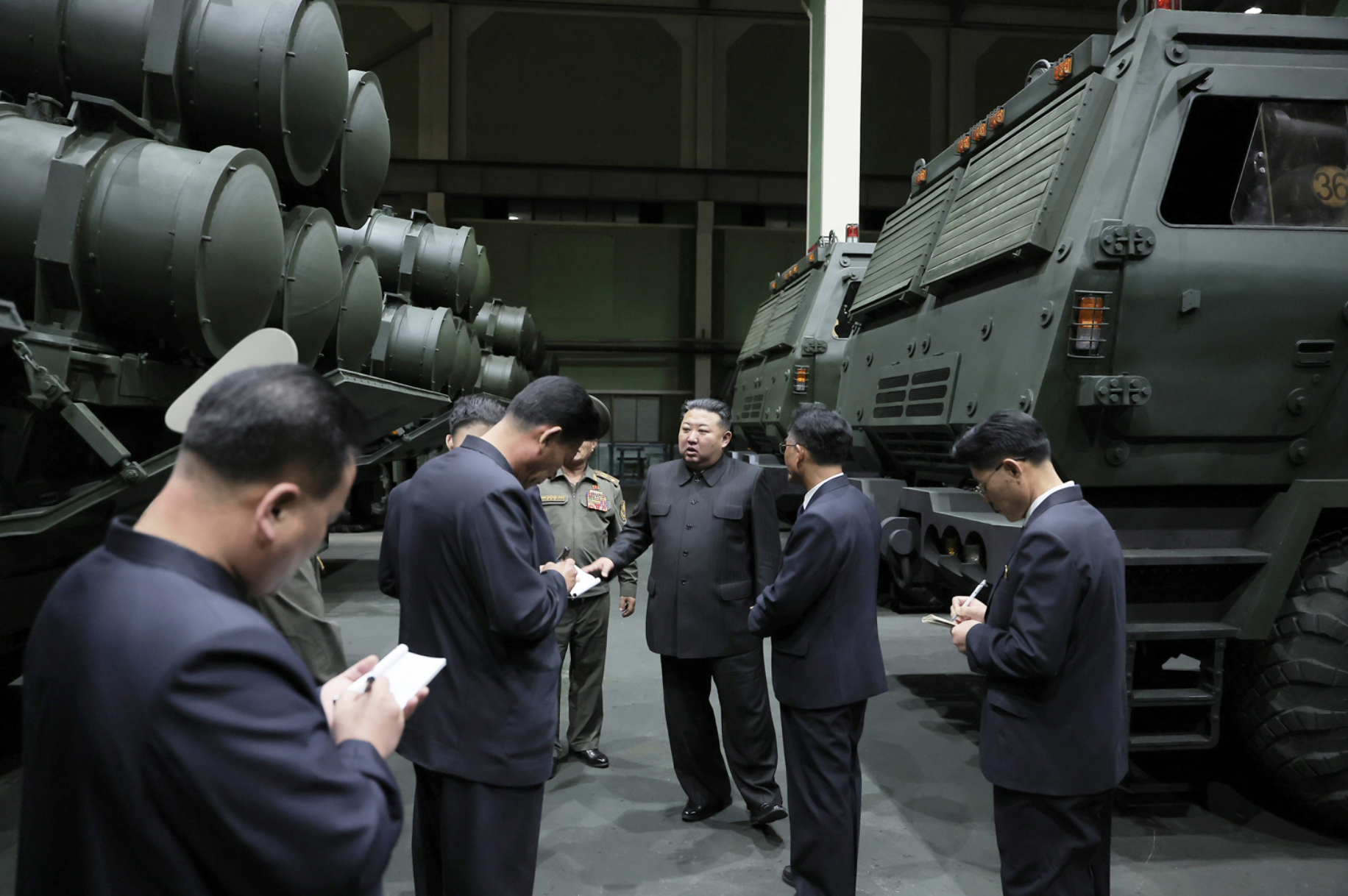
- Day One (Wednesday): Kim Jong Un arrived at an undisclosed facility specializing in mobile launcher production. Accompanied by Kim Yo Jong and top party officials, the leader reviewed the assembly lines for large-caliber rocket systems. Sources indicate that the primary focus of the first day was on streamlining the production cycle to minimize the time between design iteration and deployment.
- Day Two (Thursday): The focus shifted toward the burgeoning field of unmanned aerial systems (UAS). State media images highlighted Kim inspecting "suicide drones"—loitering munitions designed for high-precision strikes. Analysts note that this aligns with global trends in modern warfare, where small-scale, autonomous munitions have demonstrated devastating efficacy in recent conflicts.
- Day Three (Friday): The final leg of the tour involved high-level consultations with engineers and defense scientists. During these sessions, Kim reportedly emphasized the "indispensable" nature of AI in modern combat, calling for a radical overhaul of the nation’s production facilities to embrace automation.
Supporting Data: The Modernization Narrative
While the specific locations of the plants remain classified, analysis of the released photography by NK News and other intelligence observers provides critical clues. The presence of 600mm super-large multiple launch rocket systems (MLRS) within the factory visuals is particularly significant. These systems, often referred to as "tactical nuclear-capable," are the backbone of North Korea’s deterrence strategy against South Korean and U.S. forces.
The Shift Toward AI and Automation
Kim’s rhetoric regarding AI represents a departure from the traditional "man-and-machine" labor approach that has historically defined North Korean industry. By pushing for automated manufacturing, the leadership likely aims to achieve two goals:
- Precision and Quality Control: Reducing the margin of error in the manufacturing of sophisticated guidance components for cruise missiles and drones.
- Labor Efficiency: Mitigating the impact of manpower shortages caused by the diversion of labor toward agricultural and construction projects across the country.
The state’s emphasis on "self-reliance" in technology also suggests an attempt to bypass export controls. By domesticating the production of microchips and automated control systems, Pyongyang hopes to insulate its defense sector from the tightening grip of international technology embargoes.
Implications for Regional Security
The inspection tour has triggered immediate concern among regional powers, particularly in Seoul and Tokyo. The strategic emphasis on suicide drones—inexpensive yet highly destructive—could fundamentally alter the defensive posture of the Korean Peninsula.
The "Asymmetric Advantage"
For years, North Korea has sought "asymmetric advantages" to offset the conventional superiority of the U.S.-ROK alliance. Suicide drones offer a cost-effective way to neutralize high-value targets, such as radar installations, command centers, and naval assets, without risking a full-scale conventional engagement.
The Role of Domestic Production
By showcasing these factories, the North Korean leadership is sending a message to both its citizenry and its adversaries: that the defense industry is a self-sustaining engine. This narrative serves to boost domestic morale, framing the hardships of the current economic climate as a necessary sacrifice for the "shield" of the state.
Official Responses and International Reaction
Pyongyang’s Stance
State media narratives continue to frame these developments as essential measures for "self-defense" in the face of what it describes as "hostile policies" by the United States and its allies. The rhetoric surrounding the tour suggests that Kim views the modernization of the defense industry as the top priority for the remainder of the decade.
The View from Seoul and Washington
While the South Korean government has not released a formal statement regarding these specific factory visits, military analysts in Seoul remain on high alert. The integration of AI into North Korean munitions creates a new set of variables for the Combined Forces Command (CFC) to manage.
U.S. officials have frequently expressed concern over the "deepening military cooperation" between Moscow and Pyongyang, speculating that technical expertise or components from Russia may be aiding North Korea’s push toward advanced drone and missile technology. The recent tours appear to be a physical manifestation of these broader, internationalized defense ties.
Looking Ahead: The Future of the Second Economic Commission
The Second Economic Commission has long been the "black box" of the North Korean economy. As Kim Jong Un demands a shift toward high-tech production, the pressure on this commission will intensify. The mandate is clear: accelerate the development of autonomous systems, secure a consistent supply chain for specialized components, and demonstrate the ability to manufacture these systems at scale.
Challenges to Modernization
Despite the ambitious rhetoric, significant hurdles remain. The North Korean defense sector faces:
- Energy Constraints: Sustaining a high-tech, automated manufacturing line requires stable electricity, a commodity that remains scarce in many parts of the country.
- Human Capital: While the DPRK has a robust cadre of nuclear and missile scientists, the broader manufacturing sector may struggle with the transition to complex robotics and software-defined production.
- Economic Isolation: The continued strict enforcement of UN Security Council resolutions remains the primary bottleneck for obtaining the specialized machinery required for advanced automation.
The Strategic Calculus
Ultimately, the recent factory inspections serve as a reminder that Kim Jong Un is not merely interested in the size of his arsenal, but in its lethality and technological sophistication. By integrating AI into its defense industrial base, Pyongyang is signaling that it intends to remain a formidable, and increasingly unpredictable, player on the global stage.
As the international community monitors these developments, the focus will likely shift to whether the North can successfully bridge the gap between its aspirational military goals and the harsh realities of its isolated industrial base. For now, the images of the leader inspecting automated systems in a munitions plant serve as a stark warning: the North Korean defense sector is undergoing a profound, and potentially dangerous, evolution.
Disclaimer: This report is based on state media releases and analysis of available imagery. All strategic interpretations are based on current defense intelligence trends and may evolve as further information becomes available.


 Ammar Sabilarrohman
  Pevita Pearce
  Nana Wu
