
 By Neng Nana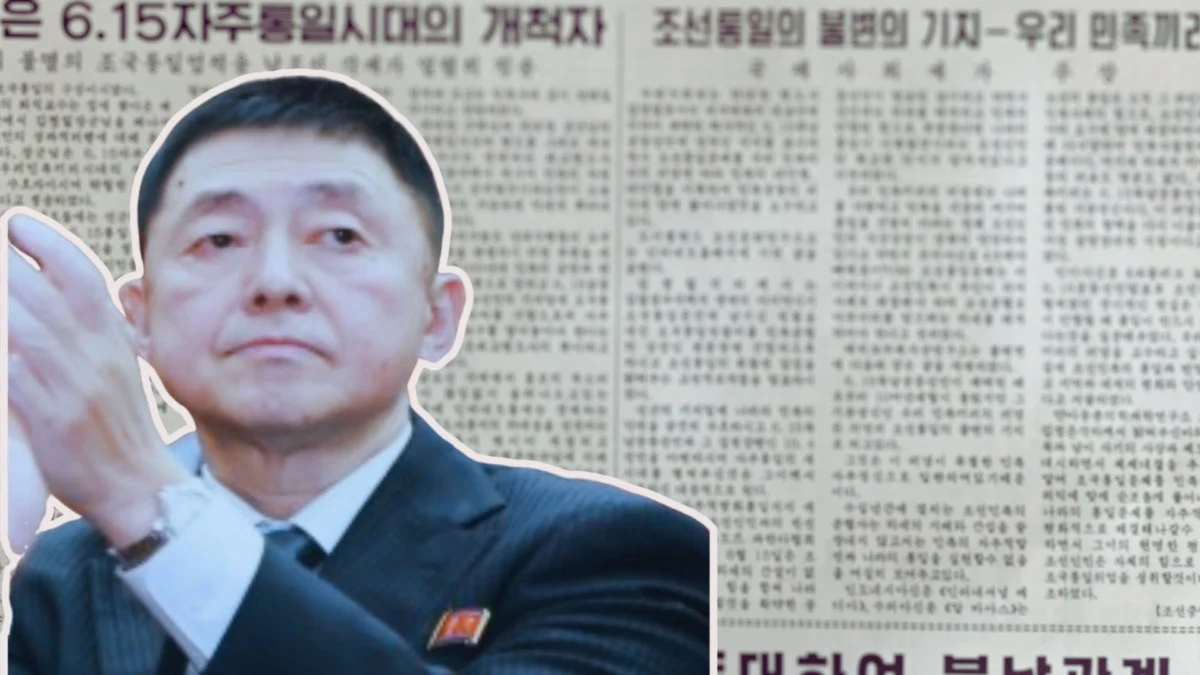
Executive Summary
After a conspicuous two-year hiatus from the public-facing opinion circuit, Kim Ji Yong, the chief editor of the Tokyo-based Choson Sinbo, has returned to the digital fray. As the primary media outlet for the General Association of Korean Residents in Japan (Chongryon)—a pro-Pyongyang organization that acts as a de facto diplomatic mission—the Choson Sinbo serves as a critical barometer for North Korean foreign policy objectives. Kim’s resumption of bylined columns, which explicitly target the strategic postures of Washington, Tokyo, and Seoul, signals a shift in Pyongyang’s messaging strategy. His recent August 5 column, which vehemently rejected international calls for denuclearization, marks a definitive move toward a more confrontational rhetoric that aligns with the current state of heightened geopolitical tensions on the Korean Peninsula.
Chronology: The Silence and the Resurgence
To understand the significance of Kim Ji Yong’s return, one must analyze the timeline of his silence and the broader context of North Korea’s shifting stance on diplomacy.
- 2023–2025 (The Hiatus): During this period, Kim’s bylined columns, which were previously a staple for observers tracking DPRK propaganda, ceased abruptly. This silence coincided with a period of internal restructuring within Pyongyang’s foreign affairs apparatus and a pivot toward total reliance on domestic state media outlets like Rodong Sinmun and KCNA for high-level policy declarations.
- Early 2026 (The Precursor): Tensions in the region began to escalate following the deployment of increased military assets by the U.S. and its allies. Observers noted subtle shifts in how Chongryon-affiliated media began framing the concept of "sovereignty" in the face of international sanctions.
- August 2026 (The Return): Kim Ji Yong broke his two-year silence with a series of pieces that echoed the rhetoric emanating directly from Pyongyang’s Ministry of Foreign Affairs.
- August 5, 2026: The publication of his latest column, which served as a comprehensive rebuttal to the international community’s denuclearization framework, effectively signaling that the "diplomatic window" had not just closed, but had been dismantled.
Supporting Data: The Role of Choson Sinbo and Chongryon
The Choson Sinbo is not merely a newspaper; it is a vital organ of the Korean Workers’ Party (KWP) influence within Japan. Its editorial board, led by Kim Ji Yong, maintains a unique position that allows them to articulate Pyongyang’s positions to an international, albeit specialized, audience.
The Chongryon Nexus
Chongryon, or the General Association of Korean Residents in Japan, has long been a conduit for North Korean influence. Historically, the organization facilitated the "repatriation" of thousands of Zainichi Koreans to the North—a project now marred by allegations of false promises and human rights abuses, as documented by recent Japanese court rulings.
The financial and ideological ties between the Kim regime and Chongryon remain robust. In April 2025, state media reported that Kim Jong Un directed substantial financial aid to the organization to support the education of pro-DPRK youth in Japan. This symbiotic relationship ensures that the Choson Sinbo operates with a high degree of ideological alignment with the central government in Pyongyang.
Analysis of the August 5 Column
In his most recent critique, Kim Ji Yong explicitly rejected the "denuclearization-first" model that has defined diplomatic engagements between the DPRK and the international community for three decades. He characterized the demand for disarmament as an "imperialist imposition" designed to render North Korea vulnerable to "regime change" tactics. By utilizing the Choson Sinbo to disseminate these views, Pyongyang is attempting to influence the discourse among the Korean diaspora and international observers, positioning North Korea’s nuclear arsenal as a non-negotiable prerequisite for national survival rather than a bargaining chip.
Official Responses and Geopolitical Implications
Regional Reaction
The return of Kim’s polemics has triggered a cautious response from intelligence and diplomatic circles in Tokyo and Seoul. The Japanese government, which has long monitored Chongryon’s activities due to concerns regarding illicit funding and espionage, views the Choson Sinbo’s harder line as a reflection of Pyongyang’s current domestic policy of "self-reliance" (Juche).
South Korean officials, speaking on condition of anonymity, have noted that the rhetoric coming from Kim Ji Yong mirrors the increasingly aggressive language used in the Rodong Sinmun. The implication is that the DPRK has effectively abandoned the possibility of meaningful dialogue regarding nuclear disarmament for the foreseeable future.

Implications for International Diplomacy
The implications of this shift are multi-faceted:
- Hardening of Positions: By using a "foreign-based" outlet to push a hardline agenda, Pyongyang is testing the waters for how much pushback it can expect from the international community without engaging in direct state-to-state confrontation.
- Information Warfare: The Choson Sinbo provides a veneer of "independent" journalism that allows the DPRK to reach audiences that might be more skeptical of direct KCNA dispatches. Kim Ji Yong’s return is a calculated move in an ongoing information war.
- The "New Normal": Analysts suggest that the return to polemics indicates that Pyongyang has moved into a "new normal" of security policy, where the nuclear issue is viewed as permanently settled in favor of the regime. The era of the "Six-Party Talks" mentality is now officially a relic of the past in the eyes of Pyongyang’s editorial writers.
The Strategic Intent of the "Hard Line"
Why now? The return of Kim Ji Yong to the editorial front lines suggests that Pyongyang feels the need to reinforce its position on the global stage. As the international community grapples with conflicts in Europe and the Middle East, North Korea appears to be leveraging this "distraction" to solidify its status as a permanent nuclear-armed state.
The Choson Sinbo articles function as a "force multiplier" for Pyongyang’s diplomacy. By articulating the arguments against denuclearization in a structured, long-form editorial format, Kim Ji Yong provides intellectual fodder for sympathetic voices globally. It is an effort to reframe the debate from "North Korean aggression" to "North Korean defense," a narrative shift that the regime has pursued with increasing intensity throughout 2026.
Furthermore, the timing of his return—immediately following high-level military exercises in the region—suggests a coordinated effort to align the media output with the regime’s military posture. The message is clear: Pyongyang is no longer interested in explaining its nuclear program; it is interested in justifying its permanence.
Conclusion
The resumption of Kim Ji Yong’s bylined columns in the Choson Sinbo is a significant development for those who study the inner workings of North Korean foreign policy. It represents a deliberate escalation in rhetoric and a rejection of the diplomatic status quo that has governed Korean Peninsula relations for years.
As the Choson Sinbo continues to push a narrative that centers on the absolute necessity of nuclear weapons, the international community faces a sobering reality. The diplomatic path forward is increasingly obstructed, not just by military maneuvers and missile tests, but by a sophisticated, state-aligned media apparatus that is determined to normalize the existence of a nuclear North Korea. Whether this rhetoric is a prelude to further provocations or simply an attempt to cement a new strategic reality, the return of Kim Ji Yong serves as a definitive signal that Pyongyang’s hardline policy is not merely a temporary reaction—it is a long-term, calculated directive.
Observers should expect the Choson Sinbo to continue acting as a primary vehicle for this messaging, bridging the gap between the insular world of North Korean state media and the broader international discourse. As the regime continues to lean on organizations like Chongryon to maintain its influence abroad, the role of editors like Kim Ji Yong will likely remain a focal point for intelligence agencies and geopolitical analysts alike.
In the complex chessboard of Northeast Asian security, the Choson Sinbo has re-entered the game, and its latest moves indicate that the board itself is being reshaped in favor of a more defiant and isolated Pyongyang.
 Ammar Sabilarrohman
  Pevita Pearce
  Nana Wu
