
 By Suro Senen
By Editorial Staff
September 20, 2026
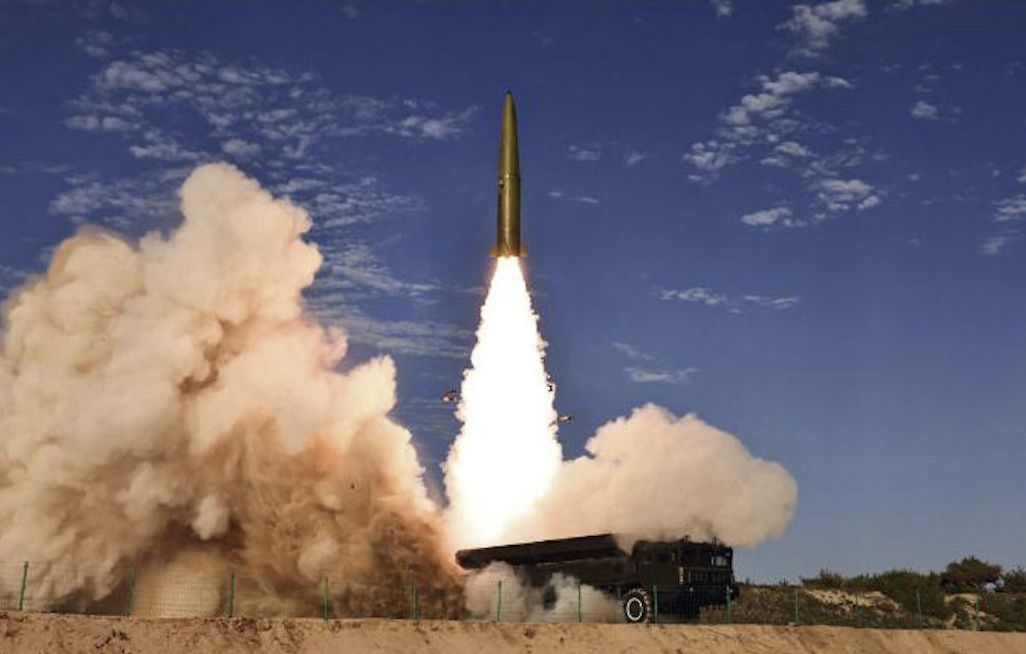
In a significant escalation of regional tensions, North Korea conducted two separate ballistic missile launches on Sunday, drawing sharp condemnation from Seoul and Tokyo. The launches, which originated from the strategic port city of Wonsan, come amidst a period of heightened military posturing on the Korean Peninsula. South Korean and Japanese authorities confirmed the events, noting that the projectiles landed in the East Sea (Sea of Japan), prompting immediate intelligence-sharing protocols between the United States and its regional allies.
The launches represent the latest in a string of provocative actions by Pyongyang, challenging international sanctions and testing the defensive readiness of the South Korean and U.S. militaries.
Chronology of the Sunday Launches
The sequence of events began on Sunday afternoon, disrupting the relative calm of the weekend. According to the South Korean Joint Chiefs of Staff (JCS), the military detected the first launch at approximately 3:00 p.m. KST. The projectile was fired from the vicinity of Wonsan, a coastal city frequently used by the North Korean military as a testbed for ballistic technology.
Preliminary telemetry data indicated that the first missile traveled a distance of roughly 280 miles (450 kilometers) before splashing down into the sea. While the ROK military stopped short of identifying the specific class of missile, the flight distance is consistent with short-to-medium-range tactical ballistic systems.
The situation escalated just under three hours later. At approximately 5:50 p.m. KST, the JCS detected a second launch, also emanating from the eastern coast. This second projectile exhibited a greater range than its predecessor, flying over 373 miles (600 kilometers).
The Japanese Coast Guard, which monitors maritime traffic and regional security, reported shortly thereafter that the missiles appeared to have fallen shortly after launch into waters outside of Japan’s Exclusive Economic Zone (EEZ). By monitoring the flight paths, intelligence analysts in Tokyo and Seoul were able to quickly determine that the projectiles did not pose an immediate threat to the Japanese mainland, though the proximity of the impact zones to shipping lanes prompted standard maritime safety warnings.
Supporting Data and Technical Assessment
Military analysts point to the Wonsan region as a vital hub for North Korea’s missile development program. The choice of location allows for controlled flight tests over the East Sea while minimizing the risk of a technical failure occurring over sovereign foreign territory.
The Significance of Flight Distances
The disparity in the flight distances—450 kilometers and 600 kilometers—suggests that Pyongyang may be testing different variants of its tactical ballistic arsenal. Weapons experts note that these distances align with the operational envelopes of North Korea’s KN-23 or KN-24 solid-fuel short-range ballistic missiles (SRBMs).
Solid-fuel technology is a critical area of focus for the North Korean military. Unlike liquid-fueled missiles, which require extensive and time-consuming fueling procedures prior to launch, solid-fuel missiles can be deployed and fired with minimal warning. This capability significantly complicates the "detect-and-intercept" architecture currently employed by South Korea’s Kill Chain preemptive strike system and the U.S.-led THAAD missile defense network.
Intelligence Gathering
Following the second launch, the JCS issued a statement confirming that the South Korean and U.S. intelligence communities are conducting an in-depth analysis of the flight characteristics. This includes evaluating the apogee (peak altitude), velocity, and potential maneuverability of the projectiles. Such data is essential for updating threat models and ensuring that regional defense systems are calibrated to intercept such weapons should they be used in a real-world conflict scenario.
Official Responses and Diplomatic Fallout
The international community was quick to respond to the Sunday launches, with Seoul and Tokyo leading the charge in condemnation.
The View from Seoul
The South Korean Ministry of National Defense labeled the launches a "grave provocation" that violates multiple United Nations Security Council resolutions. In an emergency press briefing, a spokesperson for the JCS emphasized that these actions "severely undermine peace and stability on the Korean Peninsula."
South Korean officials have reiterated their commitment to maintaining a robust combined defense posture with the United States. The ROK military has further tightened surveillance and reconnaissance measures to guard against the possibility of follow-up launches or other military provocations.
The View from Tokyo
Japanese officials expressed "deep concern" regarding the timing and nature of the launches. Prime Minister’s office staff stated that the actions by North Korea are "absolutely unacceptable" and constitute a direct violation of international law. The Japanese government has maintained a high state of alert, coordinating closely with Washington to monitor further developments in the Sea of Japan.
Washington’s Stance
While the U.S. Department of Defense has yet to release a detailed formal assessment, officials in Washington have historically condemned such launches as destabilizing. The U.S. remains committed to the "ironclad" defense of its allies, South Korea and Japan, and is likely to coordinate a multilateral diplomatic response through the United Nations Security Council in the coming days.
Implications for Regional Security
The events of September 20, 2026, are not occurring in a vacuum. Rather, they are the latest manifestation of a multi-year trend of nuclear and missile expansion by the Democratic People’s Republic of Korea (DPRK).
Testing the Limits of Deterrence
North Korea’s tactical goal with these tests is twofold. First, it seeks to refine its domestic missile technology, specifically focusing on mobility and rapid-response capabilities. Second, these tests serve as a political signal to the United States and its allies that Pyongyang remains undeterred by sanctions and diplomatic pressure.
By conducting "double-tap" or sequential launches, North Korea aims to demonstrate its ability to overwhelm defensive systems. If a military conflict were to occur, the ability to launch multiple waves of missiles in rapid succession would force defenders to prioritize targets, potentially allowing some projectiles to reach their intended targets.
The Geopolitical Landscape
The timing of these launches—following recent domestic reports from the KCNA—suggests that the North Korean leadership is looking to project strength amidst internal economic challenges. However, the external cost is the further solidification of the trilateral security cooperation between Seoul, Tokyo, and Washington.
In response to similar provocations over the past year, the U.S. and its allies have engaged in increased joint military exercises. These exercises, designed to demonstrate interoperability and resolve, often serve as a catalyst for further North Korean rhetoric, creating a "tit-for-tat" cycle of escalation that remains the defining characteristic of Northeast Asian security.
Prospects for Diplomacy
At present, the prospects for a return to meaningful denuclearization talks appear dim. The focus of the international community has shifted from active engagement to containment and deterrence. As Pyongyang continues to diversify its missile capabilities, the burden of managing this threat will continue to test the diplomatic and military ingenuity of the new administration in Washington and the current leadership in Seoul.
As of Sunday evening, the Korean Peninsula remains in a state of high alert. While the projectiles have fallen, the political fallout from these launches will likely dominate the regional agenda for the remainder of the month. The international community now watches closely to see if Pyongyang will escalate further or pause to observe the reaction of its neighbors.
Copyright © 2026 Korea Risk Group. All rights reserved. This article and its contents are protected under international copyright law and may not be reproduced, distributed, or utilized for commercial purposes without express written permission from the Korea Risk Group.


 Ammar Sabilarrohman
  Pevita Pearce
  Nana Wu
