
 By Ammar Sabilarrohman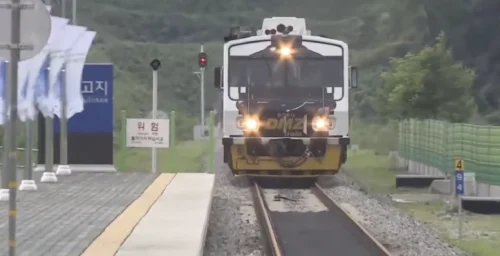
As the geopolitical landscape of the Korean Peninsula remains locked in a period of protracted tension, the South Korean government has signaled its intent to breathe new life into one of its most ambitious infrastructural legacies: the Gyeongwon Line. With plans to resume work on the southern section of this historic railway in 2027, Seoul is betting that infrastructure development can serve as a catalyst for future stability, even if the immediate diplomatic prospects with Pyongyang remain dim.
Main Facts: The Project at a Glance
The Gyeongwon Line, which historically connected Seoul to Wonsan on the DPRK’s eastern coast, has long been a potent symbol of both division and the potential for reconciliation. The South Korean government’s current initiative, scheduled for completion by 2029, aims to finalize the restoration of the line up to the edge of the Demilitarized Zone (DMZ).
This is not merely a construction project; it is a strategic maneuver. By finalizing the domestic leg of the railway, Seoul intends to demonstrate a readiness for cross-border cooperation while simultaneously modernizing regional transport networks within South Korea. The project follows a roughly decadelong suspension, during which shifting political tides and escalating inter-Korean hostility stalled progress. While Unification Minister Chung Dong-young has framed the project as a necessary precursor to future connectivity, experts are divided on whether such a move will sway the North, which has increasingly adopted a policy of hardline separation.
Chronology: A History of Disconnection and Renewal
The story of the Gyeongwon Line is inseparable from the history of the Korean Peninsula itself. Understanding the current project requires a look back at the timeline of this fractured artery:
- 1914: The Gyeongwon Line is completed during the Japanese colonial era, establishing a critical trade and transport route between the capital and the eastern port of Wonsan.
- 1950–1953: The Korean War renders the line effectively useless, as the tracks are severed by the creation of the DMZ.
- 2000s: The first inter-Korean summits trigger a wave of optimism. Plans are drafted to restore the Gyeongwon Line to facilitate cross-border travel and logistics.
- 2015: South Korea conducts a symbolic groundbreaking ceremony to extend the line toward the DMZ, but progress is hampered by the volatile security environment.
- 2016–2026: A decade of diplomatic cooling, marked by nuclear testing and the collapse of the "thaw" period, leads to the project’s effective suspension.
- 2027 (Scheduled): The South Korean government plans to resume construction, focusing on the southern section to ensure the domestic infrastructure is prepared for a "best-case scenario" reunification or rapprochement.
Supporting Data: Economic and Logistical Implications
The decision to resume construction is supported by a mix of long-term economic planning and regional development goals. Experts argue that even if the line never crosses the DMZ, the restoration provides localized benefits for South Korea.
Regional Economic Revitalization
The northern regions of South Korea, particularly those bordering the DMZ, have suffered from economic stagnation due to the "security discount"—the idea that businesses avoid these areas due to the proximity of the North. By upgrading the Gyeongwon Line, the South Korean government aims to integrate these provinces into the broader national economy, improving commute times and logistics for local industries.
The "Wait and See" Strategy
Current analysis suggests that the cost-benefit ratio of the railway is heavily weighted toward domestic utility. Infrastructure projects of this scale act as a "soft power" signal. By completing the internal tracks, Seoul is essentially keeping a door open. The data suggests that the cost of maintaining the status quo—abandoning the tracks entirely—would be higher than the cost of modernization, which preserves the possibility of future trans-continental rail links stretching toward China and Russia.
Official Responses and Political Discourse
The project has sparked a vigorous debate within the South Korean political establishment. Minister Chung Dong-young’s push for the project coincides with a broader debate regarding Seoul’s rhetorical approach to Pyongyang. Recent policy papers have suggested that South Korea move away from labeling the North as its "main enemy," arguing that such terminology only serves to calcify the North’s own aggressive posturing.
Conversely, conservative factions in the South have questioned the wisdom of pouring tax revenue into a railway that leads to a border that remains firmly shut. Critics argue that until the North shows a genuine commitment to denuclearization and a reduction in military provocations, infrastructure projects are premature and potentially undermine the international sanctions regime.

"The government is balancing two contradictory goals," says one regional analyst. "They are attempting to prepare for a future that requires inter-Korean integration, while simultaneously acknowledging that the current occupant of the North is not interested in the same vision."
Implications: A Bridge to Nowhere or a Catalyst for Peace?
The implications of the Gyeongwon Line restoration are far-reaching, touching upon regional security, environmental considerations, and the psychological fabric of the Korean people.
1. Diplomatic Signaling
If the project proceeds, it acts as a permanent, physical statement of intent. It tells the international community—and the North—that South Korea remains committed to the principle of "peace through connectivity." However, there is a risk that the North may view this as a provocative act of encroachment, as they have historically been sensitive to the "encroachment" of southern influence into the DMZ buffer zone.
2. Geopolitical Alignment
The potential reconnection of the line would, in the long term, link Seoul to the Trans-Siberian Railway. This would transform South Korea from an "island" economy into a bridge between the Pacific and Europe. While this remains a distant dream, the restoration of the Gyeongwon Line is the first structural step toward that reality. It signals to regional powers—specifically China and Russia—that Seoul is positioning itself as a central hub in Eurasian logistics.
3. The Psychological Divide
For many South Koreans, the railway is a physical manifestation of the hope for reunification. The act of laying track is an act of defiance against the permanence of the border. Even if the trains remain stationary for years to come, the existence of the infrastructure serves as a morale booster, reminding the public that the division of the peninsula is not necessarily an eternal state of affairs.
Conclusion: The Long Road Ahead
As the 2027 start date approaches, the Gyeongwon Line project will remain a focal point of the debate on inter-Korean policy. While it is highly unlikely that a few miles of track will convince the DPRK to change its strategic trajectory, the project provides Seoul with a tangible, productive output for its long-term planning.
The railway will not fix the broken diplomatic channels on its own, but it ensures that when—or if—those channels are reopened, the physical infrastructure will be ready to support a new era. For now, the Gyeongwon Line remains a project of patient architecture: waiting for a political climate that is as connected as the tracks it seeks to build.
Disclaimer: This report is based on current government projections and expert analysis as of August 2026. The political, environmental, and security challenges associated with the DMZ remain the primary variables affecting the project’s ultimate success.


 Pevita Pearce
  Nana Wu
